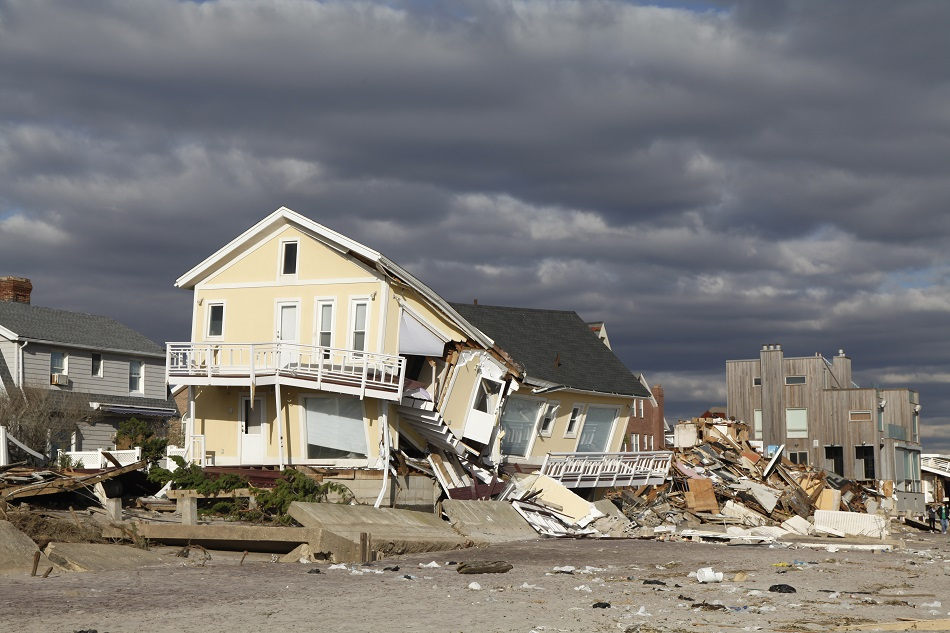
Image Credit: Leonard Zhukovsky/Shutterstock.com
A hurricane is a violent tropical cyclone with winds moving around a low-pressure area at speeds of about 74 miles per hour. It is usually formed in the eastern Pacific Ocean, Gulf of Mexico, Caribbean Sea, or the southern Atlantic Ocean together with thunderstorms.
The hurricane season lasts for several months from June to November in these parts of the world. The Atlantic hurricane season begins in June and gets severe between mid-August to October, and the eastern Pacific hurricane season starts from mid-May and lasts until the end of November.
The storm surge resulting from a hurricane is a threat to human and animal lives. Water levels can reach heights of over 20 feet at the coast and flash floods may also occur when a hurricane strikes. Hurricanes can trigger microbursts, tornadoes, and winds blowing at a speed of more than 155 miles per hour. Hurricanes that move slowly towards the mountain regions cause heavy rain, which can, in turn, produce mudslides or landslides.
The Saffir–Simpson hurricane wind scale
The Saffir–Simpson scale is employed for rating the intensity of hurricanes and providing wind impact-related information. This scale divides hurricanes into five categories based on the speed of the wind at a preset time.
- Category 1: 74–95 mph
- Category 2: 96–110 mph
- Category 3: 111–130 mph
- Category 4: 131–155 mph
- Category 5: more than 155 mph
This scale is used for assessing the damage to property due to floods and hurricanes.
Hurricane Naming Convention
For several years, hurricanes were not named formally. Only the most devastating hurricanes were named after the name of places where they created severe damages. Later, different countries used different methods for naming hurricanes. For instance, several hurricanes in the Caribbean islands have derived their name from the particular Saint’s day on which they occurred. During World War 2, meteorologists in the US began naming tropical cyclones in the Pacific and Atlantic Oceans using women’s names.
Today, the names of the storms and hurricanes are selected by the World Meteorological Organization. The first tropical storm of the year is given a name starting with the letter A, the second storm is given a name starting with the letter B and so on. However, the letters Q, U, X, Y, and Z are not used as there are very few names starting with these letters, and both male and female names are now used.
Eastern Pacific and Atlantic tropical storms have different name lists. Some names of particularly destructive storms such as Irene, Keith and Paloma are now retired.
Potential Hazards of a Hurricane
The following section discusses some hurricane hazards:
- Strong winds – High winds of speeds of more than 74 mph are capable of destroying mobile homes and buildings and removing the roofing materials from buildings.
- Storm surge – This is the rise in water level as the swirling wind pushes the water towards the shore. The surge, in turn, develops the storm tide that increases the mean level of water affecting roads, houses, and other infrastructure. Several coastal communities have been destroyed by major storms like Hugo, Camille, and Katrina.
- Rainfall and flooding – Flooding caused by heavy rains is the most dangerous consequence of tropical cyclones. Nearly 81% of hurricane-related deaths globally have been due to drowning in floods, according to the reports of the National Hurricane Center.
- Tornadoes – Hurricanes are usually accompanied by tornadoes. Tornadoes are often present in the hurricane center where thunderstorms take place. They consist of winds that circulate and move forward at a Fujita speed of F1 and F2.
- Beach erosion – Loss in the width of a beach may occur due to erosion resulting from strong winds.
How to Protect Your Home from a Hurricane
These techniques can be applied to protect houses from devastating rain and winds due to hurricanes.
The Roof System
Hurricane clips or straps can be fixed to the roof at a point where the roof truss is connected with the exterior wall. It is necessary to check whether the clips or straps are fastened tightly to avoid the weakening of roofs. With gable-end roofs, the ends of the roofs are required to be braced. Further, in order to strengthen the gable ends, the steel angles need to be fixed to the gable.
Exterior Openings
Sliding doors, windows, and French doors can be safeguarded using impact-resistant glazing or hurricane shutters. Some of the types of hurricane shutters include:
- Shade shutters
- Hurricane netting and fabric panels
- Accordion shutters
- Bahama shutters
- Rolldown shutters
- Colonial shutters
Shuttering can be performed using metal storm panels or plywood of 5/8 inch (16 mm). It is important to secure the pins at the top and bottom of the double-entry doors.
Fences And Porches
During fencing, proper spacing needs to be allowed at the bottom of the ground for air to flow underneath the fence. Moreover, it is best to ensure that the porch roof is properly fixed to the exterior wall of the building.
Sources and Further Reading
This article was updated on 24th February, 2020.
Disclaimer: The views expressed here are those of the author expressed in their private capacity and do not necessarily represent the views of AZoM.com Limited T/A AZoNetwork the owner and operator of this website. This disclaimer forms part of the Terms and conditions of use of this website.