Sponsored by UltrarayReviewed by Olivia FrostFeb 2 2026
Looking for deeper technical guidance? This article introduces key radiation protection principles for wall and ceiling shielding.
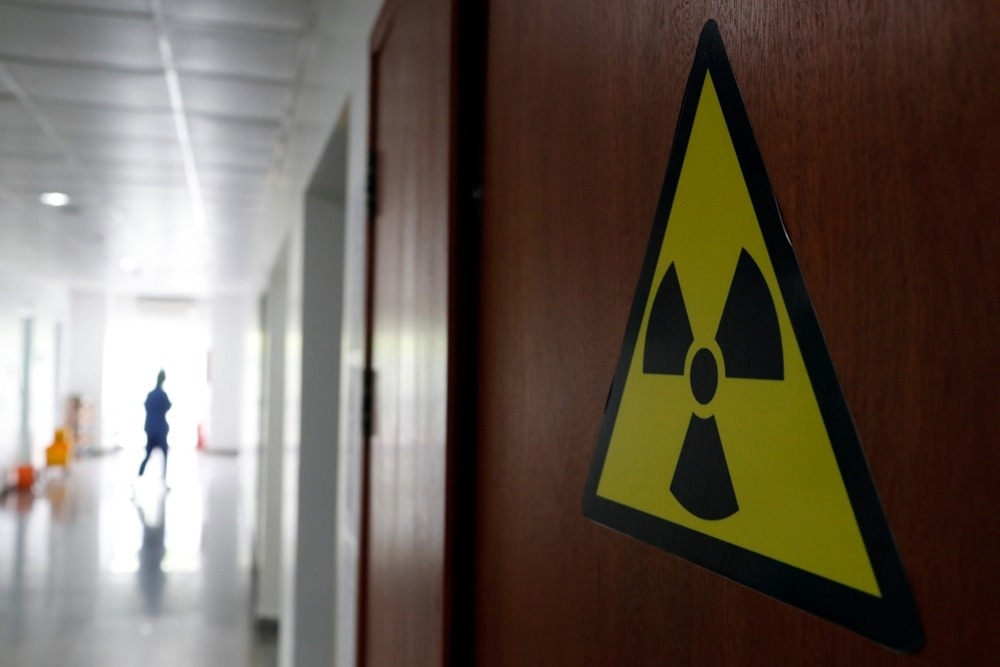
Image Credit: godongphoto/Shutterstock.com
Most radiation protection failures in healthcare buildings do not occur because the wrong shielding material was selected. They occur because shielding continuity is broken at interfaces between walls, ceilings, and adjacent assemblies. These failures often remain invisible until radiation surveys are conducted after construction is complete.
Design teams frequently assume that if wall and ceiling shielding thicknesses are calculated correctly, compliance will follow. In practice, radiation takes the path of least resistance. Gaps, seams, and poorly coordinated transitions allow radiation to escape even when individual components meet design intent.
Understanding wall and ceiling shielding rules is therefore about material selection and how shielding elements connect and overlap to form a continuous protective enclosure.
What is Radiation Protection in Building Design Actually Trying to Achieve?
Radiation protection in buildings limits radiation exposure in adjacent spaces to acceptable levels, as defined by regulatory guidance, occupancy assumptions, and equipment usage. This applies to diagnostic imaging rooms, treatment areas, and support spaces where radiation-generating equipment is present.
The goal is not zero radiation outside the room; it is controlled exposure within defined limits. Achieving this depends on shielding effectiveness across the entire enclosure, including walls, ceilings, floors, doors, glazing, and all interfaces between them.
Projects fail when radiation protection is treated as a calculation exercise rather than a system-level construction problem.
Why are Wall and Ceiling Interfaces the Highest Risk Areas?
Wall and ceiling interfaces are high risk because they sit at the boundary between different building elements, trades, and installation sequences. Wall shielding is typically installed during framing and drywall stages, while ceiling shielding is often installed later alongside services and finishes.
This separation creates opportunities for gaps, misalignment, or incorrect assumptions about coverage responsibility. For example, two shielding sheets that appear flush can separate by as little as 1/16 in to 1/8 in (2 to 4 mm) due to fastener tolerance, framing variation, or sheet flatness.
Radiation surveys consistently identify elevated readings at these interfaces when overlap rules are not clearly defined and enforced.
What Does Continuous Shielding Actually Mean in Practice?
Continuous shielding means that there is no direct path for radiation to pass through the enclosure without encountering the required shielding material. This continuity must be maintained across seams, corners, and transitions.
In practice, this requires shielding materials to overlap at joints rather than meeting edge-to-edge. Overlaps account for construction tolerances, material movement, and installation variability. A nominal edge-to-edge joint that shifts by half an inch can still create a measurable leakage path.
Merely aligning shielding sheets flush with one another does not reliably achieve continuity under real-world construction conditions.
What Overlap Rules are Typically Required for Wall Shielding?
Wall shielding generally requires overlapping joints both vertically and horizontally. The purpose of overlap is to ensure that small misalignments or imperfections do not create gaps.
Overlap dimensions vary based on installation method, sheet size, and project requirements. In practice, overlaps in the range of 1 inch to 2 inches (∼25-50 mm) are commonly used. What matters most is not the exact dimension, but that the overlap is defined, constructible, and verifiable.
Projects often fail when overlaps are left undefined or reduced in the field to minimize waste. For example, reducing an overlap from 1 inch (∼25 mm) to 1/2 in (∼12 mm) can eliminate the tolerance needed to accommodate framing movement.
How Should Wall-to-Ceiling Shielding Transitions Be Handled?
At wall-to-ceiling transitions, shielding must extend beyond the visible finished surface to maintain continuity. This usually means that wall shielding extends above the finished ceiling or that ceiling shielding extends down over the wall shielding.
Failure occurs when wall shielding stops at the ceiling grid level or when ceiling shielding is assumed to cover wall terminations without confirmation. A suspended ceiling system can vary by ±1 in (±25 mm) across a room, leaving an unshielded band if no overlap is provided.
Clear detailing is required to show how far shielding extends and which element overlaps the other.
Does Overlap Direction Matter for Radiation Protection?
Yes. Overlap direction affects both shielding reliability and constructability. Overlaps should be oriented to reduce the likelihood of separation during installation or future access.
At ceiling interfaces, it is often more reliable for ceiling shielding to overlap wall shielding. This reduces the risk of gaps forming if ceiling systems are adjusted or disturbed. Even a separation of > 1 inch overlap (∼25 mm) at this junction can create a localized leakage path.
Leaving overlap direction to installer preference increases variability and inspection risk.
How Do Services and Penetrations Affect Wall and Ceiling Rules?
Services and penetrations significantly complicate radiation protection. Electrical, mechanical, plumbing, and medical systems frequently pass through walls and ceilings near overlap zones.
If a penetration passes through only one layer of shielding at an overlap, radiation can bypass the intended protection entirely. For example, a 1 in (∼25 mm) wall-to-ceiling overlap can be rendered ineffective by a 2 in (∼50 mm) conduit that penetrates only the ceiling shielding.
Flat-sheet overlaps do not provide protection around round or irregular penetrations unless additional shielding measures are provided.
Are the Same Rules Applied to All Healthcare Rooms?
No. Radiation protection requirements depend on equipment type, energy levels, usage patterns, and adjacent occupancy. While overlap principles remain consistent, tolerance for imperfections decreases as radiation output and workload increase.
Rooms such as CT, interventional suites, and nuclear medicine spaces are less forgiving of construction deviations than low-usage diagnostic rooms. A > 1 in (∼25 mm) gap that may be barely acceptable in one context can be problematic in another.
How are Wall and Ceiling Shielding Failures Identified?
Shielding failures are typically identified during post-construction radiation surveys. These surveys measure radiation levels outside the room, not the quality of construction details directly.
When elevated readings are detected, investigation often reveals gaps or misaligned overlaps at seams or interfaces. Correcting these issues usually requires removing finishes, ceilings, or services.
The cost and disruption of late-stage remediation far exceed the effort required to define overlap rules clearly during design.
Who is Responsible for Ensuring Wall and Ceiling Shielding Rules are Followed?
Responsibility for radiation protection is shared across design, construction, and inspection roles. Designers are responsible for defining requirements clearly. Contractors are responsible for executing them accurately. Inspectors verify performance, not intent.
Problems arise when overlap rules are implied rather than explicitly documented. Each party may assume that the other has addressed the issue.
Effective projects treat radiation protection as a coordinated system rather than a delegated task.
How Should Shielding Rules be Documented in Building Projects?
Shielding rules should be documented in drawings, details, and specifications. Notes should clearly describe overlap requirements, minimum extensions beyond finishes, and responsibilities at interfaces.
Generic statements such as “provide continuous shielding” are insufficient. Without details, installers are forced to interpret intent, increasing variability and risk.
Clear documentation reduces ambiguity and improves consistency across trades.
When Might Standard Shielding Rules Need Adjustment?
Renovations, retrofits, and constrained existing buildings may require alternative approaches to achieve radiation protection. Limited access to framing or existing services may prevent standard overlap strategies.
In these cases, assumptions and limitations should be documented, and shielding approaches adapted accordingly. Not all guidance applies universally, and professional judgement remains essential.
What Should Building Teams Take Away From This?
Radiation protection failures are rarely caused by ignorance of shielding requirements. They are caused by underestimating how often small interface decisions undermine otherwise compliant designs.
Wall and ceiling shielding rules exist to control risk at the most vulnerable locations. Treating overlaps and transitions as critical system requirements, rather than minor details, significantly improves outcomes.
Radiation protection is achieved by the quality of the entire shielding system.
For a more detailed, construction-focused technical breakdown, see Ultraray’s in-depth post: Lead Overlap Rules for Wall and Ceiling Shielding in Healthcare Facilities

This information has been sourced, reviewed and adapted from materials provided by Ultraray.
For more information on this source, please visit Ultraray.