Sponsored by UltrarayReviewed by Olivia FrostMar 9 2026
Choosing radiation shielding is not just about stopping radiation. Many projects run into trouble because people assume different shielding options all do the same thing. They do not.
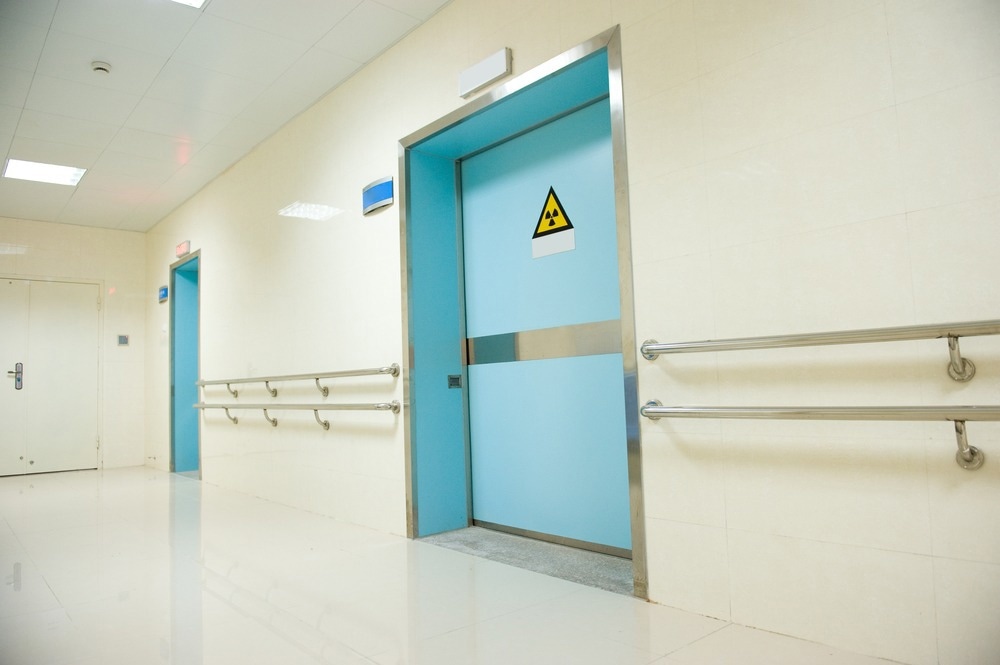
Image Credit: hxdbzxy/Shutterstock.com
Most problems happen when a shielding choice does not match how a room is actually used. This article explains, in simple terms, when mobile barriers, lead doors, and lead curtains work well, when they do not, and why choosing the wrong one can cause delays, safety concerns, or extra cost later.
Why Do Radiation Shielding Choices Often Go Wrong?
Most mistakes are not caused by bad math or bad science. They happen when people guess how a space will be used instead of planning for real life.
Common problems include:
- Picking a fixed door before knowing how the room will change
- Using a movable barrier where people forget to place it correctly
- Choosing curtains without checking how much radiation is present
- Forgetting how staff, patients, or equipment move through the room
Radiation shielding works as a system. Walls, doors, ceilings, and openings must work together. If one part is wrong, radiation can escape through gaps or unprotected areas.
When is a Lead-Lined Door the Right Choice?
A lead-lined door is often the best choice when a room is permanent and unlikely to change over time. It works particularly well in X-ray and CT rooms where the layout is fixed.
Because the door remains in the same place at all times, staff do not need to remember to move it or align it during use. When installed correctly, it provides a consistent barrier that meets the shielding standards inspectors expect.
Lead doors tend to work well as:
- They stay in the same position every day
- They match the walls and look like a normal door
- They can include a small lead glass window to see through
- They are easy for inspectors to check
However, problems can arise when lead doors are added late in the project or modified after the walls are already built. If the door size or swing direction changes, gaps can form around the edges. Fixing these gaps afterward is often costly.
Lead doors are also fixed in place. If the room layout changes in the future, the door cannot move with it.
When Does a Mobile Radiation Barrier Make More Sense?
Mobile radiation barriers are large rolling shields that can be moved to wherever protection is needed. They are especially useful in spaces that are temporary or still changing.
They are often misunderstood. A mobile barrier is not a door replacement for every situation. It works best when its role is clearly defined.
Good uses for mobile barriers include:
- Temporary protection during renovations
- Shielding staff who must stay inside a room during imaging
- Rooms that serve more than one purpose
- Facilities with limited construction budgets
- Spaces that may move or change in the future
A mobile barrier can be rolled into position only when it is needed. This allows shielding to move with the work, rather than forcing the work to adapt to the building.
Mobile barriers only work when they are placed correctly, however. If someone forgets to position it, protection is lost.
They also have height limits. Most are about 6 to 7 feet tall. If radiation can pass above that height, the barrier alone is not enough.
When are Lead Curtains the Better Option?
Lead curtains are flexible sheets that hang from a track or frame. They are best suited for lower radiation levels and situations where fast installation is important.
They are often mistaken for doors, which can lead to problems.
Lead curtains are really useful when it comes to:
- Dividing a room into smaller areas
- Covering tall openings above mobile barriers
- Temporary or changing layouts
- Lower exposure imaging areas
Curtains can extend higher than mobile barriers, which helps cover taller spaces. They are also lighter and easier to install.
But Lead curtains are not meant for high radiation areas. They must overlap correctly at the edges, or radiation can leak through gaps.
Problems usually occur when curtains are used in places where a solid wall or lead-lined door is required.
How Does Cost Affect the Decision?
Focusing only on the purchase price often leads to the wrong choice.
- Lead doors cost more at the start but need less daily attention
- Mobile barriers cost less to install but depend on people using them correctly
- Lead curtains are usually the lowest cost but have clear limits
The right option depends on how long the space will be used and how often it may change.
Temporary Shielding Vs. Long-Term Shielding
Temporary shielding is not necessarily a poor choice when it is planned intentionally.
- Mobile barriers work well during construction or upgrades
- Lead curtains support short term or flexible layouts
- Lead doors suit permanent rooms
Problems tend to arise when temporary solutions remain in place for years without review. Any change in equipment, workflow, or room use should prompt a shielding reassessment.
Why Room Layout and Movement Matter
Radiation shielding should reflect how people actually move through the space.
Important questions to consider include:
- How do staff enter and exit the room?
- Where does the radiation travel?
- Are there gaps at the ceiling or corners?
- Will the equipment be moved later?
Ignoring these questions early in a project often leads to late design changes, higher costs, or delays during inspections.
Choosing the Right Option Without Overcomplicating it
There is no single shielding solution that fits every project.
In simple terms:
- Lead doors are best for fixed, long term rooms
- Mobile barriers add flexibility when spaces change
- Lead curtains solve specific low exposure problems
Most problems occur when these options are treated as interchangeable. When shielding choices match how a space is used today - and how it may change tomorrow - projects tend to run more smoothly and inspections are easier to pass.

This information has been sourced, reviewed and adapted from materials provided by Ultraray.
For more information on this source, please visit Ultraray.