A hybrid machine learning and metaheuristic framework optimizes sludge, fly ash, slag, and gypsum mixtures to improve compressive strength. The approach enables sustainable sludge reuse, reduces waste, and supports low-carbon construction material development.
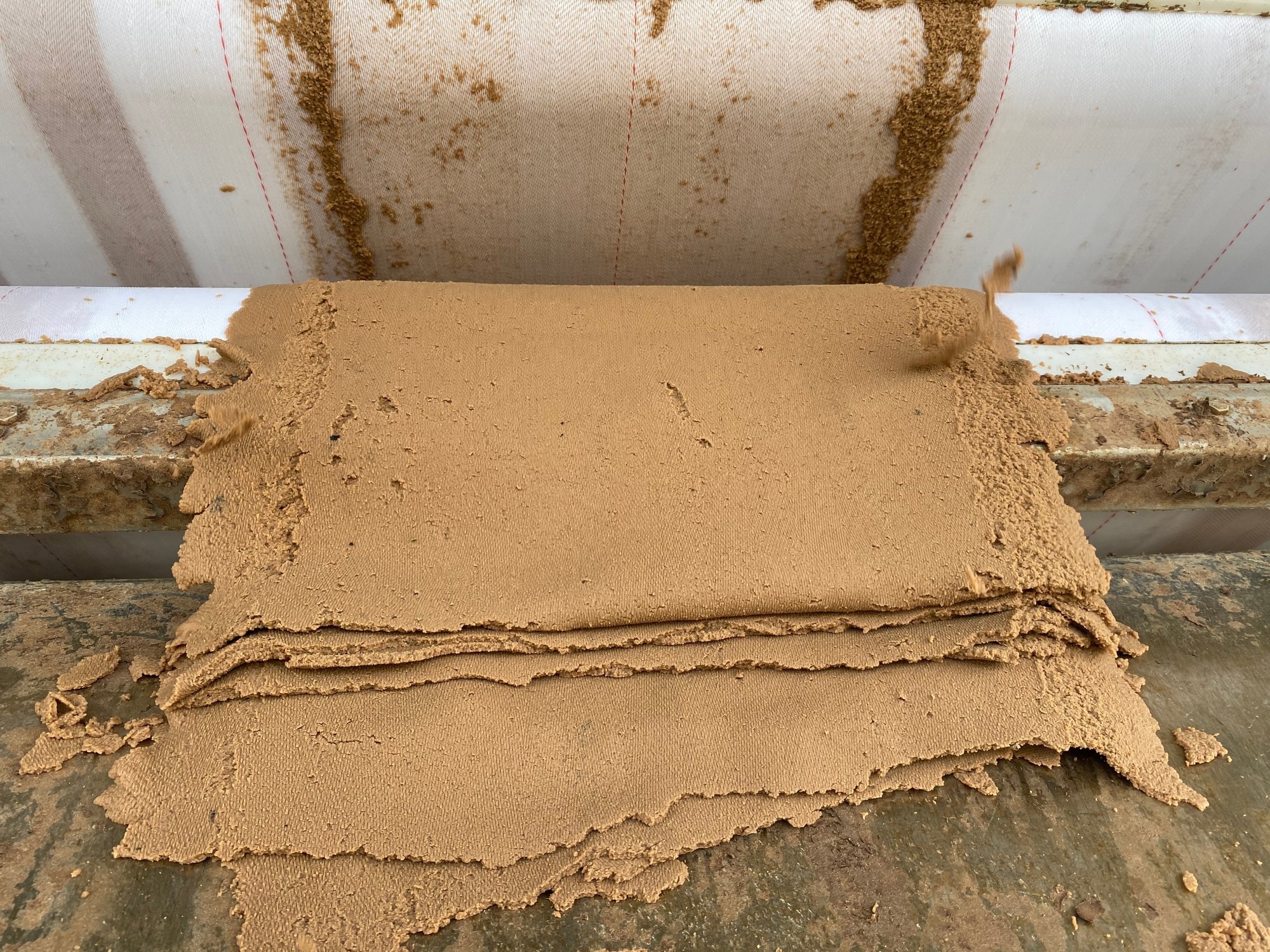 Study: Hybrid ML and metaheuristic optimization of slag-fly ash-gypsum modified solidified sludge for construction. Image Credit: ANONGNAJ PHEWNGERN/Shutterstock
A paper recently published in Scientific Reports combined metaheuristic optimization and machine learning (ML) to maximize the unconfined compressive strength (UCS) of fly ash, desulfurized gypsum, and slag-modified municipal sludge for construction.
Sustainable Municipal Sludge Management
Globally, rapid urbanization in recent years has led to significant expansion of wastewater treatment facilities, resulting in substantial sludge production. Safe and standardized sludge treatment is crucial as improper disposal could severely affect the environment. Traditional sludge disposal approaches, including landfilling and incineration, cause secondary pollution and are unsustainable.
Sludge solidification can address these issues as a sustainable alternative approach. Sludge solidification involves using solidifying agents like ash from municipal solid waste incineration, lime, fly ash, and cement to stabilize sludge for use in construction materials.
Yet, low mechanical strength and high water content make untreated sludge unsuitable for direct use in construction. Many studies have been performed to improve the mechanical strength and decrease the water content of solidified sludge to increase its suitability in construction. Recently, researchers applied ML for UCS prediction of materials like solidification materials, concrete, and fly ash.
Sludge contains nitrogen, organic matter, potassium, and phosphorus, and thus offers significant potential for low-carbon and resource recovery applications. Yet, environmentally sustainable, safe, and effective sludge treatment approaches are necessary due to toxic pollutants.
Industrial solid wastes like fly ash, desulfurized gypsum, and slag can be used for municipal sludge modification and solidification. Subsequently, the solidified materials can be applied as landfill cover layers. This approach decreases pollution from sludge and industrial wastes while reducing natural clay dependence.
Proposed Modified Solidified Sludge
In this work, researchers combined metaheuristic optimization and ML to maximize the UCS of fly ash, desulfurized gypsum, and slag-modified municipal sludge. The objective was to investigate sludge solidification optimization using gypsum, fly ash, and slag blends for construction materials from recycled sludge.
Through the integration of metaheuristic-based optimization methods and ML, researchers aimed to improve and predict the sludge-based composites mechanical performance, offering a data-driven framework for designing sustainable materials. Overall, researchers evaluated 190 specimens.
Predictive models were based on Histogram Gradient Boosting (HistGBoost), K-Nearest Neighbors (KNN), Categorical Boosting (CatBoost), Extreme Gradient Boosting (XGBoost), Gradient Boosting Machine (GBM), LightGBM, Random Forest (RF), and Support Vector Regression (SVR), which were coupled with the Whale Optimization Algorithm (WOA).
Additionally, Young’s Double-Slit Experiment Optimizer (YDSE), Hiking Optimization Algorithm (HOA), Octopus Optimization Algorithm (OOA), Gazelle Optimization Algorithm (GOA), Grey Wolf Optimizer (GWO), Genetic Algorithm (GA), and Particle Swarm Optimization (PSO) were applied for comparison. Optimal WOA-ML parameter settings were identified through sensitivity analysis.
The Research Methodology
The hybrid WOA-ML models, like LightGBM, GBM, XGBoost, and SVR, were employed for predicting and optimizing the UCS. Among metaheuristic algorithms, WOA was chosen owing to its proven competitiveness in complex neural network optimization. Thus, its enhancement could directly improve the overall optimization framework effectiveness and efficiency.
Additionally, the WOA-ML hybrid’s exploitation and exploration capabilities enable it to effectively determine the global optimum by avoiding local optima. Moreover, researchers assessed the framework using different metaheuristic algorithms, including YDSE, HOA, GWO, PSO, and WOA, with a holistic performance assessment across all models.
They performed model verification by evaluating the models predictive accuracy using standard validation techniques, including statistical tests and error metrics. Sensitivity analysis evaluated key parameter influence, while application uncertainty quantification (UQ) analysis ensured model reliability and robustness. Eventually, the optimized results from the metaheuristic framework and WOA-ML were validated by performing simulations using Design Expert software.
Download the PDF of this page here
Key Findings of the Study
The hybrid WOA-ML approaches demonstrated good performance in predicting UCS of modified sludge mixtures. The WOA-RF model achieved the highest predicted UCS of 8.2985 MPa, followed by WOA-XGBoost (8.229 MPa) and WOA-GBM (8.085 MPa). The optimal mix comprised sludge (44.2%), fly ash (16%), slag (18.7%), gypsum (19%), and sodium hydroxide (NaOH) (2.1%).
Among metaheuristic algorithms, GWO attained the highest UCS of 8.226 MPa, whereas HOA showed the lowest at 5.15 MPa, reflecting variation in exploration efficiency. On average, optimized mixes included 23.7% gypsum, 38.9% sludge, 13.4% slag, 21.6% fly ash, and 2.5% NaOH.
Sensitivity analysis using SHapley Additive exPlanations (SHAP) and partial dependence revealed NaOH, slag, sludge, and gypsum as key influencing parameters, with NaOH being most critical.
Uncertainty quantification indicated HistGBoost had the lowest variance, while GBM, XGBoost, and CatBoost balanced accuracy and uncertainty. Bootstrap-based 95% intervals confirmed reliability, with XGBoost ensuring consistent coverage, and RSM validated predictive capability.
In conclusion, the findings of the study demonstrated the feasibility of sludge solidification as a low-strength construction material.
Journal Reference
Azarkhosh, H., Chen, Y., & Elias, S. (2026). Hybrid ML and metaheuristic optimization of slag-fly ash-gypsum modified solidified sludge for construction. Scientific Reports, 16(1), 12195. DOI: 10.1038/s41598-026-47428-3, https://www.nature.com/articles/s41598-026-47428-3
Disclaimer: The views expressed here are those of the author expressed in their private capacity and do not necessarily represent the views of AZoM.com Limited T/A AZoNetwork the owner and operator of this website. This disclaimer forms part of the Terms and conditions of use of this website.