Integrated strategies like thermal sharing networks, bio-based materials, and smart windows reduce emissions and energy use. These innovations transform buildings into active energy systems, supporting decarbonization and sustainable urban development.
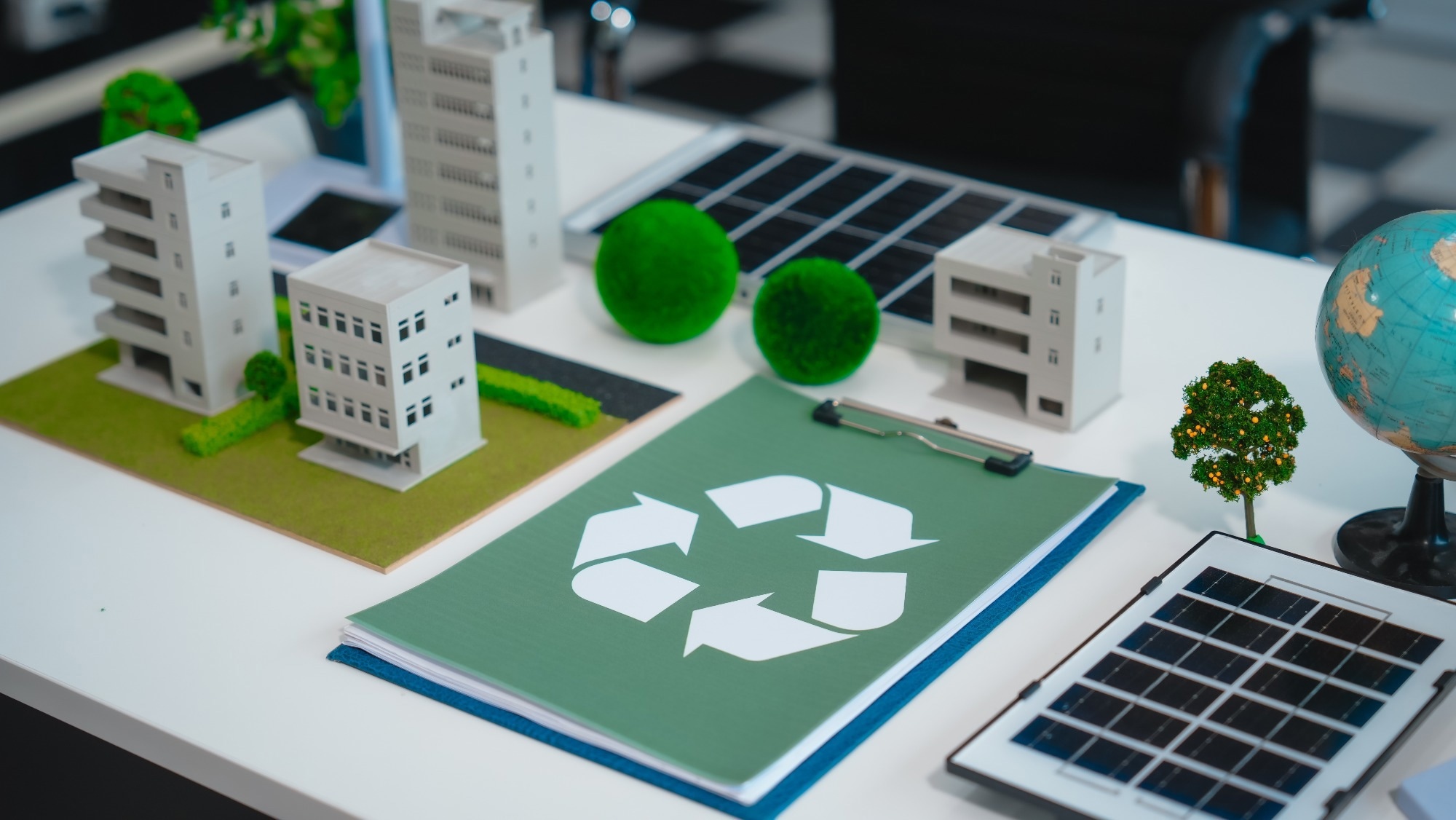 Study: The climate limits of construction in over 1,000 cities. Image Credit: PanuShot/Shutterstock
Greenhouse gas emissions in the United States rose in 2025 mainly due to higher heating demand in residential and commercial sectors. A recent study published in the journal Nature Cities demonstrated five pathways to reduce emissions from the built environment. It focused on structural decarbonization, including approaches such as biological concrete and thermal sharing networks to reshape how infrastructure interacts with the environment.
Energy Consumption: A Key Factor in Climate Change
The building sector plays a crucial role in the clean energy transition. It accounts for nearly 75% of electricity use in the United States and about one-third of global emissions.
While power generation has shifted toward renewable sources such as wind, hydro, and solar, many building heating systems still lag. Many structures rely on natural gas, a methane-based fuel that contributes to local air pollution and greenhouse gas emissions.
To address these environmental challenges, experts suggest that the construction industry must move toward total electrification. This includes deploying high-performance heat pumps and minimizing the environmental impact of construction materials.
By treating buildings as active components of the energy system rather than passive consumers, researchers believe that it is possible to meet climate targets established by the Paris Agreement and prevent global temperature increases beyond 2°C (3.6°F).
Strategies for Reducing Building Emissions
Researchers have combined engineering, biology, and data science to enhance building efficiency. They investigated multiple pathways for reducing energy use and emissions.
One approach focused on reusing waste heat from data centers. Simulations in a Chicago neighborhood demonstrated how underground water loops could transfer heat from computing facilities to nearby apartments and hospitals, creating a localized thermal network. Another innovation involves electrochromic windows, which utilize transparent electrodes between glass panes to change tint with a small electrical signal. This helped form a reversible metal layer that blocks sunlight and reduces cooling demand.
Additionally, bio-based alternatives using cyanobacteria produced mineralized structures with sunlight, seawater, and carbon dioxide. This effectively captured and stored carbon without high-temperature processing. Researchers also explored bacterial adhesives that can repair cracks in concrete, thereby extending structural lifespan. Furthermore, the concept of “urban forestry” was examined, treating buildings as material sources; salvaging components can significantly reduce landfill waste and methane emissions globally.
Quantifying the Impact of Sustainable Practices
Integrating these technologies led to substantial reductions in energy use and carbon emissions. In the Chicago simulation, waste heat from a single data center was sufficient to supply three large apartment buildings and two hospitals. In some cases, excess heat was available, highlighting the potential for data centers to act as local energy sources.
Smart window systems reduced combined heating, cooling, and lighting energy use by about 20%. At the national level, this saved approximately $44 billion annually, lowered peak electricity demand, and improved grid stability. In materials research, replacing 40% of conventional cement with bio-based alternatives can offset associated carbon emissions. This is significant given that cement production accounts for about 8% of global emissions.
In construction waste management, a hospital deconstruction project in Boulder successfully recovered 93% of materials, totaling 30 million pounds. Overall, this demonstrates that large, complex structures can be effectively reused with the right methods and technology.
Download the PDF of this page here
Real-World Applications and Policy Advancements
The transition from research to real-world applications is underway. A startup named “Prometheus Materials” has successfully commercialized bio-cement technology and supplied materials for the Limelight Hotel Boulder. This shows its viability in large-scale construction. Similarly, another company, “Tynt Technologies,” is working to develop adjustable window systems for residential and commercial buildings.
Municipal policies are evolving as well. Cities such as Boulder, San Antonio, and Portland are promoting deconstruction over demolition. This supports local material reuse, reduces construction waste, and addresses housing demand with a lower environmental impact.
Conclusion: A Vision for Regenerative Building Practices
In summary, this study indicates that the future of the building sector depends on moving beyond carbon-intensive practices. By adopting smart control systems and biological materials, the construction sector can transition from being a major emitter to an active contributor to a cleaner energy system. Similarly, smart control systems and bio-based materials can turn buildings from major emitters into active contributors to cleaner energy.
Moving forward, widespread adoption will require coordination among researchers, utilities, and policymakers. Technologies such as artificial intelligence (AI)-driven energy management and material recovery from existing structures provide a clear shift toward a circular economy. Ultimately, these innovations represent a necessary advancement toward a more resilient and sustainable built environment for future generations.
Journal Reference
Rankin, K.H., & et al. (2026). The climate limits of construction in over 1,000 cities. Nat Cities 3, 115-125. DOI: 10.1038/s44284-025-00379-8, https://www.nature.com/articles/s44284-025-00379-8,
https://www.colorado.edu/today/smart-cool-and-recycled-5-ways-tomorrows-buildings-could-be-easier-planet
Disclaimer: The views expressed here are those of the author expressed in their private capacity and do not necessarily represent the views of AZoM.com Limited T/A AZoNetwork the owner and operator of this website. This disclaimer forms part of the Terms and conditions of use of this website.