Steel bridges are susceptible to corrosion and cracks owing to environmental erosion, long-term exposure to traffic loads, and material aging. Timely detection and maintenance of these damages is critical to ensure bridge structure stability and mitigate risk to public safety.
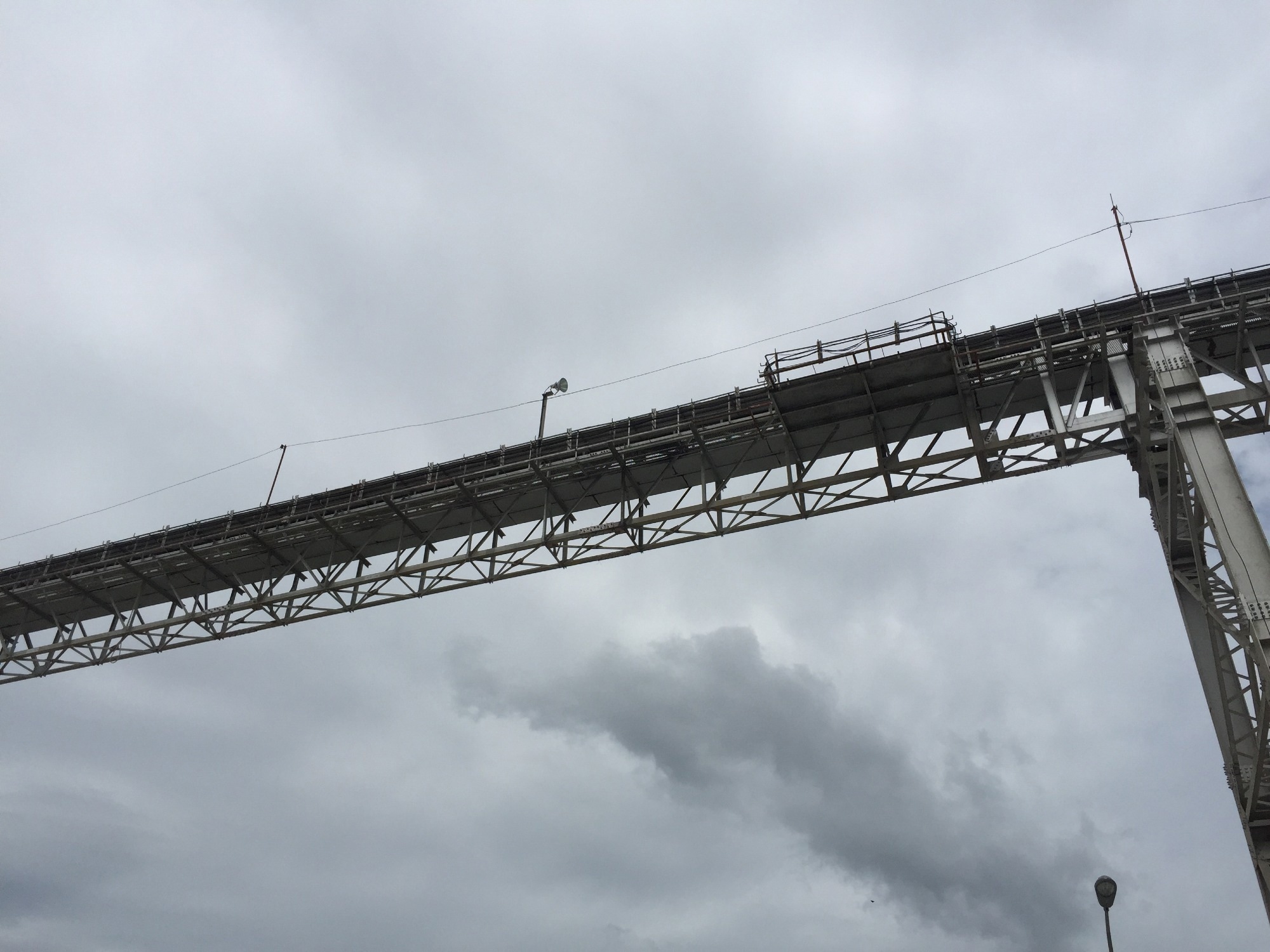 Image Credit: visarut botmart/Shutterstock.com
Traditional steel bridge maintenance is challenging because bridges of varying standards and ages vary in technical difficulty, structural complexity, and design. Thus, maintenance personnel must possess deep professional experience and expertise to address complex and diverse maintenance challenges. Additionally, the maintenance process requires high-risk operations such as high-altitude welding and work, posing a threat to maintenance personnel's safety. Using magnetic robots for steel bridge maintenance could effectively address challenges such as low efficiency, high cost, and high risk.1-4
Magnetic Climbing Robot
Magnetic adsorption technology, a primary attachment method for wall-climbing robots, is commonly used in steel bridge maintenance. For instance, the Shenzhen Institute of Artificial Intelligence and Robotics (AIRS) has developed the Cooperative Climbing Robot Main Cable Version IV (CCRobot IV). It utilizes handrail ropes on the suspension bridge’s maintenance walkway as climbing supports and operates two gripping boot sets with four claws that open and close alternately, simulating worms’ stretching movements to advance. CCRobot IV carries several visual sensors during its “walk” on a lightweight composite frame, enabling comprehensive main cable detection.1
In a paper published in Applied and Computational Engineering, researchers introduced a novel magnetic adsorption robot that addresses the high costs and low efficiency of traditional maintenance methods. Featuring a dual robotic arm mechanism, the robot was modeled using the Denavit–Hartenberg (D-H) parameter method, and wall adhesion was realized using electromagnetic adsorption. Direct power supply was provided through direct current (DC) power to control weight.
Through the HC-05 Bluetooth module, the robot can perform flexible remote control operations. The proposed design considered the unique characteristics of bridge structures and the specific requirements of maintenance operations to improve the safety and efficiency of steel bridge maintenance. Researchers enhanced the robot’s ability to navigate obstacles, improved the robot’s emergency protection measures, and integrated multi-sensors to achieve autonomous and intelligent operation that scans all areas without leaving any blind spots. Emulating caterpillar locomotion, the multi-sensor-equipped magnetic adsorption robot could freely maneuver in any direction within steel structures and autonomously retract upon completing inspections.1
Based on control complexity and cost, researchers chose electromagnetic adsorption for this robot, considering the working environment (a steel bridge) and the use of a dual-arm structure. A separate DC power supply was selected to power electromagnets, as the Arduino board's power supply is insufficient. Electromagnets require a large amount of current, which exceeds the Arduino board’s pin current limit. During the practical performance testing, the magnetic adhesion robot performed well on steel structures.
The robot displayed obstacle-crossing capabilities and consistently adhered to the steel surface. It successfully overcame various depressions and protrusions and moved freely within the steel structure. Additionally, the robot performed maintenance and inspection tasks effectively during actual operations, highlighting the robot's design’s practicality and effectiveness. These findings indicated that the application of magnetic adhesion robots in steel bridge maintenance enhances maintenance efficiency, operational reliability, and safety. It combined the advantages of conventional vacuum adhesion and magnetic adhesion robots, resulting in higher flexibility and stability.1
Flying-climbing Mobile Robot
In a paper published at the 2021 IEEE International Symposium on Safety, Security, and Rescue Robotics (SSRR), researchers presented a novel hybrid robotic design that combines the advantages of a mobile robot’s steady climbing capability and a drone’s flying flexibility/maneuverability to perform faster, higher-quality steel bridge inspections. They equipped the mobile robot part with permanent magnets that alter the distance from the steel surface. The robot switches between operating modes, including moving, taking off, and landing, by adjusting the distance between the steel surface and the magnet. Giant magneto-resistance (GMR) sensor was equipped to the robot for an in-depth inspection for detecting steel cracks.2
Researchers performed a mechanical analysis to assess the mobile part’s climbing capability. They also developed a landing algorithm that allowed the robot to safely perform in-depth inspection by landing on a steel surface. The developed robot was evaluated and validated on real bridges to ensure the robot's efficacy and stability. Findings showed that the robot could switch from flying to climbing for quick to-and-fro movement at several bridge locations and perform in-depth and visual inspections using the GMR sensor array and cameras, respectively.
Mechanical analysis confirmed the mobile part’s climbing capability. Under the robot’s mobile body, the GMR sensor array effectively checked for steel cracks as a lightweight sensor. Yet, the bridge’s corners may not be thoroughly checked with the GMR sensor array under the current installation. These areas could only be checked using a camera.2
AI-powered Magnetic Robot
A work published in the International Journal of Scientific Engineering and Science proposed an artificial intelligence (AI) powered magnetic inspection robot equipped with magnetic wheels that allow it to adhere to and traverse complex ferromagnetic surfaces, including steep vertical inclines, cylindrical structures, internal and external corners, and flat surfaces. The robot can conduct comprehensive inspections and access hard-to-reach areas thanks to its robust locomotion system, powered by precision control mechanisms and strong magnetic adhesion, providing a reliable, stable solution for assessing large-scale infrastructure such as steel bridges under demanding or severe environmental conditions.
Researchers also incorporated advanced machine learning (ML) techniques, such as MobileNetV2, a deep learning architecture, into the system for defect detection. They trained the model using a large dataset of steel surface defects. Results showed that the model achieved 85% precision, demonstrating robust performance across six defect types.3
Specifically, the robot’s deep-learning-based inspection process improved the reliability and accuracy of structural assessments compared with conventional methods, with operational efficiency and defect detection as key benefits. The findings demonstrated that integrating robotic systems and AI-driven image analysis could provide an automated, scalable solution that increases detection accuracy, reduces human labor, and improves sustainability and safety.
This robot marked a significant advancement in structural health monitoring (SHM) for ferromagnetic structures such as bridges. A key contribution of this work was the inspection of large scale steel structures’ hard-to-reach areas. Conventional methods are expensive, impractical, or inefficient in these situations. Robotic automation ensured reliable repair and maintenance decisions. Particularly, MobileNetV2 and convolutional neural networks (CNN) ML models showed success in accurate structural defect identification.3
High-mobility Inchworm Climbing Robot
A paper published in Automation in Construction introduced a high-mobility inchworm climbing robot (HMIC Robot) that can traverse diaphragms between sections and perform internal inspections of steel box girder bridges. Researchers developed the robot by integrating mechanical design with adhesion-force experiments and finite-element simulations.
The proposed HMIC Robot displayed superior obstacle-crossing and climbing capabilities compared with existing robots, owing to its central core module with large-size wheels that provide efficient, stable mobility on the ground and on steel surfaces, unique footpad electromagnetic control, and a hybrid power design. Additionally, the robot’s excellent locomotion capabilities, such as 360-degree flips and horizontal and vertical climbing, make it well-suited for complex maintenance and inspection tasks on steel box girders. Thus, the design specifications in this work can serve as a crucial reference for developing similar robots and advancing robotics engineering.4
Conclusion
In conclusion, magnetic robots are transforming steel bridge maintenance by improving safety, efficiency, and inspection accuracy. With advanced adhesion methods, intelligent sensors, and AI-driven defect detection, these robots can access complex, high-risk areas while reducing human involvement. Their adaptability, obstacle-crossing ability, and autonomous operation make them highly effective for SHM, ensuring more reliable maintenance, reduced costs, and enhanced long-term stability of steel bridges.References and Further Reading
- Zhou, S. (2024). A Magnetic Climbing Robot for Steel Bridge Inspection. Applied and Computational Engineering, 81(1), 171-180. DOI:10.54254/2755-2721/81/20241084, https://www.researchgate.net/publication/385708977_A_Magnetic_Climbing_Robot_for_Steel_Bridge_Inspection
- Pham, A. Q., La, A. T., Chang, E., & La, H. M. (2021). Flying-climbing mobile robot for steel bridge inspection. 2021 IEEE International Symposium on Safety, Security, and Rescue Robotics (SSRR), 230-235. DOI: 10.1109/SSRR53300.2021.9597676, https://ieeexplore.ieee.org/abstract/document/9597676
- Tseng, A. (2024). AI-Powered Magnetic Inspection Robot for Advanced Structural Health Monitoring of Ferromagnetic Structures. International Journal of Scientific Engineering and Science, 8(9), 92-102. https://ijses.com/wp-content/uploads/2024/09/42-IJSES-V8N9.pdf
- Lin, T. H., Putranto, A., Chen, P. H., Teng, Y. Z., & Chen, L. (2023). High-mobility inchworm climbing robot for steel bridge inspection. Automation in Construction, 152, 104905. DOI: 10.1016/j.autcon.2023.104905, https://www.sciencedirect.com/science/article/abs/pii/S0926580523001656
Disclaimer: The views expressed here are those of the author expressed in their private capacity and do not necessarily represent the views of AZoM.com Limited T/A AZoNetwork the owner and operator of this website. This disclaimer forms part of the Terms and conditions of use of this website.