*Important notice: This news reports on an unedited version of the paper which has been accepted. and is awaiting final editing. Scientific Reports sometimes publishes preliminary scientific reports that are not fully edited and, therefore, should not be regarded as conclusive or treated as established information.
Graphene enhances concrete by refining microstructure, reducing porosity, and increasing strength. This construction material improves durability and performance, though optimal dispersion and dosage remain critical for effectiveness.
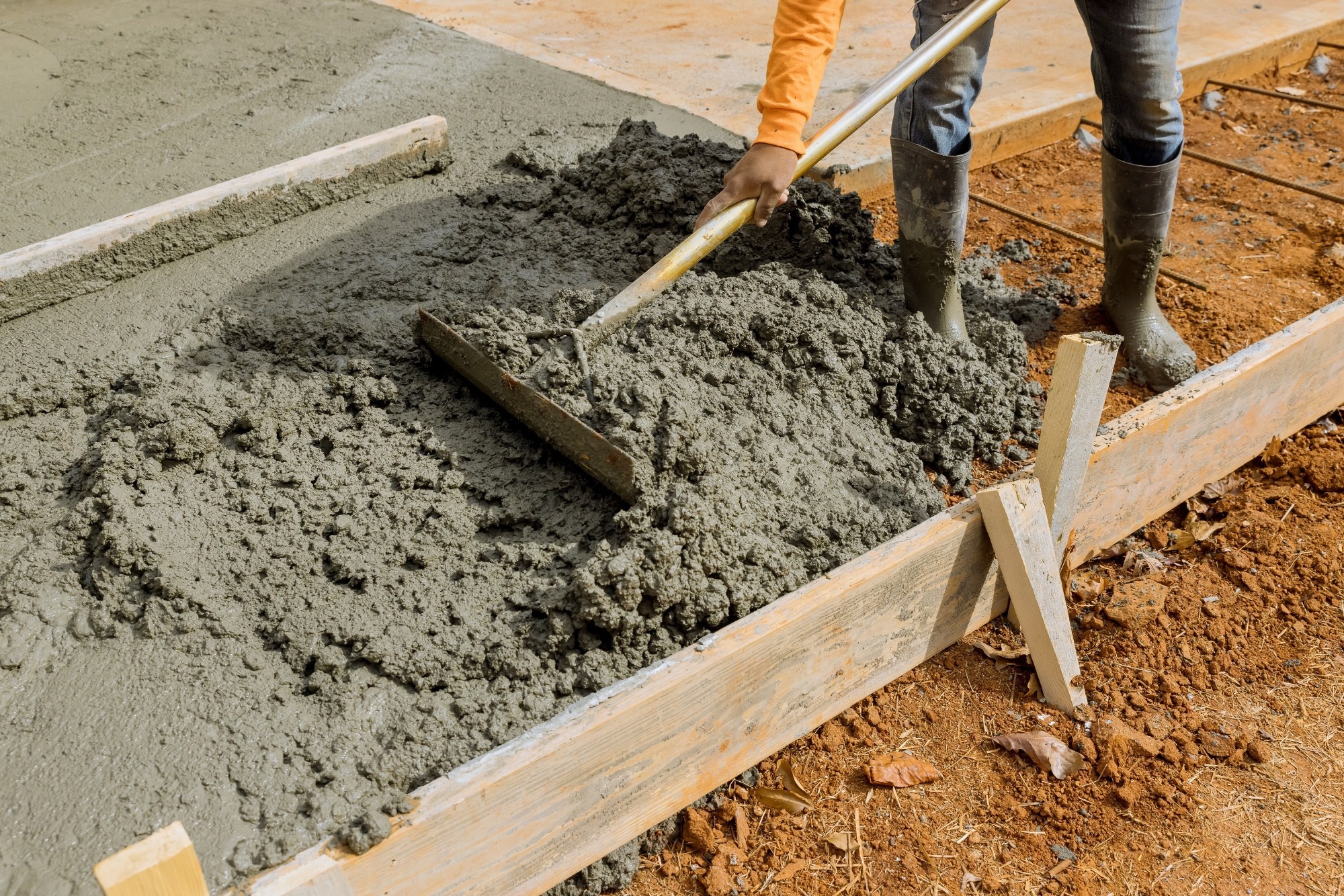 Study: Investigating the potential of graphene to enhance concrete performance. Image Credit: ungvar/Shutterstock
In a recent article published in the journal Scientific Reports, researchers investigated the potential of graphene as an innovative additive to enhance the mechanical strength, durability, and sustainability of concrete for advanced construction applications.
Graphene's Role in Concrete
Graphene is a two-dimensional material consisting of a single atomic layer of carbon atoms in a hexagonal lattice, with tensile strength estimated to be about 200 times that of steel. Its Young’s modulus approaches 1 TPa, and it possesses extraordinary surface area and electrical and thermal conductivity.
These properties have attracted significant interest in various industries, including construction, where graphene can reinforce cementitious composites. Nanomaterials like graphene can enhance cement hydration, refine microstructure, improve interparticle bonding, and reduce cracks and porosity in concrete. However, challenges related to graphene dispersion and agglomeration persist, affecting its efficiency as a reinforcement agent in concrete.
Nanotechnology integration into construction materials aims to develop infrastructure with better mechanical properties and durability. Graphene oxide (GO) derivatives have been shown to improve early-age strength and long-term performance at low dosages. The high surface area of graphene contributes to enhanced bonding in the cement matrix, leading to improved mechanical behavior and reducing permeability.
Graphene Concrete Experimental Design
This experimental study used Ordinary Portland Cement (OPC) conforming to ASTM C150 standards and aggregates, crushed granite for coarse aggregate, and natural river sand for fine aggregate, meeting ASTM specifications to ensure quality and consistency.
Graphene powder sourced from commercial suppliers was characterized for purity, structure, and dispersion behavior using advanced techniques such as X-ray Diffraction (XRD), Fourier Transform Infrared Spectroscopy (FTIR), and Scanning Electron Microscopy (SEM). The graphene used had a nominal thickness between 100–500 nm and a specific surface area up to 2600 m²/g, beneficial for mechanical enhancement.
Concrete mixes employed a constant water-to-cement ratio and standard proportions of aggregates to cement with varying graphene dosages of 0%, 0.1%, 0.2%, 0.3%, 0.4%, and 0.5% by weight of cement. Graphene was first dispersed in water using mechanical stirring to ensure homogenization, then combined with dry cement and aggregates during mixing. Specimens were cast in molds corresponding to standard sizes for compressive strength (15 cm cubes) and flexural strength (10 × 10 × 50 cm prisms) and cured under controlled conditions for 7 and 28 days.
Mechanical tests followed ASTM C39 for compressive strength and ASTM C78 for flexural strength evaluation. Water absorption tests assessed permeability by measuring mass changes after water immersion to infer durability enhancements.
Microstructural analyses with SEM examined the distribution and interaction of graphene within the cement matrix, while XRD profiles identified crystalline phases indicative of graphene integration. FTIR spectroscopy characterized chemical bonds and functional groups responsible for graphene’s influence on cement hydration.
Mechanical & Microstructural Insights
The addition of graphene powder consistently improved both compressive and flexural strength of concrete up to an optimal dosage of 0.4% by cement weight. At 28 days, compressive strength increased from 33.58 MPa (control) to 37.75 MPa at 0.4% graphene, marking an 11.6% improvement.
Flexural strength also improved proportionally, reaching 4.47 MPa compared to 3.0 MPa for control mixes. Strength gains are attributed to graphene’s ability to bridge and arrest microcracks, refine pore structure, and densify the cement matrix, thereby enhancing load transfer and toughness.
Download the PDF of this page here
Beyond 0.4% dosage, mechanical performance declined due to graphene agglomeration, which increased porosity and disrupted the homogeneity of the matrix. This highlights the importance of dispersing graphene uniformly within the concrete mixture to fully harness its reinforcing potential.
SEM micrographs showed that graphene-filled concrete had fewer voids and microcracks, with smoother, more compacted matrix regions than control specimens. The improved interfacial transition zones between cement paste and aggregates correspond to better stress distribution and reduced crack propagation.
XRD analysis detected a characteristic graphene peak near 26.5° 2θ, confirming successful incorporation and interaction within the concrete structure. The FTIR spectra revealed stable functional groups that facilitate cement hydration, accelerate the formation of hydration products, and contribute to matrix densification.
Water absorption tests demonstrated lowered permeability in graphene-modified concrete, indicating enhanced resistance to water ingress and increased durability. This reduction in permeability could lead to longer service life and reduced maintenance costs in concrete structures.
Optimizing Graphene Dosage
This research confirms that graphene powder is an effective additive for enhancing concrete properties when optimally dosed at around 0.4% by weight of cement. At this level, both compressive and flexural strengths increase significantly, accompanied by notable improvements in durability due to reduced permeability. The integration of graphene results in a denser, more cohesive microstructure with enhanced crack resistance and load transfer capacity.
Future work should focus on scaling dispersion techniques, optimizing graphene types, and evaluating long-term durability under various environmental conditions to pave the way for industrial adoption. Overall, graphene-enhanced concrete offers a compelling path toward smarter, stronger, and more sustainable construction materials for the built environment.
Journal Reference
Kalif M.F.M., Mitikie B.B., et al. (2026). Investigating the potential of graphene to enhance concrete performance. Scientific Reports. DOI: 10.1038/s41598-026-52461-3, https://www.nature.com/articles/s41598-026-52461-3