Researchers demonstrate that an optimized ternary concrete mix combining silica fume, fly ash, and manufactured sand significantly improves strength while enabling accurate machine learning-based performance prediction.
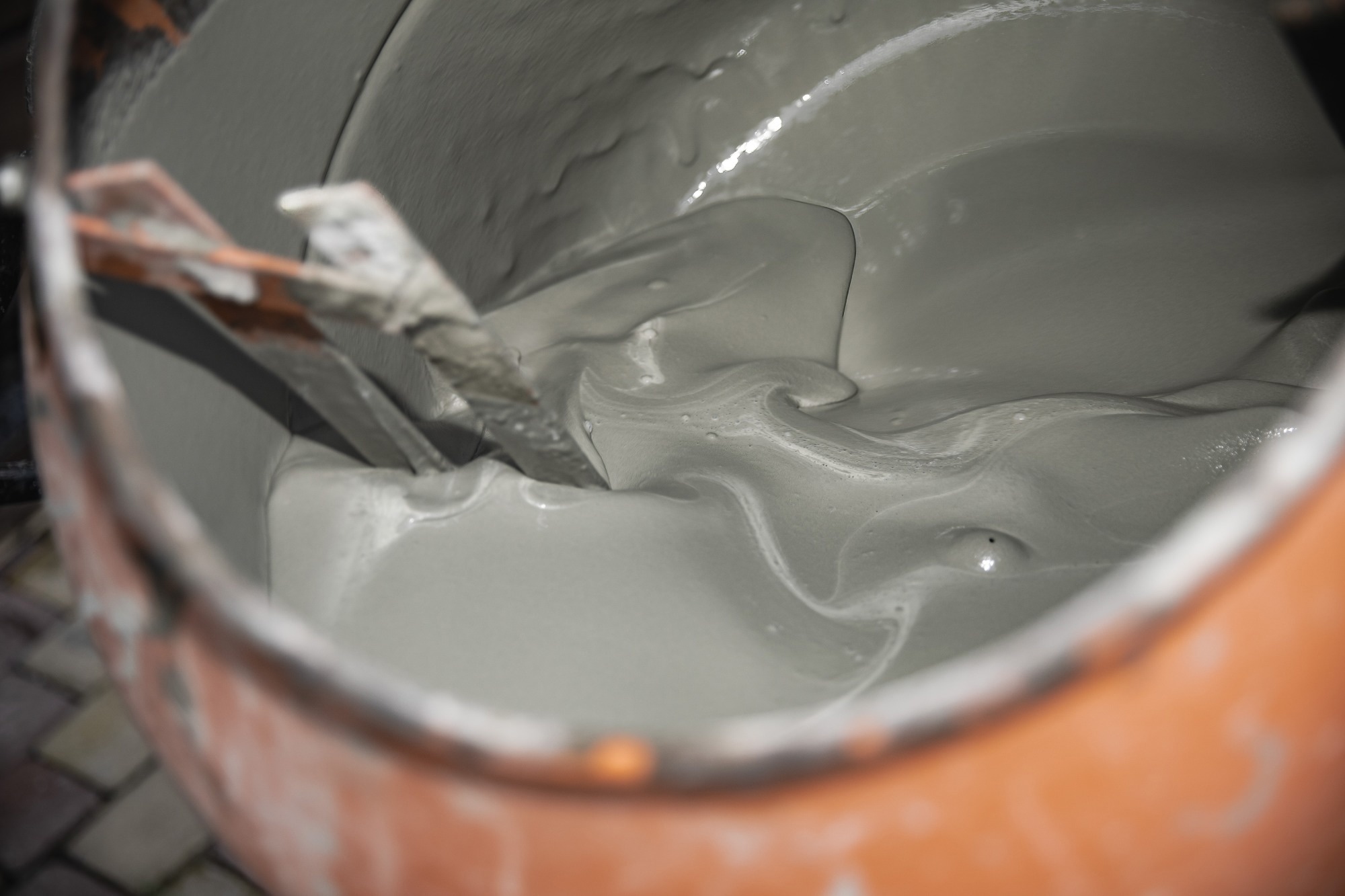
Study: Integration of machine learning and microstructural characterization for strength forecasting with silica fume and M-sand for sustainable concrete. Image Credit: Natali-Natali love/Shutterstock.com
A paper recently published in Scientific Reports has evaluated a range of sustainable concrete mixes incorporating varying levels of silica fume, manufactured sand (m-sand), and fly ash. The study identifies an optimal formulation that enhances both microstructural and mechanical properties, supported by thermogravimetric analysis (TGA), scanning electron microscopy (SEM), energy-dispersive spectroscopy (EDS), and machine learning (ML) models.
Sustainable Concrete Strength Prediction
This work builds on a growing need to address the environmental impact of cement production, which is expected to increase significantly by 2030 due to rising demand from urbanization and economic growth. As Portland cement remains a major source of greenhouse gas emissions, attention has shifted toward more sustainable alternatives.
At the same time, the depletion of natural river sand and the environmental cost of aggregate extraction are pushing the construction industry to reconsider conventional materials. In response, researchers and practitioners are increasingly incorporating substitutes such as m-sand, silica fume, and fly ash to reduce both carbon footprint and resource consumption.
However, improving sustainability introduces new complexity.
Earlier studies, such as those examining silica fume with recycled aggregates, show that performance varies widely depending on mix proportions. For instance, while certain combinations enhance compressive strength, others reduce shear performance. This variability highlights a key challenge when it comes to predicting concrete strength, as it becomes much more difficult as more alternative materials are introduced.
Traditional models often struggle to capture these interactions. While machine learning does offer a way to identify patterns, its effectiveness can be limited if it does not have enough data and microstructural insight. This gap sets the stage for the present study.
The Study
To address these challenges, the researchers designed an experimental program that directly connects material composition, microstructure, and predictive modeling.
They prepared a series of ternary concrete mixes using 10 % fly ash and 100 % m-sand, while varying silica fume content from 0 % to 24 %. This structured approach allowed them to isolate how each component influences hydration and strength development.
Beyond simply measuring performance, the study integrates microstructural analysis with machine learning. Mechanical properties like compressive, tensile, and flexural strength, along with ultrasonic pulse velocity, were all evaluated at multiple curing stages (7, 28, and 90 days). TGA and SEM-EDS were also used to examine hydration products and internal structure at 28 days.
This combined methodology addresses several gaps in existing research, particularly the lack of:
- Integrated studies on silica fume and fly ash with m-sand
- Clear links between microstructure and mechanical behavior
- Reliable ML models tailored to sustainable ternary mixes
To strengthen predictive capability, the researchers applied a range of ML techniques, including ANN, AdaBoost, XGBoost, gradient boosting, random forest, and LASSO, ensuring a comprehensive comparison of model performance.
Findings
With this framework in place, the results provide a clear progression from material design to performance outcomes.
Across all mixes, partial cement replacement with silica fume and the use of m-sand consistently improved mechanical properties compared to conventional concrete. The most effective composition (12 % silica fume with 10 % fly ash) appeared to be a more balanced solution.
At 28 days, this mix achieved notable gains in compressive, tensile, and flexural strength, while ultrasonic pulse velocity confirmed high overall quality. These improvements are closely tied to microstructural changes observed during analysis.
TGA results revealed temperature-dependent decomposition processes, while SEM-EDS showed enhanced formation of calcium-silicate-hydrate (C–S–H) gel and a denser interfacial transition zone. Together, these features explain the observed strength gains.
Importantly, the ML models mirrored these findings. Gradient boosting delivered the most accurate predictions, followed by AdaBoost and other ensemble methods. At the same time, feature importance analysis reinforced the idea that curing age plays a more significant role in strength development than any single material component.
Conclusion
By linking sustainability, microstructure, and predictive modeling in a single framework, the study offers a more cohesive understanding of ternary concrete performance. The identified optimal mix not only improves strength and durability but also reduces environmental impact.
More importantly, the findings show how combining experimental analysis with machine learning can move beyond isolated observations toward more reliable, data-informed material design. As sustainable construction materials become more complex, this kind of integrated approach will be increasingly important for both research and practical applications.
Taken together, the study identifies a high-performing mix and demonstrates a scalable method when it comes to evaluating and predicting next-generation concrete systems.
Journal Reference
Chaitanya, B. K., Sri Durga, C. S., Thatikonda, N., Mitikie, B. B., Madhavi, Y., & Venkatesh, C. (2026). Integration of machine learning and microstructural characterization for strength forecasting with silica fume and M-sand for sustainable concrete. Scientific Reports, 16, 8858. DOI: 10.1038/s41598-026-43410-1, https://www.nature.com/articles/s41598-026-43410-1
Disclaimer: The views expressed here are those of the author expressed in their private capacity and do not necessarily represent the views of AZoM.com Limited T/A AZoNetwork the owner and operator of this website. This disclaimer forms part of the Terms and conditions of use of this website.