*Important notice: This news reports on an unedited version of the paper which has been accepted. and is awaiting final editing. Scientific Reports sometimes publishes preliminary scientific reports that are not fully edited and, therefore, should not be regarded as conclusive or treated as established information.
Secondary recycled concrete enables additional aggregate reuse in construction, but higher replacement ratios reduce crack resistance and durability, making controlled use around 50% important for circular building materials applications today.
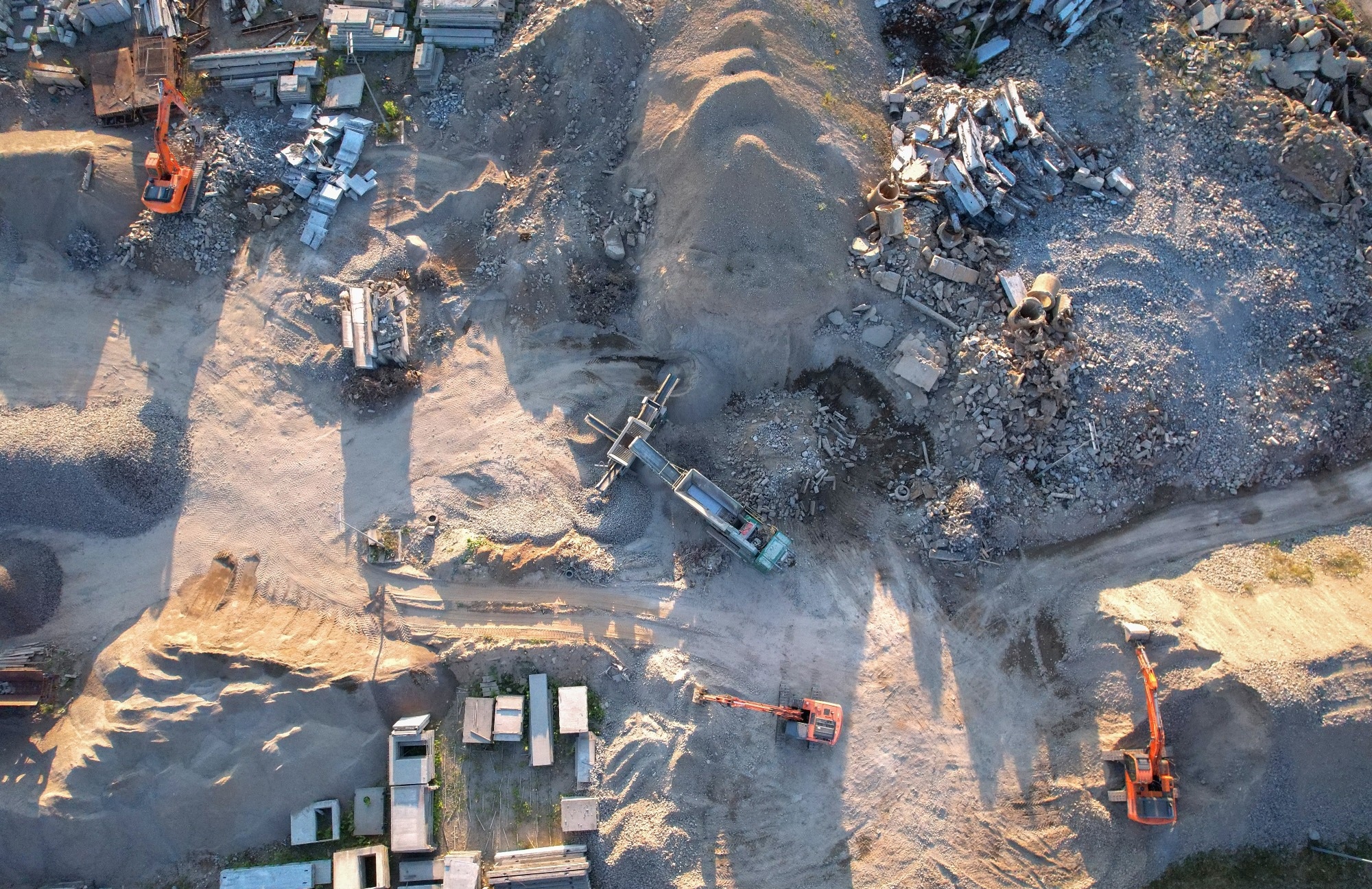 Study: Mechanical and durability investigation of concrete made with natural, recycled, and secondary recycled coarse aggregate. Image Credit: Maksim Safaniuk/Shutterstock
In a recent research article published in Scientific Reports, researchers investigated the characteristics of concrete produced with natural, recycled, and secondary-recycled coarse aggregates, demonstrating that secondary-recycled concrete can be feasibly utilized in construction applications when the secondary-recycled aggregate replacement ratio is limited to 50%.
Secondary Aggregate Concrete Recycling
In the construction sector, recycled aggregate concrete has emerged as an important strategy for reducing construction and demolition waste while conserving natural resources. The growing use of recycled concrete structures has demonstrated significant environmental and economic benefits; however, an important challenge arises when they reach the end of their service life.
The demolition of recycled aggregate concrete generates a new generation of waste materials, raising questions regarding their subsequent reuse and recyclability. One promising solution is the production of secondary recycled aggregate, obtained by crushing recycled concrete and reusing it in the manufacture of new concrete.
Despite its sustainability advantages, secondary recycled aggregate generally has poorer physical characteristics than conventional recycled aggregate because it contains additional layers of adhered mortar, higher porosity, increased water absorption, and more microcracks.
These characteristics may adversely affect the performance of secondary recycled concrete, particularly with respect to durability and long-term structural reliability. Therefore, understanding whether secondary recycled aggregate can be effectively reused in structural concrete is essential for achieving a circular economy in the construction industry.
Experimental Design and Characterization
Nine concrete mixtures were prepared using natural coarse aggregate, recycled coarse aggregate (RCA), and secondary recycled coarse aggregate (RRCA) at replacement levels of 0%, 25%, 50%, 75%, and 100%. RCA was produced by crushing laboratory-cast concrete, while RRCA was obtained by crushing recycled concrete specimens. All aggregates were processed under identical conditions and adjusted to similar gradations.
Concrete performance was evaluated through cracking, mechanical, and durability tests. Crack resistance was assessed using slab cracking tests that monitored crack initiation, width, length, and total crack area. Mechanical properties were determined through compressive and splitting tensile strength tests at 7 and 28 days. Durability was examined using electric flux measurements to assess chloride permeability and freeze–thaw tests to evaluate mass loss and relative dynamic elastic modulus.
To investigate performance mechanisms, nuclear magnetic resonance was used to characterize pore structure, while scanning electron microscopy was employed to examine hydration products, microcracks, interfacial zones, and overall microstructural features.
Performance Evaluation and Mechanisms
The results showed that increasing the replacement ratio of recycled and secondary recycled aggregates generally reduced concrete performance, with crack resistance being particularly sensitive to aggregate quality. Recycled and secondary recycled concretes exhibited earlier crack initiation and larger crack areas than conventional concrete, and crack width, length, and total crack area increased with higher aggregate replacement levels.
This deterioration was more pronounced in secondary recycled concrete due to the higher water absorption and greater number of pre-existing microstructural defects in secondary recycled aggregates. At equivalent replacement ratios, secondary recycled concrete consistently showed poorer resistance to shrinkage-induced cracking than recycled concrete.
Mechanical properties also declined as recycled aggregate content increased. Both compressive and splitting tensile strengths decreased due to adhered mortar, increased porosity, and additional interfacial transition zones. However, secondary recycled concrete exhibited strength values comparable to those of recycled concrete, with only marginal reductions observed even at 100% replacement. This suggests that the additional defects in secondary recycled aggregates have a limited impact on load-bearing capacity.
In contrast, durability properties were significantly affected. Electric flux values increased with aggregate replacement, indicating increased chloride-ion permeability and reduced resistance to aggressive environments. Secondary recycled concrete consistently exhibited higher permeability than recycled concrete due to greater pore connectivity and microcrack density.
Saving this for later? Download a PDF here.
Similarly, freeze-thaw testing revealed greater mass loss and a lower relative dynamic elastic modulus as replacement levels increased, with secondary recycled concrete exhibiting more severe deterioration due to its higher water absorption and pore volume.
Microstructural analyses supported these findings. Nuclear magnetic resonance results indicated increased pore volume and larger pore sizes with higher recycled aggregate content. Secondary recycled concrete contained substantially more transition pores than recycled concrete, while differences in gel and macropores were minimal. These transition pores had little effect on strength but significantly reduced impermeability and frost resistance by facilitating fluid transport through the concrete matrix.
Implications for Sustainable Construction
This study demonstrates that secondary recycled coarse aggregate can serve as a viable alternative to conventional aggregates in concrete production, supporting the development of a more circular and sustainable construction industry.
Although increasing the proportion of recycled and secondary recycled aggregates led to reductions in crack resistance, durability, and mechanical performance, the extent of deterioration varied among different properties.
These findings highlight the feasibility of multiple recycling cycles for concrete materials and provide valuable guidance for the practical application of secondary recycled aggregates in sustainable construction projects.
Journal Reference
Zhang M., Ji X., et al. (2026). Mechanical and durability investigation of concrete made with natural, recycled, and secondary recycled coarse aggregate. Scientific Reports. DOI: 10.1038/s41598-026-55372-5, https://www.nature.com/articles/s41598-026-55372-5