Graphene nanoplatelets improve concrete strength, durability, and permeability by refining microstructure and reducing cracking. Optimal dosages significantly enhance mechanical performance and environmental resistance, supporting development of longer-lasting, sustainable construction materials.
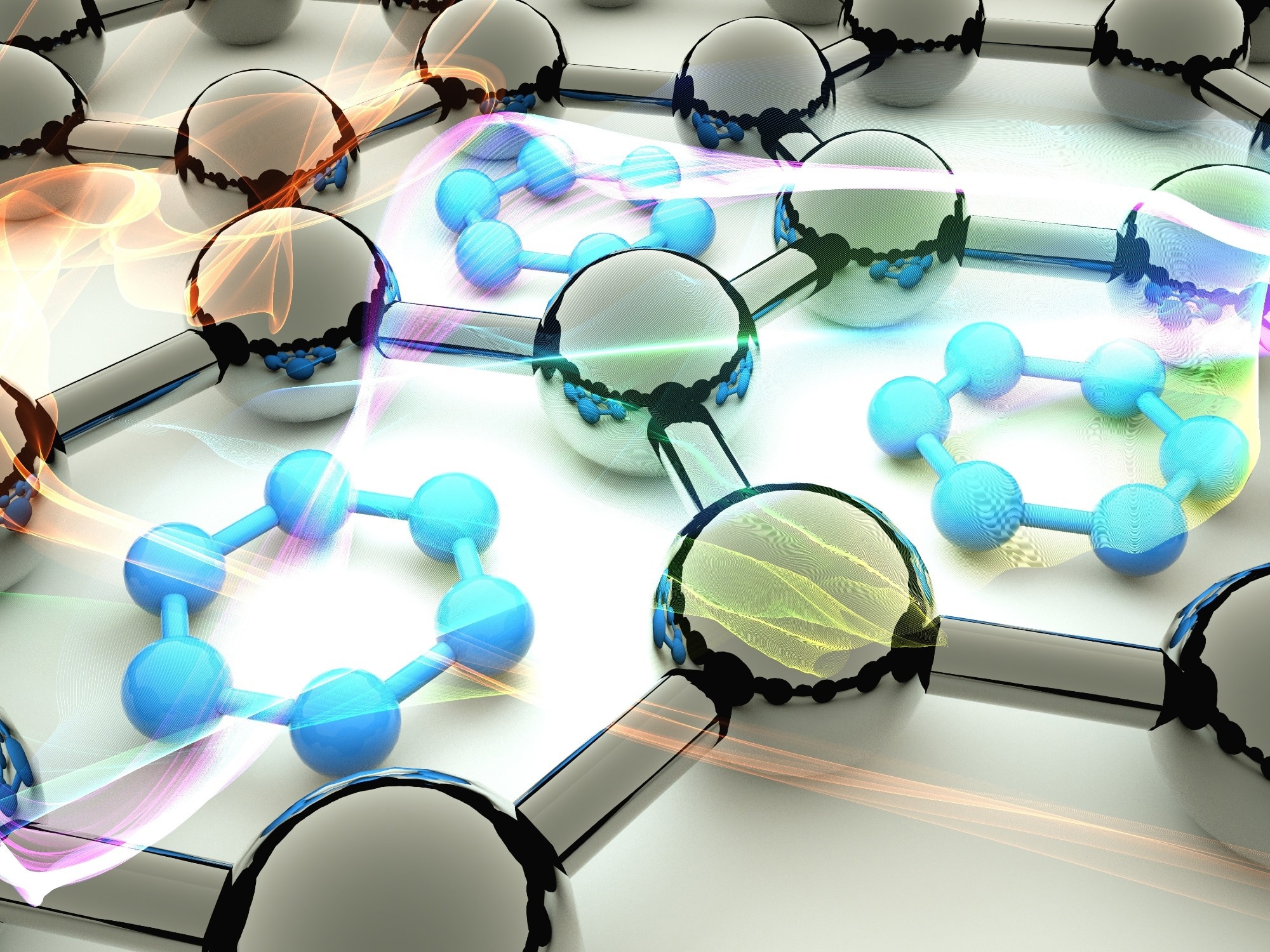 Study: Effect of graphene nanoplatelets on the behaviour of cementitious compounds: an experimental investigation. Image Credit: High level specialist/Shutterstock
A recent study published in Scientific Reports demonstrated that incorporating graphene nanoplatelets (GNPs) improves the strength and durability of cementitious materials. Researchers found that optimized GNP concentrations help reduce brittleness and water absorption, achieving compressive strengths of up to 47 MPa.
These findings highlight the potential of GNPs for developing high-performance, more sustainable concrete, offering a key approach to improving structural reliability and longevity.
The Role of Graphene in Modern Construction
GNPs are a layered form of graphene that exhibit exceptional mechanical strength, flexibility, and electrical conductivity due to their two-dimensional (2D) structure. Their incorporation into cementitious materials addresses issues in traditional concrete, such as brittleness and micro-cracking, thereby enhancing durability and structural integrity.
At the nanoscale, GNPs interact with cement particles to refine the microstructure, enhance bonding between the cement matrix and aggregates, and reduce permeability, resulting in superior overall performance. These properties make GNPs relevant to the development of resilient construction materials, as the industry aims to mitigate environmental degradation.
Advancements in graphene production have enabled the cost-effective manufacturing of high-quality GNPs, expanding their applications in cement-based systems. This integration offers a solution to enhance performance and durability against environmental stresses.
Experimental Investigation of GNPs in Concrete
Researchers conducted experiments using 25 concrete mixtures across five strength grades (M20 to M40), with GNP concentrations ranging from 0% to 20% by weight of cement. They evaluated fresh-state behavior, mechanical performance, durability, and microstructural characteristics to determine optimal GNP dosages/concentrations.
For mixture preparation, GNPs were dispersed in water with a polycarboxylate-based superplasticizer to prevent agglomeration, then subjected to high-shear mixing to ensure uniform distribution within the cement matrix. The specimens were cast, cured, and tested in accordance with International and American standards (IS 4031, ASTM).
Fresh-state properties were assessed using workability tests, including slump and compaction factor tests. Additionally, mechanical performance was evaluated using compressive, flexural, and split tensile strength tests. Furthermore, durability was evaluated using sulfate resistance, water absorption, and rapid chloride permeability tests.
Microstructural analyses were performed using scanning electron microscopy (SEM) and X-ray diffraction (XRD) to investigate changes in morphology, hydration kinetics, and the formation of calcium silicate hydrate (C-S-H). This approach enabled a detailed understanding of the dose-dependent effects of GNPs on concrete performance.
Key Outcomes and Their Significance
The use of GNPs significantly improved the mechanical properties and durability of concrete. Compressive strength reached about 47 MPa, while flexural strength peaked at 7.3 MPa, with increases in split tensile strength compared to control mixtures. These enhancements correspond to strength gains of up to 30% in compression and 25% in flexure at optimal GNP dosages, indicating improved bonding and load transfer within the cement matrix.
Durability also improved substantially, with water absorption reduced from about 4.5% to 1.6%, sulfate expansion decreasing from 12.5% to 3.8%, and chloride permeability dropping to about 650 coulombs. These results reflect enhanced resistance to aggressive environmental conditions, including sulfate attack and chloride ion ingress.
These improvements were attributed to GNPs refining the pore structure and promoting crack-bridging at the nanoscale, resulting in a denser, more durable microstructure. While maximum performance was observed at 20% GNP content, an optimal range of 5-10% provided the best balance between strength, durability, and workability.
Additionally, the reduced permeability and improved efficiency of GNP-modified concrete indicate potential for lowering the overall carbon footprint of construction materials. Overall, these outcomes support more sustainable infrastructure development worldwide.
Practical Applications of GNP-Modified Concrete
The incorporation of GNPs in concrete has significant implications for the construction industry. Improved strength and durability enable the development of longer-lasting structures with reduced maintenance needs, particularly in harsh environments.
These performance gains support a wide range of applications, including in high-performance infrastructure, precast components, and repair materials for existing structures. Furthermore, enhanced resistance to environmental degradation extends service life, providing economic benefits to stakeholders across the construction sector.
Conclusion and Future Directions
While GNPs significantly enhanced the mechanical strength and durability of concrete, practical implementation requires balancing performance with workability. An optimal dosage range of 5% to 10% could improve properties without compromising mix handling.
The findings demonstrate that GNPs effectively address key limitations of traditional cementitious materials, enabling the development of high-performance, durable, and more sustainable concrete systems suited for modern construction demands. This research contributes to the growing integration of nanotechnology in construction materials, highlighting graphene as a promising component in next-generation infrastructure solutions.
Further work should focus on long-term performance under real-world conditions and the economic feasibility of large-scale production, which may redefine material standards and support the development of resilient, efficient, and sustainable built environments.
Journal Reference
Anitha Selvasofia, S.D., & et al. (2026). Effect of graphene nanoplatelets on the behaviour of cementitious compounds: an experimental investigation. Sci Rep. DOI: 10.1038/s41598-026-47524-4, https://www.nature.com/articles/s41598-026-47524-4
Disclaimer: The views expressed here are those of the author expressed in their private capacity and do not necessarily represent the views of AZoM.com Limited T/A AZoNetwork the owner and operator of this website. This disclaimer forms part of the Terms and conditions of use of this website.