Glass fiber powder from wind turbine waste improves hybrid cement performance when activated with Ca(OH)2. It supports circular construction, reduces waste, and enables low-carbon binders with acceptable strength and durability.
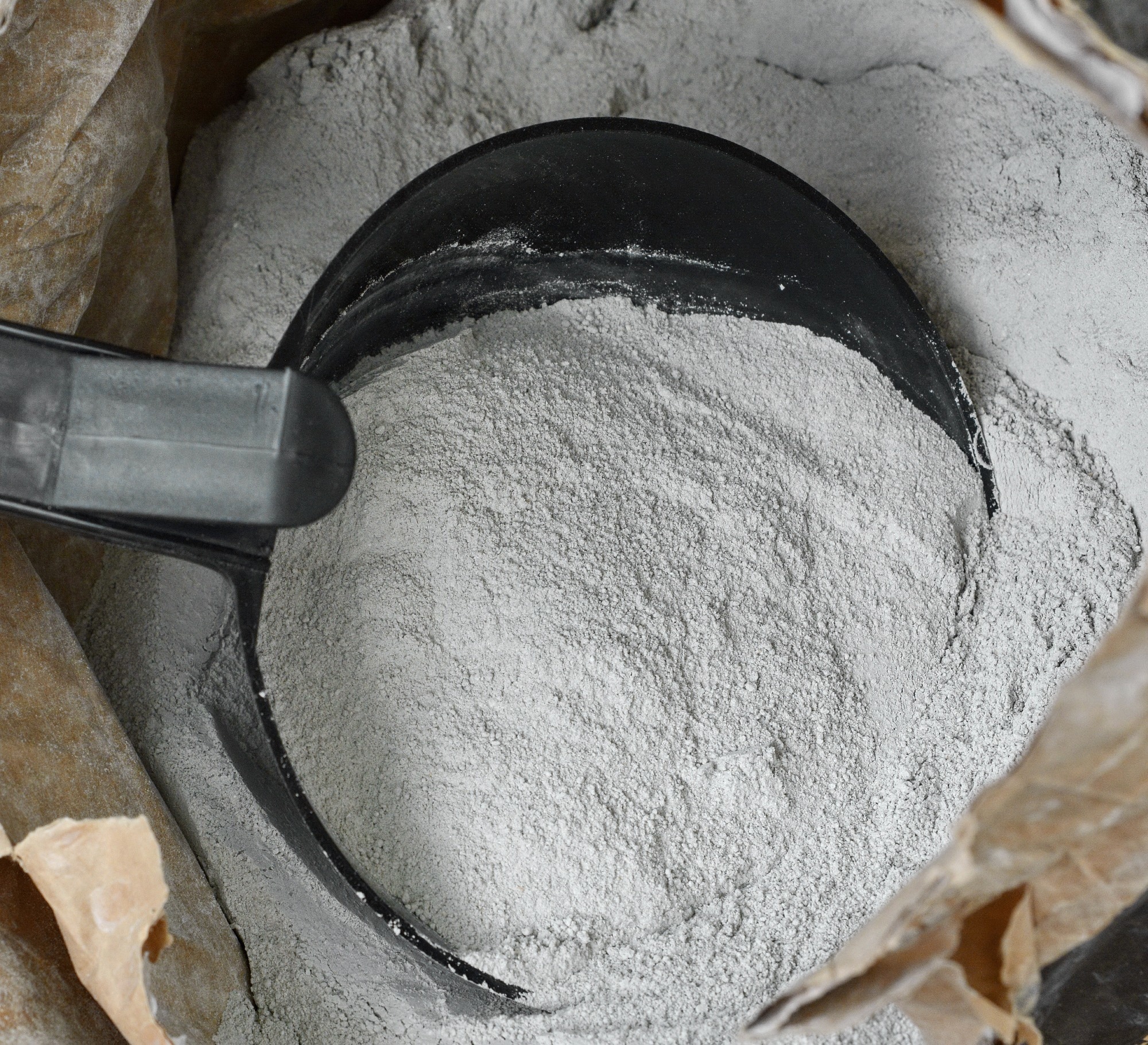 Study: Incorporation of glass fibre powder derived from wind turbine blades in OPC-alkali-activated hybrid binders. Image Credit: milart/Shutterstock.com
A recent study published in Construction and Building Materials examined the use of glass fiber powder (GFP) derived from WTBs in ordinary Portland cement-alkali-activated hybrid binders (OPC-AAHBs) to address waste management and support sustainable construction.
Recycling Challenges and Opportunities for WTBs
WTBs are primarily composed of thermoset composites, which consist of glass fibers embedded in polymer matrices, such as epoxy resins, making them difficult to recycle. Existing disposal methods, including landfilling and incineration, cause environmental harm and result in the loss of valuable materials.
Mechanical recycling, involving crushing and grinding, is widely used due to its simplicity and lower environmental impact. Chemical methods preserve fibre integrity but require harsh conditions and specialized equipment, whereas thermal treatments enable fibre recovery at high energy costs, potentially leading to property degradation.
The recovered glass fibers, which constitute 60-75% of WTB composites and are silica-rich, can be repurposed as supplementary cementitious materials for construction. Although GFP exhibits limited reactivity, alkaline activation can enhance its interaction with calcium hydroxide, promoting the formation of additional calcium silicate hydrate (C-S-H) and thereby improving mechanical performance. This study examined the incorporation of GFP into OPC-AAHBs as a sustainable approach to waste management and material development.
Incorporating Glass Fiber Powder into Hybrid Binders
Researchers evaluated the incorporation of GFP from waste wind turbine blades into OPC-AAHBs through a series of structured experiments. The raw WTB material was thermally treated to produce GFP, which was characterized for its chemical composition and particle size, showing higher silica (44.46%) and alumina (10.54%) contents compared to conventional Portland cement.
Cement paste samples were prepared with GFP replacing 30% to 70% of Portland cement and activated using sodium hydroxide (NaOH) or calcium hydroxide (Ca(OH)2), with a constant water-to-binder ratio of 0.40. The experimental design focused on determining the maximum feasible replacement level, identifying optimal activation conditions, and examining interactions between cement hydration and alkali activation.
Samples were tested for compressive strength and hydration behavior using isothermal calorimetry. At the same time, phase composition and reaction products were analyzed through X-ray diffraction (XRD), thermogravimetric analysis (TGA), and solid-state nuclear magnetic resonance (NMR) spectroscopy. These methods enabled the evaluation of hydration activation and the identification of optimal replacement levels and activation conditions.
Mechanical Performance and Reactivity of GFP
The direct replacement of Portland cement with GFP reduced the compressive strength due to dilution effects that limit the formation of hydration products, with the strength loss increasing at higher replacement levels.
Pastes without alkali activation exhibited significantly lower strength as compared to the OPC reference paste, with reductions of approximately 21.0%, 27.7%, 36.6%, and 49.0% at 30%, 40%, 50%, and 60% GFP replacement, respectively.
The use of NaOH as an activator further reduced compressive strength by suppressing cement hydration, despite inducing rapid early heat release associated with alkali activation. In contrast, Ca(OH)2 activation improved mechanical performance by maintaining hydration processes and providing a compatible environment for GFP incorporation.
The formulation containing 30% GFP and 3% Ca(OH)2 exhibited improved performance, with only a 22.2% reduction in strength at 28 days compared to the reference. Calorimetry results confirmed that NaOH suppresses hydration, while Ca(OH)2 supports sustained reactions.
Microstructural analysis using NMR indicated that Ca(OH)2 promotes the gradual release of reactive silica from GFP and facilitates the formation of calcium-aluminosilicate hydrate (C-A-S-H), contributing to enhanced long-term strength. These findings highlight the competitive interaction between cement hydration and alkali activation, demonstrating that Ca(OH)2 is more suitable than NaOH for developing effective GFP-based OPC-AAHB systems.
Applications for Sustainable Construction Practices
This research demonstrates that GFP derived from waste wind turbine blades can be effectively incorporated into OPC-AAHB systems as a supplementary cementitious material, particularly when activated with Ca(OH)2.
This approach provides a practical solution for managing composite waste while reducing the carbon footprint of cement production. The integration of GFP into construction materials supports the development of low-carbon, high-performance binders, aligning with sustainability goals and circular economy principles.
Conclusion and Future Directions
This study demonstrates the feasibility of incorporating GFP from waste wind turbine blades into OPC-AAHB systems as a sustainable construction material. It show that Ca(OH)2 is a more effective activator than NaOH, partially compensating for the strength loss associated with cement replacement and supporting the development of low-carbon binders.
Future work should focus on optimizing mix designs, evaluating long-term performance and durability, assessing properties such as shrinkage and mechanical behavior under standardized conditions, and exploring alternative activation methods and material variability. Such efforts will support the application of GFP-based binders in sustainable construction.
Download the PDF of this page here
Journal Reference
Mao, Y., He, L., & Wu, C. (2026). Incorporation of glass fibre powder derived from wind turbine blades in OPC-alkali-activated hybrid binders. Construction and Building Materials, 523(146275). DOI: 10.1016/j.conbuildmat.2026.146275, https://www.sciencedirect.com/science/article/pii/S0950061826011815
Disclaimer: The views expressed here are those of the author expressed in their private capacity and do not necessarily represent the views of AZoM.com Limited T/A AZoNetwork the owner and operator of this website. This disclaimer forms part of the Terms and conditions of use of this website.