Graphene oxide–modified nano-concrete significantly improves strength retention and resists sulfuric acid degradation. Microstructural densification reduces porosity and cracking, enabling durable, long-lasting infrastructure for aggressive sewer environments.
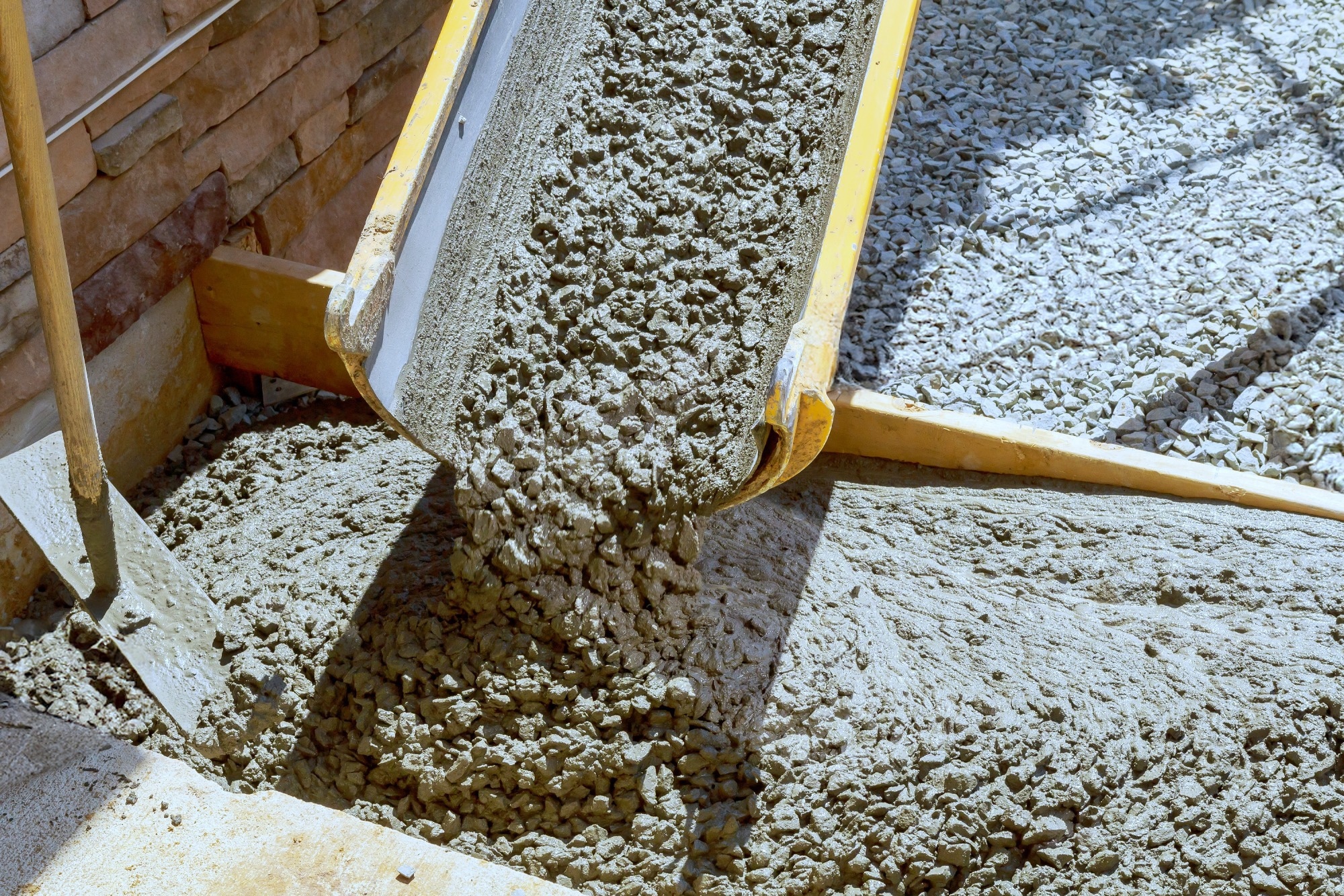 Study: Degradation resistance of graphene oxide-tailored ternary blended concrete under prolonged sulfuric acid exposure. Image Credit: ungvar/Shutterstock
A new study in Cement and Concrete Research investigates the durability of graphene oxide-tailored ternary blended nano-concrete composites (GO-TBNCCs) under severe sulfuric acid exposure in sewer environments. The optimized nano-concrete composites show significantly higher strength retention, reduced degradation, and improved service life. These results advance the development of more durable and sustainable concrete for aggressive infrastructure conditions.
Why Conventional Concrete Fails in Sewer Conditions
Sulfuric acid generated through biological and chemical processes drives concrete degradation in sewer systems. This corrosion significantly shortens infrastructure lifespan and creates major economic and environmental challenges. Conventional approaches that use supplementary cementitious materials such as fly ash and slag improve durability but remain insufficient under prolonged acid exposure.
This study addresses a key research gap by examining the lack of long-term evaluation of nano-modified concrete under highly aggressive acid conditions. While earlier research demonstrates short-term improvements using graphene oxide, it does not adequately assess long-term performance.
The research evaluates both macro-level performance (strength, mass loss, and dimensional stability) and microstructural mechanisms (pore structure, hydration phases, and chemical interactions). It identifies an optimal mix that significantly enhances strength retention and degradation resistance, highlighting the potential of GO-based nano-reinforcement for long-term infrastructure applications.
Material Design and Evaluation of Nano-Concrete Composites
The team prepared twelve concrete mixes with varying proportions of FA (20%), GGBFS (20–40%), and p-GO (0.0275–0.0639 wt%), while maintaining a constant water-to-cementitious ratio of 0.38. They pre-treated the graphene oxide using a three-stage process to ensure uniform dispersion and prevent agglomeration. Then, they cast specimens into cubes and cylinders, cured them for 28 days, and then exposed them to a sulfuric acid solution (pH 1.0) for up to 120 days to simulate aggressive sewer conditions. Control samples were cured in water for direct comparison.
The team conducted a comprehensive testing program to evaluate degradation behavior, including compressive strength, mass loss, dimensional changes, and degradation depth measured using phenolphthalein indicators. They also performed microstructural characterization using X-ray diffraction (XRD), Fourier transform infrared spectroscopy (FTIR), transmission electron microscopy (TEM), and scanning electron microscopy with energy-dispersive X-ray spectroscopy (SEM-EDX). The researchers further analyzed pore structure using digital image processing to quantify porosity, pore size, and distribution. They validated the results statistically using ANOVA and t-tests, focusing on 120-day exposure data to assess long-term performance.
Performance of Nano-Concrete Composites in Acidic Conditions
The results show that incorporating p-GO significantly enhances the performance of ternary blended concrete under acidic conditions. The optimal mix (20F40GB639GO) achieved approximately 123% higher residual compressive strength than the acid-exposed control. It also reduced strength loss by about 70%, while mass and dimensional losses decreased by up to 86% and 91%, respectively.
Degradation depth, a key indicator of corrosion, was found to be decreased by approximately 92%, demonstrating strong resistance to acid penetration. The surface pH of GO-modified samples remained above 8.5, indicating effective buffering against acidic environments.
Microstructural analysis explains these improvements. The addition of p-GO promotes the formation of modified hydration phases that fill voids and seal micro-cracks. SEM observations reveal a denser matrix with fewer pores and tighter crack patterns compared to the porous and cracked structure of control samples.
Pore structure analysis indicates that porosity reduces up to ~84% along with smaller and less connected pores. This refinement restricts the entry of sulfate ions, preventing the formation of harmful products such as gypsum and ettringite. At the chemical level, p-GO forms stable bonds (Si–O–GO and Al–O–GO) with hydration products. These interactions reduce calcium hydroxide availability and promote the formation of stronger C–S–H and C–A–S–H gels. Overall, the combined effect of p-GO, FA, and GGBFS creates a denser, more cohesive, and chemically stable matrix that resists degradation under prolonged acidic exposure.
Sustainable Solutions for Durable Concrete Construction
This study confirms that GO-tailored ternary blended concrete offers a highly effective solution for improving durability in aggressive environments such as sewer systems. The incorporation of small amounts of p-GO leads to significant enhancements in mechanical strength, microstructural integrity, and resistance to acid-induced degradation. The optimal mix showed better strength retention and lower damage due to improved microstructure and chemical stability.
The fabricated nano-concrete composites have important potential applications in infrastructure design and maintenance. The use of GO-TBNCCs can extend the service life of concrete structures, reduce repair costs, and enhance sustainability by incorporating industrial by-products such as fly ash and slag. Furthermore, the study provides new insights into the role of nanomaterials in modifying hydration chemistry and improving durability at both micro and macro scales. This opens opportunities for developing next-generation construction materials tailored for extreme environments.
Future research should focus on field-scale validation, long-term monitoring under real service conditions, and optimization of large-scale production methods. Overall, GO-TBNCCs represent a promising advancement in durable concrete technology for modern infrastructure challenges.
Download the PDF of this page here
Journal Reference
Anwar, A., Liu, X., et al. (2026). Degradation resistance of graphene oxide-tailored ternary blended concrete under prolonged sulfuric acid exposure. Cement and Concrete Research, 205, 108215. DOI: 10.1016/j.cemconres.2026.108215, https://www.sciencedirect.com/science/article/pii/S0008884626000840
Disclaimer: The views expressed here are those of the author expressed in their private capacity and do not necessarily represent the views of AZoM.com Limited T/A AZoNetwork the owner and operator of this website. This disclaimer forms part of the Terms and conditions of use of this website.