*Important notice: This news reports on an unedited version of the paper which has been accepted. and is awaiting final editing. Scientific Reports sometimes publishes preliminary scientific reports that are not fully edited and, therefore, should not be regarded as conclusive or treated as established information.
Low-temperature thermal treatment restores binding capacity in wood-cement waste, enabling eco-friendly biocomposites. The process reduces emissions, improves strength, and supports circular construction with lower environmental impact.
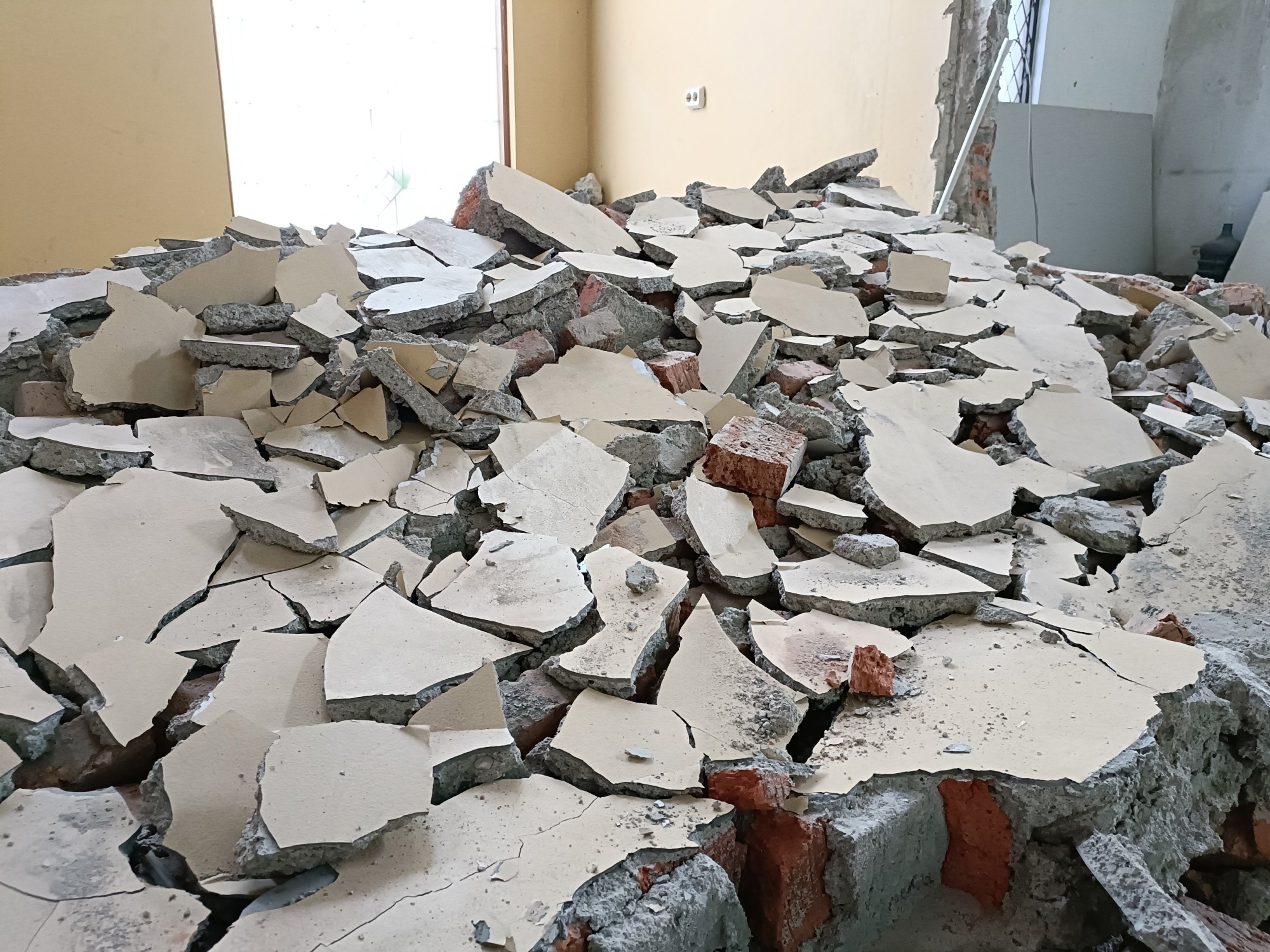 Study: Evaluating the binder performance and biocomposite applications of thermally reactivated wood-wool cement panel waste. Image Credit: emenbi/Shutterstock
A paper recently published in Scientific Reports investigated the thermal reactivation of sanding dust (SD), a by-product of wood-wool cement panel manufacturing, to address the research gap in complex organic-mineral residue upcycling.
Cement Reactivation for Sustainability
The construction sector significantly impacts global resource consumption and the environment, with construction materials accounting for half of all extracted raw materials globally, while concrete production accounts for 8% of global carbon dioxide emissions. Thus, the sector has substantial sustainability implications.
Cement binder reactivation can reduce resource consumption and environmental impact in this sector. The reactivation’s scientific mechanism involves hydrated compounds' thermal dehydration, and the binding capacity is restored upon subsequent rehydration. Yet, this treatment’s intensity dictates a key trade-off between environmental impact and binder quality.
For example, the entire hydraulic capacity is restored when end-of-life cement is reclinkered at 1450 °C, but the process exceeds the 600–750 °C decarbonation threshold, resulting in the release of stored carbon dioxide unless costly capture technologies are used. Conversely, a sustainable alternative is reactivation at low temperatures (450 °C), lower than the decarbonation limit, for carbon-sensitive wastes.
Portlandite is selectively converted into reactive precursors while maintaining calcite stability, thereby sequestering carbon within the material structure. Thus, the method provides adequate binding properties required for specific applications like low-density biocomposites while minimizing process emissions.
The Research Gap
Despite circular construction advances, a scientific gap exists regarding the selective reactivation of industrial cementitious byproducts. Specifically, how thermal reactivation selectively recovers the innate hydraulic capacity of complex organic-mineral residues, such as wood-wool cement panel SD, without degrading fibers or releasing carbon dioxide from carbonated phases must be investigated.
Moreover, the direct transformation of manufacturing-line waste into a secondary self-binding raw material through low-temperature (450 °C) treatment is also under-researched.
Evaluation of Thermal SD Reactivation
In this work, researchers studied the thermal SD reactivation to address the research gap in complex organic-mineral residue upcycling and, consequently, overcome the challenge of industrial waste management.
SD, a wood-wool cement panel manufacturing by-product, was obtained from a Latvian wood-wool cement panel plant. Researchers established a low-temperature pathway that restores hydraulic capacity without carbon dioxide release from carbonated phases.
Raw SD was heated for 5 hours at 450 °C, followed by comprehensive physical, chemical, and mineralogical characterization using an X-ray diffractometer (XRD), thermogravimetric analysis (TGA), and a scanning electron microscope (SEM).
The 450 °C temperature was chosen for maximizing portlandite dehydration while remaining below the decarbonation threshold (600 °C). Subsequently, the reactivated binder was used to synthesize low-density, novel biocomposites with manufacturing-line waste as filler.
In this study, researchers shift the focus to the precise mineralogical restoration of industrial paste-rich waste from the existing aggregate-centric recycling, thereby forming a circular pathway that maintains the stable calcite structure’s carbon-sequestering benefits while avoiding the chemical intensity of geopolymerization.
The objective was to demonstrate resource conservation by transforming manufacturing residues into more environmentally friendly secondary raw materials, thereby reducing the construction industry’s ecological footprint.
Download the PDF of this page here
Significance of the Study
Results from the investigation into the heat-treated SD (HTSD)’s properties showed that heat treatment at 450 °C significantly refined the binder’s physical characteristics. As a standalone binder, HTSD’s average particle size reduced from 29.21 µm to 19.11 µm (by 35%), and the Blaine surface area increased from 2420 to 2996 cm²/g.
TGA and XRD analyses confirmed mineralogical transformations, including the decomposition of hydrated phases such as Portlandite and the Larnite formation, a reactive anhydrous clinker phase, indicating successful reactivation beyond simple dehydration.
The reactivated HTSD binder performed substantially better than the original SD, with the start time of the setting decreasing from more than 9 hours to just 40 minutes. Additionally, the 28-day compressive strength increased eightfold from 1.59 MPa to 13.05 MPa, validating restored binding capacity. Life Cycle Assessment results showed a 63% decrease in global warming potential compared to commercial CEM II cement.
The biocomposite analysis demonstrated that increasing the filler proportion in the binder-to-filler (B/F) ratio from 2 to 4 reduced density from 415 kg/m³ to 369 kg/m³ and thermal conductivity from 0.075 to 0.068 W/(m•K), indicating improved insulation performance.
Additionally, the biocomposites realized compressive strengths up to 185 kPa and showed anisotropic mechanical behavior, with higher strength in the forming direction. Biocomposites with HTSD binder consistently showed lower emissions (10–42 kg carbon dioxide eq.), confirming their sustainability.
In conclusion, the study's findings demonstrated the feasibility of transforming SD into a reactive cementitious binder through targeted thermal treatment. The successful subsequent application of this binder in producing new bio-based building materials validated the circular economy approach to manufacturing value-added products from industrial residues.
Journal Reference
Argalis, P. P., Vitola, L., Puzule, L., Zhou, X., Sinka, M., & Bajare, D. (2026). Evaluating the binder performance and biocomposite applications of thermally reactivated wood-wool cement panel waste. Scientific Reports. DOI: 10.1038/s41598-026-48936-y, https://www.nature.com/articles/s41598-026-48936-y
Disclaimer: The views expressed here are those of the author expressed in their private capacity and do not necessarily represent the views of AZoM.com Limited T/A AZoNetwork the owner and operator of this website. This disclaimer forms part of the Terms and conditions of use of this website.