A decision-driven framework evaluates e-waste and recycled concrete for strength, cost, and emissions. Results show near-equivalent performance to conventional concrete while reducing carbon footprint and supporting circular construction practices.
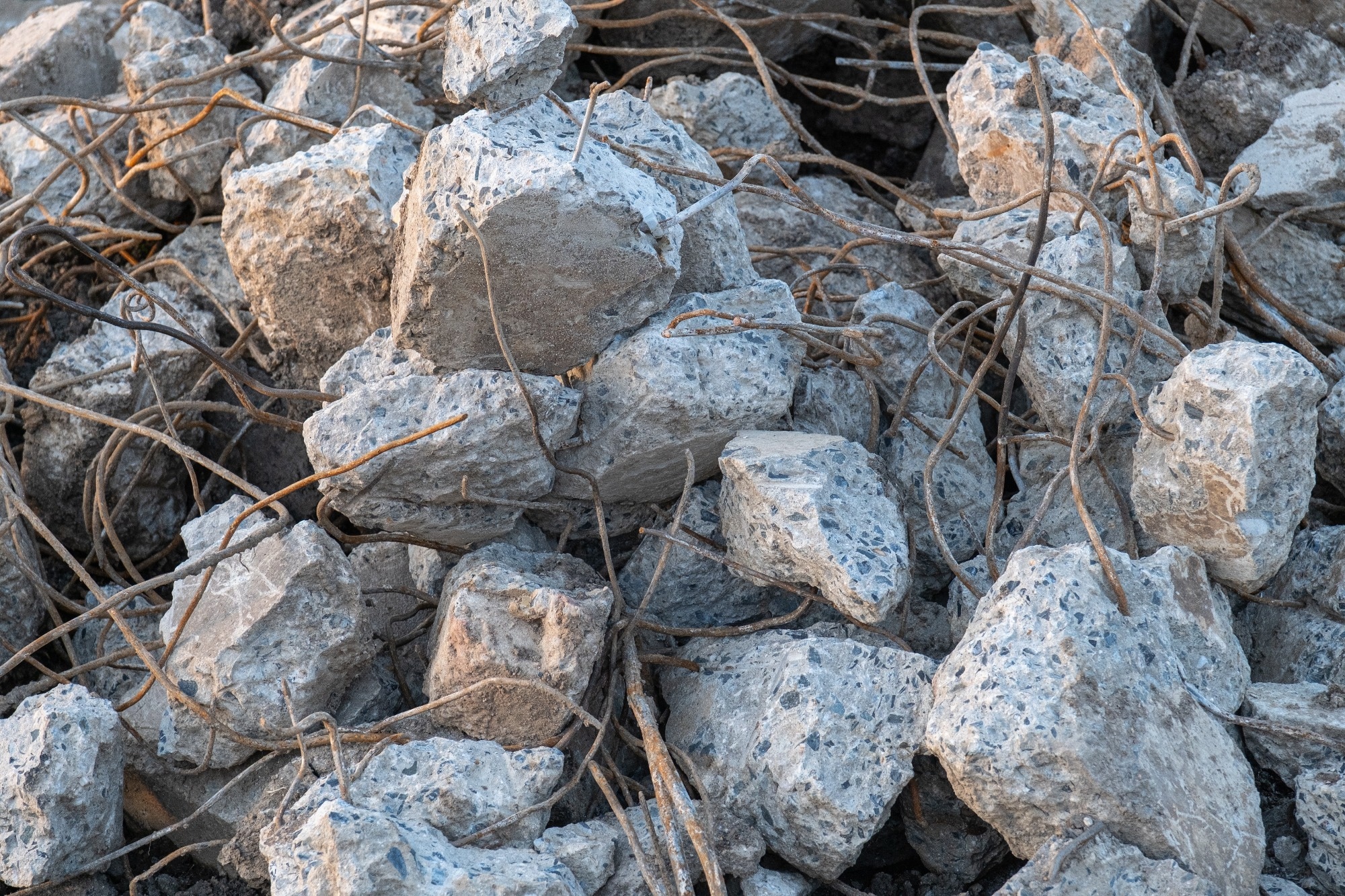 Study: A unified decision oriented framework for sustainability assessment of electronic waste and recycled rubble aggregate concretes. Image Credit: ArieStudio/Shutterstock
The global construction industry is currently facing a critical challenge: meeting growing infrastructure demand while reducing carbon emissions. In a recent study published in the journal Scientific Reports, researchers introduced a decision-oriented framework to evaluate electronic waste concrete (EWC) and recycled rubble aggregate concrete (RWC). The framework integrates mechanical testing, economic analysis, and life-cycle assessment.
These materials can reach up to 97.2% of the compressive strength of conventional concrete. This approach provides a unified tool for assessing performance, cost, and environmental impact, helping bridge the gap between laboratory and practical use.
The Environmental Crisis
Concrete production places a heavy burden on the environment. The cement industry alone accounts for about 8% of global carbon dioxide (CO2) emissions. The extraction of natural aggregates, which make up nearly 70% of concrete volume, is accelerating the depletion of natural resources, with reserves projected to reach 55 billion tons by 2030.
Waste generation is also rising. Construction and demolition waste (CDW) is among the largest global waste categories, while electronic waste reached 62 billion kg in 2022. To address these issues, the industry is turning to circular economy approaches. RCA and e-waste-derived materials can reduce landfill use and conserve natural resources. However, adoption remains limited due to concerns over material consistency, mechanical performance, and the lack of standardized economic and environmental benchmarks.
An Integrated Analytical Protocol for Material Evaluation
Researchers employed a mixed-methods approach to compare conventional and waste-based concrete. The experimental phase followed a 1:2:4 mix proportion for cement, fine aggregate, and coarse aggregate. Three mixes were tested: a control Normal Concrete (NC), Electronic Waste Concrete (EWC) with a 5% e-waste replacement, and Rubble Waste Concrete (RWC) with a 30% demolition waste. Compressive strength was measured after 28 days using ASTM (American Standard for Testing and Materials) C39 standards.
Beyond physical testing, economic performance was evaluated using a Sustainable Earned Value Management (SEVM) framework. Metrics such as Planned Value (PV), Earned Value (EV), and Actual Cost (AC) were used to calculate the Cost Performance Index (CPI).
Simultaneously, environmental impact was assessed through Life Cycle Assessment (LCA) based on ISO (International Standard) 14040/14044 standards, focusing on carbon emissions and resource use. Microstructural analysis was conducted using Scanning Electron Microscopy (SEM-EDX) and X-ray Diffraction (XRD) to examine the interfacial transition zone (ITZ) and material stability. In addition, a survey of 249 construction professionals was conducted to assess industry awareness and identify barriers to adoption.
The Mechanical, Economic, and Ecological Outcomes
The study demonstrated the strong feasibility of waste-modified concrete. RWC reached a compressive strength of 40.00 MPa, closely matching the control mix's 41.17 MPa. EWC also achieved 39.42 MPa. These values confirm that strength remained within acceptable structural tolerance limits, even with 30% aggregate replacement.
Microstructural analysis indicated different behaviors. RWC benefited from strong mechanical interlocking, whereas EWC showed a slightly weaker ITZ due to the smooth, polymeric nature of e-plastics, which explains its minor performance trade-off.
Economically, RWC reduced material costs by 9.7% (about PKR (Pakistani Rupee) 3.84 per three cylinders). EWC was nearly cost-neutral, with a small saving of PKR 0.52.
Environmentally, both materials reduced embodied carbon by about 13.47 kg CO2 per ton. However, the survey indicated a knowledge-practice gap. While 82% of respondents (mostly engineers) had technical awareness, a Relative Importance Index (RII) of 0.593 shows ongoing concerns about durability and the lack of standardized guidelines.
Download the PDF of this page here
Applications for Infrastructure Development
The framework has broad implications for the construction sector. RWC is identified as a ready-to-use material for both structural and non-structural applications. Its strength retention and cost efficiency make it suitable for large urban redevelopment projects, where demolition waste can be reused on-site, reducing transport and logistics costs.
EWC is better suited for controlled, low-load usage such as paving, walkways, and masonry blocks. It safely immobilizes e-plastics within a cement matrix, offering a practical solution for managing complex waste streams. Adoption of these materials can support green building certifications, corporate sustainability goals, and government procurement policies.
Benchmarking for a Decarbonized Future
In summary, this study presents a decision-oriented framework that advances sustainable construction. It relates mechanical performance, economic viability, and stakeholder insights into a single tool for informed decision-making. The findings confirm that waste concrete is technically viable and can reduce the environmental impact of construction.
Future work should focus on long-term durability assessments, including creep, shrinkage, and chemical resistance. Standardized recycling protocols will also be essential for wider adoption. As global carbon-emission regulations tighten, such frameworks will play an important role in driving the construction industry toward a circular economy.
Journal Reference
Bashir, M.T., &. et al. (2026). A unified decision oriented framework for sustainability assessment of electronic waste and recycled rubble aggregate concretes. Sci Rep. DOI: 10.1038/s41598-026-48896-3, https://www.nature.com/articles/s41598-026-48896-3
Disclaimer: The views expressed here are those of the author expressed in their private capacity and do not necessarily represent the views of AZoM.com Limited T/A AZoNetwork the owner and operator of this website. This disclaimer forms part of the Terms and conditions of use of this website.