It’s well known by now that horizontal unloading systems offer an alternative to tipping trailers - an alternative that dramatically reduces the risk of rollovers, improves ground stability, and unlocks unloading in environments where tipping simply isn’t possible. But as industries such as waste, recycling, biomass, and agriculture push for higher uptime and lower environmental impact, the expectations placed on Walking Floor® systems have evolved.
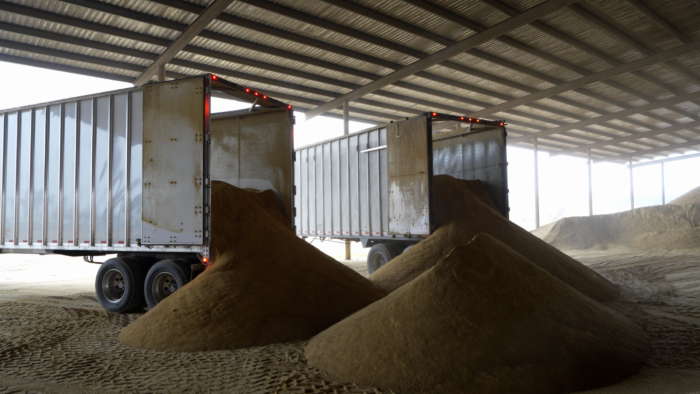 Image Credit: KEITH Manufacturing Co.
RX Technology emerged from exactly this moment of pressure and possibility. Developed through years of field feedback, engineering experimentation, and long-term durability testing, RX marks Keith Manufacturing Co.’s first major redesign in more than a decade. While Walking Floor® systems have long been valued for their dependability, the RX platform represents a fundamental shift - one shaped not by incremental tweaks, but by rethinking how reliability, safety, and sustainability intersect in mobile material handling.
The result is a system designed to prevent the most common causes of failure before they occur, reduce maintenance hours across a trailer’s lifespan, enhance operator safety through more intuitive control, and set the stage for future efficiency improvements. Taken together, these changes reflect a broader evolution in the industry: moving from equipment that responds to issues toward technology that anticipates them.
Why Reliability Needed a Rethink
The engineering behind RX Technology began with one recognition: long term reliability is built not just on strong components, but on eliminating the subtle, recurring problems that operators face every day. Over decades of building Walking Floor® systems, Keith’s engineering team has seen nearly every type of failure - and learned which issues appear repeatedly across industries and applications.
The most significant issues were rooted in adjustment-based components and heat related failures. Previous generations of Walking Floor drives relied on threaded rods to manually adjust the switching valve during installation and maintenance. While the components themselves were reliable, the adjustments introduced variables: a slight misalignment, a corroded tube, or a seized check valve could snowball into more complex problems. In worst case scenarios, technicians sometimes resorted to cutting corroded components off the system, extending downtime and adding cost.
RX Technology reduces equipment downtime by replacing the traditional check valve components with internal cartridge-style valves. Because these valves are accessible via a single wrench, technicians can perform replacements without disturbing hydraulic tubing or the surrounding assembly. This shift turns a complex, hour-long repair into a quick, predictable task completed in minutes, ensuring the drive returns to service with minimal delay.
This shift may sound simple, but it addresses one of the core truths of mobile material handling: the smallest components often determine the largest reliability outcomes. By designing RX to avoid the conditions that lead to corrosion, misalignment, or seizing, Keith refocused reliability on prevention.
Heat: The Silent Driver of System Failure
If adjustments were the first major pain point, heat was the second - and often the most costly. Hydraulic systems naturally generate heat during operation, but when oil temperatures rise beyond safe limits, seals begin to weaken, efficiency drops, and components throughout the system experience accelerated wear. Operators might not notice the issue early, but once seals begin to melt or degrade, failures can cascade quickly.
RX Technology directly targets this longstanding vulnerability through integrated heat monitoring and early stage protection. The system now includes an automatic heat switch designed to detect rising oil temperatures before they reach damaging thresholds. Instead of allowing the system to run into a failure, the heat sensor intervenes early, shutting the system down and allowing the unit to cool. This small intervention protects not only the drive, but every downstream component dependent on healthy oil.
Industry wide, unplanned downtime remains one of the most expensive operational risks. According to the American Productivity and Quality Center, unplanned equipment failures in industrial environments can cost upwards of $260,000 per hour in losses (APQC, “Cost of Downtime in Manufacturing,” 2023). While walking floor systems operate in different conditions, the principle is the same: equipment that fails under load creates financial strain that far outweighs the cost of preventive safeguards. By positioning heat and oil quality as “first line of defense” priorities rather than backend maintenance tasks, RX Technology dramatically lowers the risk of catastrophic failures, keeps trailers on the road longer, and supports the long term total cost of ownership goals many fleets are starting to prioritize.
Making Safety Intuitive, Not Optional
Walking floor systems are already a major safety improvement over tipping, which remains one of the most hazardous operations in bulk material handling. RX Technology builds on this inherent advantage by allowing operators to work with greater distance, more control, and more predictable system behavior. The most transformative shift RX Technology delivers is the move from manual control as the default to electric control as the standard. This allows the system to be integrated into broader trailer safety logic - for example, preventing the floor from running unless the rear doors are open. Electric controls also make remote operation viable, enabling drivers to remain inside the cab if they choose.
Just as importantly, electric controls simplify the operator interface. Instead of relying on directional levers and manual sequencing, RX moves to single action commands: one button to start a movement and multiple intuitive ways to stop it. In jobsite environments where distractions, weather, or fatigue can affect reaction time, this kind of clarity directly influences operator safety.
From a reliability standpoint, intuitive controls also reduce the likelihood of misuse or partial operation, situations that can create unsafe conditions when hydraulic equipment doesn’t behave as expected. When controls are simple, predictable, and easy to understand, safety becomes a built-in feature rather than an operator-dependent variable.
Efficiency, Sustainability, and the Economics of Faster Unloading
Sustainability in mobile material handling often focuses on electrification, fuel use, or route optimization. But one of the most overlooked factors - especially in the U.S. - is how equipment design influences emissions in smaller, more incremental ways. RX Technology improves sustainability through three main pathways: shorter unloading times, lower energy demand, and improved load consolidation.
First, the faster the floor cycles, the less time the truck spends idling during unloading. While this efficiency benefit is recognized internationally, it’s discussed far less in the U.S. market. But the physics are straightforward: reducing engine-on time directly reduces emissions. Second, RX Technology includes changes to the drive and horizontal floor seals that reduce the pressure required to move material. Lower pressure means the hydraulic system draws less power from the truck, translating into measurable fuel savings over the lifespan of the trailer. Finally, walking floor trailers equipped with RX can unload 48 or 53 foot trailers in one trip, reducing the need for smaller, more frequent loads. A single large capacity trailer moving efficiently can displace multiple smaller vehicles - a direct reduction in trips, emissions, and labor hours.
These efficiency gains align with the growing environmental expectations placed on waste, recycling, biomass, and agricultural operations. Even without sweeping equipment changes, incremental emission reductions across thousands of unloading cycles create meaningful sustainability impacts.
Looking Forward: How Keith is Shaping the Next Phase of Walking Floor Innovation
Keith Manufacturing will be the first to say that RX Technology is not a final destination - it’s the beginning of a platform designed for future advances. Their engineering team emphasizes a proactive approach, not only working to solve existing customer problems, but preparing for the ones customers haven’t identified yet.
That proactive mindset is already evident in the forthcoming RX2 system. While details remain under wraps until the official release, the RX2 represents a next evolution in floor speed, power efficiency, and component simplification. What can be said now is that RX2 continues the same design philosophy driving RX: reduce variables, increase reliability, and rethink how walking floor systems can deliver more performance with less complexity.
Across waste, recycling, agriculture, and biomass, the next decade of material handling will be defined by uptime, intuitive safety, and lower environmental impact. RX Technology is engineered for precisely that landscape. By combining decades of field experience with new engineering perspectives, Keith is establishing a framework for walking floor systems that anticipate problems before they arise, protect operators through simplicity, and deliver measurable efficiency advantages across the full lifespan of a trailer. As industries continue to modernize, the systems that will stand out aren’t merely those that run reliably - they’re the ones designed, from the start, to think ahead.