* Important notice: This news reports on an unedited version of an accepted paper and is awaiting final editing. Therefore, the paper should not be regarded as conclusive or treated as established information.
The performance of glazed and unglazed transpired solar collectors (TSCs) has been investigated in a recent study to assess their potential for sustainable building applications. These façade-integrated systems capture solar energy to preheat ventilation air while reducing heat loss through building envelopes. These findings, published in Scientific Reports, could prove valuable for architects, engineers, and building designers seeking practical pathways toward low-energy and nearly zero-energy buildings.
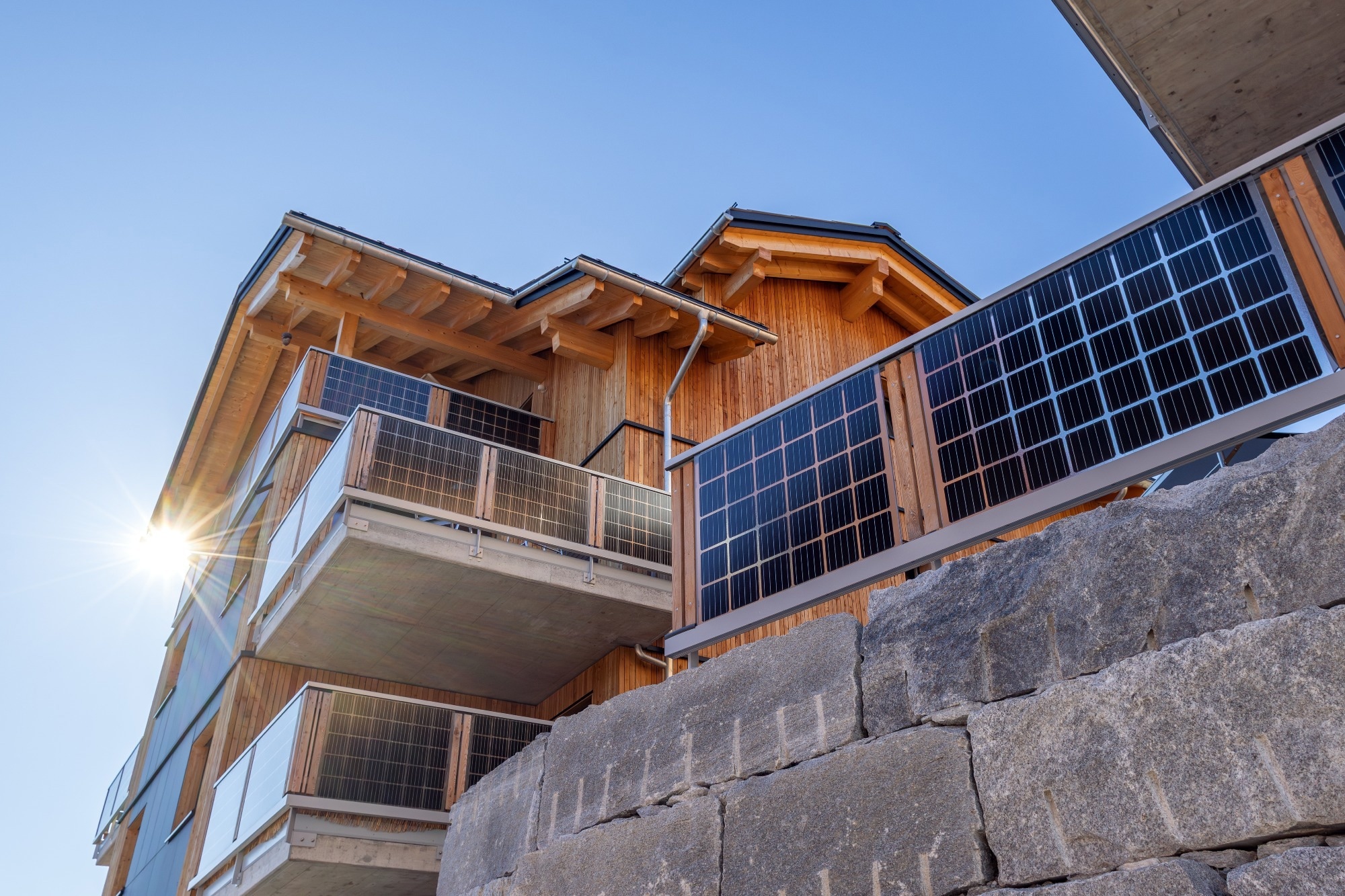 Study: Glazed and unglazed transpired solar collectors for sustainable buildings: a comparative assessment. Image Credit: Canetti/Shutterstock.com
Two Approaches for Solar Air Heating
Buildings consume a significant share of global energy, and space heating accounts for a particularly large share of demand in many regions. As the construction sector seeks to improve energy efficiency and reduce carbon emissions, solar-assisted ventilation technologies are attracting growing attention.
Among these solutions, TSCs offer a practical and cost-effective approach as they can be integrated directly into building façades.
A typical TSC consists of a dark, perforated metal absorber mounted in front of an exterior wall. Solar radiation heats the absorber, while a fan draws outdoor air through the perforations into a cavity behind the panel. The warmed air then enters the building’s ventilation system.
Busy now? Download a PDF and finish this later.
Unglazed TSCs have demonstrated strong performance in many applications, but wind exposure and radiative heat losses can reduce their efficiency.
Glazing offers a potential solution by shielding the absorber from external conditions and retaining more thermal energy. However, previous studies often compared systems with different designs or operating conditions, making it difficult to isolate the effect of glazing.
To address this gap, researchers in this study conducted a side-by-side comparison of glazed and unglazed collectors with identical geometries.
Experimental Design and Performance Evaluation
The researchers evaluated the two TSC systems at Al-Zaytoonah University in Jordan between January and March 2025. They installed both collectors side by side on a south-facing façade to ensure identical environmental exposure.
Each system used a galvanized steel absorber plate measuring 3 × 2 m and containing 22,400 uniformly distributed perforations. The glazed collector incorporated a 4 mm low-iron tempered glass cover positioned 30 mm in front of the absorber.
The team equipped the test setup with thermocouples that measured temperatures across the absorber surfaces, ventilation air streams, and interior spaces. Additional sensors continuously recorded solar irradiance, airflow velocity, and wall heat flux. To minimize environmental variability, the experiments were conducted under clear-sky conditions with low wind speeds.
Collector performance was assessed over a range of airflow rates and solar irradiance levels. Researchers evaluated key metrics, including thermal and exergy efficiencies, heat exchange effectiveness, ventilation load reduction, and wall heat-loss recovery.
Additional tests investigated passive operation by allowing the glazed collector to operate under natural convection without mechanical ventilation.
The team developed a one-dimensional heat-transfer model that incorporated conductive, convective, and radiative processes. After validating the model against measured data, they used it to estimate annual energy savings, economic performance, and long-term operating characteristics under broader climatic conditions.
Glazing Delivers Consistent Performance Gains
The study identified clear thermal and operational advantages for the glazed collector. Both systems showed higher thermal efficiencies as solar irradiance increased, but the glazed configuration consistently outperformed the unglazed design. Thermal efficiencies ranged from 48–75% for the glazed collector, compared with 42–65% for the unglazed system.
Both collectors exhibited high heat exchange effectiveness, confirming efficient transfer of solar heat to the incoming ventilation air. The unglazed collector achieved slightly higher effectiveness because air passed directly over the absorber surface. However, the glazed system delivered superior overall thermal performance by minimizing heat loss and maintaining higher absorber temperatures.
The unglazed collector performed particularly well as a dynamic insulation system. Its wall heat-loss recapture index reached 93% under low solar irradiance and remained above 60% at higher irradiance levels, demonstrating its ability to recover heat that would otherwise escape through the building envelope.
The glazed collector provided stronger preheating of ventilation air. Ventilation load reduction increased from 60% to 90% as solar irradiance rose, substantially lowering the supplementary heating required for incoming fresh air.
Under peak solar conditions, the collector increased outlet-air temperatures by up to 22 °C, highlighting its effectiveness as a solar air-heating technology.
Economic analysis confirmed the practicality of both systems. The unglazed collector achieved a shorter payback period of approximately 4.4 years because of its lower installation cost.
The glazed collector required about 5.2 years to recoup its higher initial investment but delivered greater annual energy savings and larger reductions in carbon emissions over its operational lifetime, making it an attractive option for high-performance, sustainable buildings.
Implications for Sustainable Building Design
This study highlights the potential of TSCs as building-integrated technologies to reduce heating energy demand and improve façade performance. By combining solar air heating with envelope-based thermal management, these systems deliver multiple energy-saving benefits through a single building component.
The side-by-side evaluation of glazed and unglazed collectors also provides a clear understanding of how glazing influences thermal performance under identical operating conditions.
The results indicate that the choice between glazed and unglazed systems depends largely on project requirements. Unglazed collectors offer lower costs and strong dynamic insulation performance, making them well-suited for retrofits.
Glazed collectors deliver higher thermal efficiencies, better ventilation-air preheating, and effective passive operation, making them attractive for high-performance and nearly zero-energy buildings.
Future work could focus on optimizing façade-integrated solar collector designs for different climates, building types, and ventilation requirements. Technologies that combine renewable energy generation with improved envelope performance are expected to play an increasingly important role in sustainable buildings.
Journal Reference
Fawaier, M., Shaban, N. A., et al. (2026). Glazed and unglazed transpired solar collectors for sustainable buildings: a comparative assessment. Scientific Reports. https://www.nature.com/articles/s41598-026-56698-w
Disclaimer: The views expressed here are those of the author expressed in their private capacity and do not necessarily represent the views of AZoM.com Limited T/A AZoNetwork the owner and operator of this website. This disclaimer forms part of the Terms and conditions of use of this website.