*Important notice: This news reports on an unedited version of an accepted paper and is awaiting final editing. Therefore, the paper should not be regarded as conclusive or treated as established information.
A concrete structure in rain-soaked Bergen faces a very different climate from one in tropical Manaus. Yet under European durability standards, both can sit within the same broad exposure class for concrete exposed to repeated wetting and drying. New research suggests this distinction could have major consequences: local weather may influence reinforcement corrosion as much as, or even more than, the concrete mix itself.
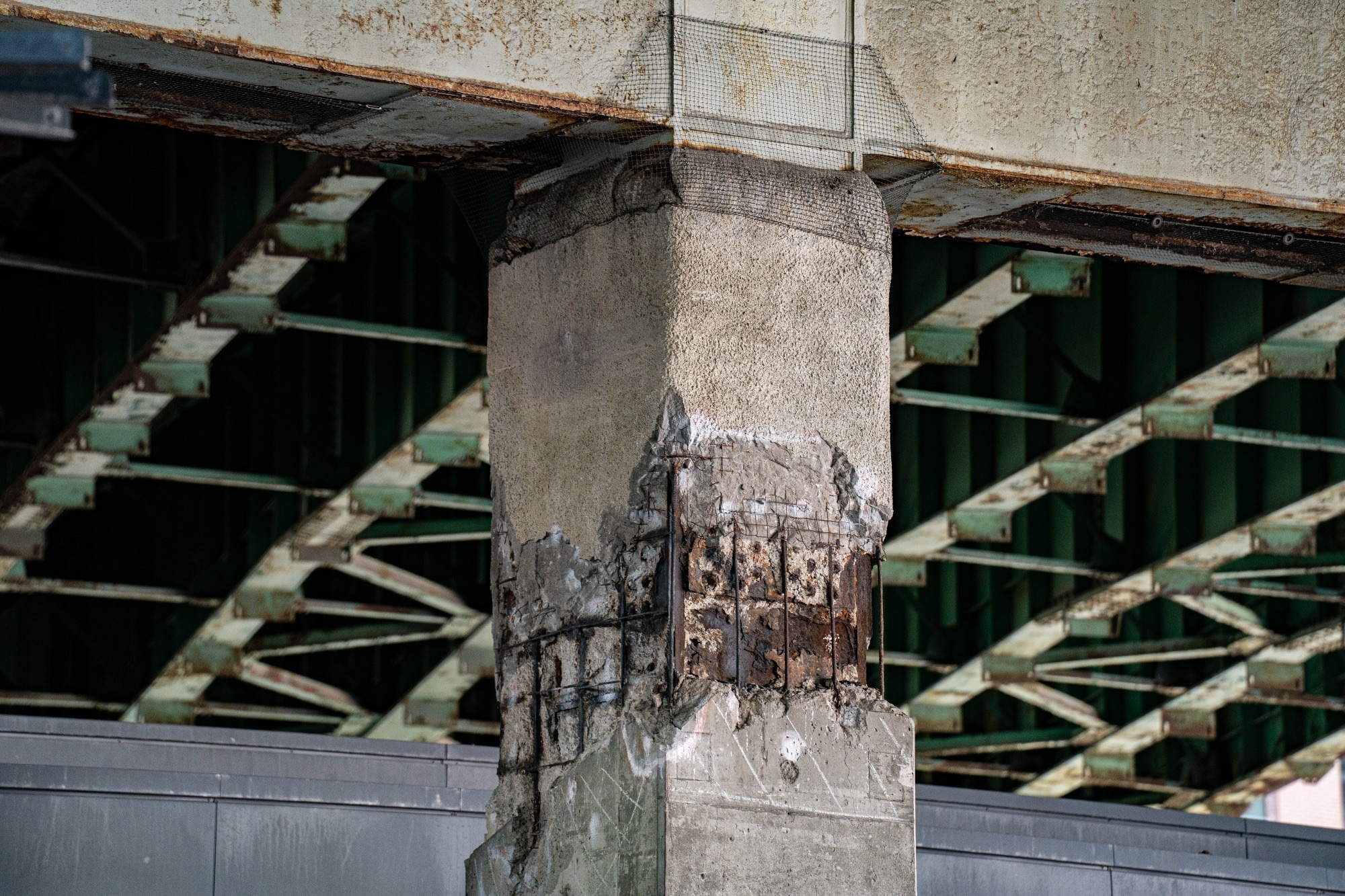
Study: Rethinking concrete durability for low-carbon concretes through climate-informed corrosion modelling. Image Credit: Erman Gunes/Shutterstock.com
A recent study published in Nature Communications described a climate-informed corrosion model that combines weather data, moisture transport, and steel corrosion behavior.1 Their results show that local climate strongly influences corrosion after carbonation removes the protective layer around reinforcement. In several cases, climate had a greater effect on predicted steel loss than the differences between the concrete mixtures studied.
The finding points to a potential blind spot in conventional durability assessments. Reinforcing steel responds to the rain, humidity, and drying around it, not simply the exposure category assigned to a structure.
Rethinking Durability for Low-Carbon Concrete
Replacing part of Portland cement clinker with supplementary cementitious materials can reduce concrete’s carbon footprint. This is important because cement production accounts for around 7% of global carbon dioxide emissions, according to the Global Alliance for Buildings and Construction.2
However, lower-clinker materials can also change the properties that control reinforcement corrosion.
Carbonation is a major durability concern. Carbon dioxide penetrates concrete, reacts with cement hydrates, and gradually reduces the material’s alkalinity. When the carbonation front reaches the reinforcement, it can break down the protective passive layer around the steel, allowing corrosion to begin.
Most durability assessment methods focus on predicting when carbonation will reach the reinforcement. However, they often represent environmental exposure using broad categories that do not fully capture variations in weather between locations or across seasons.
They can also give less attention to what happens after the steel loses its protective layer. Carbonation enables corrosion, but it does not show how quickly corrosion will progress or when it will cause meaningful damage. Moisture conditions around the reinforcement help determine that rate.
The study addresses this gap by examining how rainfall, humidity, moisture transport, and concrete properties interact to influence corrosion. This climate-informed approach could provide a more realistic assessment of reinforcement corrosion in low-carbon concrete under different climatic conditions.
Combining Concrete Testing with Climate-Based Modeling
The researchers examined three concrete systems: CEM I with a water-to-binder ratio of 0.6, CEM II B-LL with a ratio of 0.5, and CEM II B-LL with a ratio of 0.6.
In simpler terms, the study compared a conventional Portland cement concrete with two limestone-blended concretes of different quality. The mixtures allowed the team to examine how cement composition and concrete porosity influence moisture movement and corrosion behavior.
The model incorporated hourly weather data from four locations with contrasting climates: Huailai, China; Zurich, Switzerland; Manaus, Brazil; and Bergen, Norway.
Despite their different weather patterns, all four locations fall within the broad XC4 exposure class used in European durability standards. XC4 covers concrete exposed to cyclic wet and dry conditions.
This comparison allowed the researchers to examine a key limitation of broad exposure categories. Two places can receive the same classification while experiencing very different amounts of rainfall, humidity, and drying.
The researchers used a two-phase moisture transport model to simulate the movement of liquid water and water vapor through concrete under changing humidity conditions. The model captured how rainfall and drying cycles alter moisture levels within the material. The simulated moisture conditions were then linked to corrosion rates using a quantitative moisture-corrosion relationship.
The researchers applied Faraday’s law to convert corrosion current into cumulative steel loss. Finally, the service-life assessment combined the carbonation initiation period with the subsequent corrosion propagation period. The researchers used a cumulative steel loss of 100 micrometers as an illustrative limit state, rather than a universal definition of structural failure.
Click here to download your free copy
Climate Conditions Strongly Influence Corrosion Development
The model showed that rainfall can rapidly increase moisture levels in concrete, while drying generally reduces moisture more slowly. These changes directly influenced the predicted corrosion rate.
Corrosion peaks were sharper than the corresponding moisture changes because the relationship between moisture content and corrosion rate is strongly nonlinear. A relatively small change in moisture could therefore produce a more pronounced change in corrosion. This finding highlights a limitation of simple wet-or-dry exposure classifications.
The comparison between the four locations revealed clear climate-related differences. Variations in rainfall and drying patterns produced different moisture conditions and corrosion rates within the concrete. In several cases, climate influenced cumulative corrosion more than differences between the three concrete mixtures.
That does not mean the concrete mix was unimportant. Climate strongly affected the concrete surface, where moisture levels respond more directly to rainfall and drying. More porous concrete also allowed moisture to move more easily, increasing the likelihood of prolonged wet conditions near the reinforcement and resulting in higher predicted corrosion rates.
These findings highlight the importance of considering concrete permeability alongside local climate when assessing durability.
The comparison of cement systems produced another important finding. CEM I with a water-to-binder ratio of 0.6 and CEM II B-LL with a ratio of 0.5 showed similar cumulative steel loss under the investigated conditions.
This suggests that reducing the water-to-binder ratio, and therefore producing less porous concrete, can partly compensate for the greater carbonation susceptibility of lower-clinker cement. However, the finding applies to the specific mixtures and conditions investigated. It should not be treated as a universal formula for concrete design.
Carbonation Does Not Tell the Whole Service-Life Story
Service-life predictions also changed when the assessment included corrosion propagation.
Evaluations based only on carbonation initiation suggested that some low-clinker concrete systems might not achieve a 50-year service life. However, when the model considered both carbonation initiation and corrosion propagation, most systems were predicted to achieve 50 years with about 30 millimeters of concrete cover.
The exception was CEM II B-LL with a water-to-binder ratio of 0.6 in Bergen, where the model required about 40 millimeters of cover.
These values are model results, not new design recommendations. The researchers used 100 micrometers of steel loss as an illustrative threshold, and the model requires further validation before it can be applied in routine engineering practice.
Even so, the comparison shows why the distinction between corrosion initiation and corrosion damage matters. Carbonation indicates when reinforcement becomes vulnerable. It does not necessarily indicate when corrosion will reach a level that threatens the structure's service life.
Designing Concrete Durability Around Climate
The findings highlight the need for a broader approach to assessing concrete durability. Climate, moisture transport, and corrosion propagation can significantly influence the performance of low-carbon concrete, beyond carbonation alone. Local rainfall and drying patterns should therefore be considered alongside concrete properties and cover depth.
The study does not suggest that carbonation can be ignored or that lower-clinker concrete will always perform as well as conventional concrete. Instead, it argues that carbonation should be treated as the start of a possible corrosion process, rather than automatically being used as the end of service life.
The findings also have practical limits. The researchers considered three concrete systems and four example locations, while real structures can be affected by cracking, construction quality, surface orientation, shelter and other forms of exposure. The model will need further testing, validation and simplification before it can support routine design decisions or changes to durability standards.
Still, the work identifies an important issue for lower-carbon construction. Broad exposure classes are useful, but they can conceal large differences in the weather individual structures experience.
A more climate-informed approach could eventually support more accurate durability predictions, helping engineers reduce the use of carbon-intensive clinker without shortening the life of concrete buildings and infrastructure.
The central message is that the weather around concrete may matter more than current classifications suggest.3
References and Further Reading
- Albert, C., Schmid, T., Zhang, Z. and Angst, U. Rethinking concrete durability for low-carbon concretes through climate-informed corrosion modelling. Nature Communications, 2026. https://www.nature.com/articles/s41467-026-76916-3
- Global Alliance for Buildings and Construction, Concrete and Cement. https://globalabc.org/buildingmaterialsandclimate/chapter-5-improve/5-2-concrete-and-cement.html
- Roadstone, Guide on Concrete: IS EN 206. https://www.roadstone.ie/sites/default/files/2022-05/Guide-on-Concrete-IS-EN-206-2013.pdf
Disclaimer: The views expressed here are those of the author expressed in their private capacity and do not necessarily represent the views of AZoM.com Limited T/A AZoNetwork the owner and operator of this website. This disclaimer forms part of the Terms and conditions of use of this website.