Why Should Regolith be the Foundation of Shielding in Space?
The Secondary Radiation Challenge
Multilayer Shielding Architecture
Hydrogenous Material Integration
Construction Methods and Habitat Geometry
Engineering Toward Practical Limits
References and Further Reading
Radiation is a hazard of space rarely discussed. Yet, galactic cosmic rays (GCRs), constant high-energy particles from beyond the solar system, and unpredictable solar particle events can deliver intense radiation in a short time and have damaging consequences. Regolith, the moon's rock and dust, could be used as a way to protect astronauts in this extreme environment.1,2
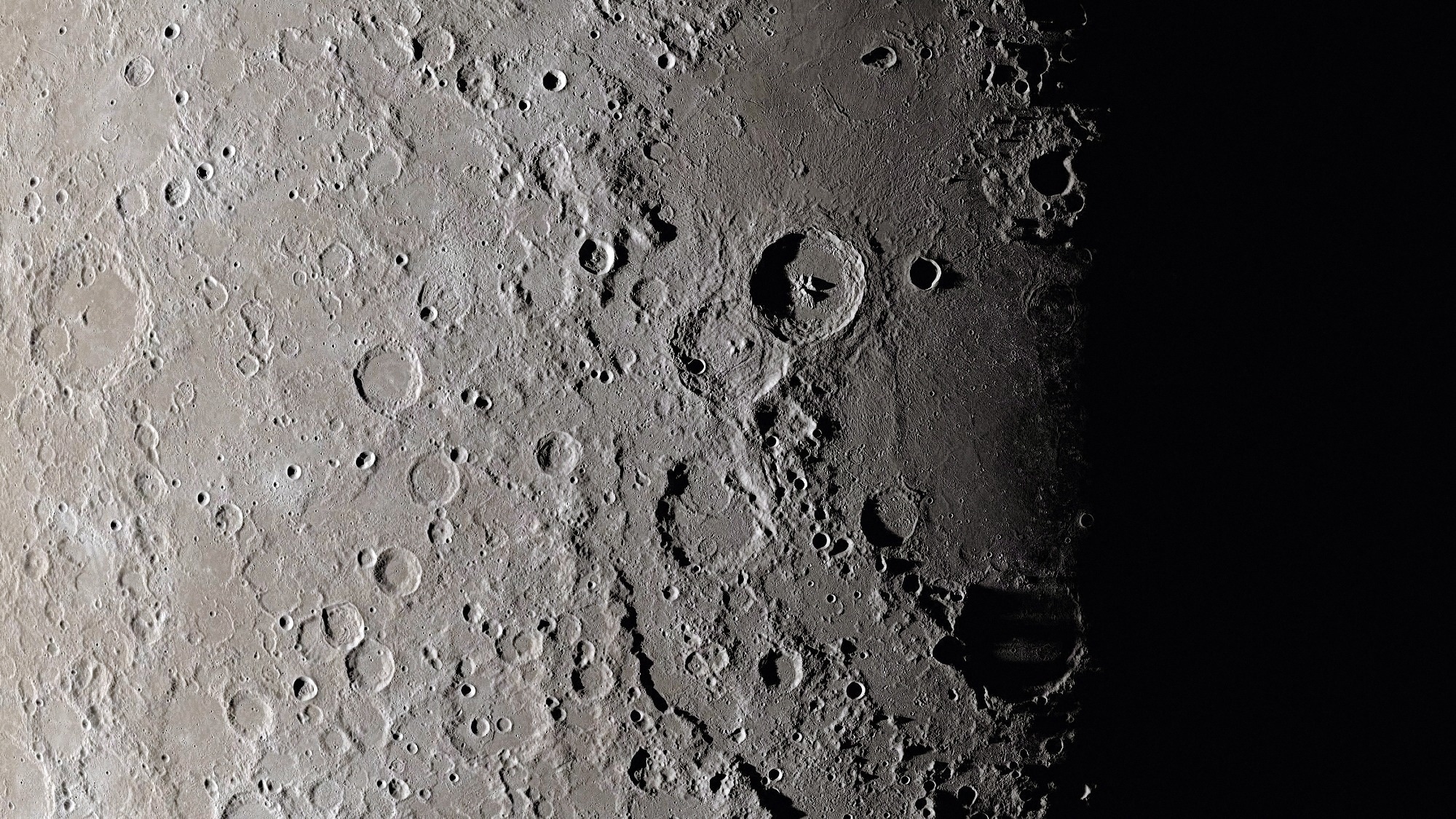 Image Credit: Evgeniyqw/Shutterstock.com
In recent years, the space industry has once again turned its gaze to the Moon. NASA's Artemis II is soon to set off for our Earth's lunar satellite. The China National Space Administration, too, is hoping to explore the Moon, with the fourth stage of its lunar exploration program launching this year with Chang’e 7. There is even talk of fiber optics on its lunar surface.
However, with no magnetic field or atmosphere, the Moon’s surface is exposed to the full spectrum of space radiation. Any astronauts venturing beyond the safety of their rockets risk exposing themselves to the Sun. This radiation is so harmful that NASA astronauts have a strict career limit of 600 mSv total. Even a single large solar particle event can push unshielded crew members toward that ceiling in a matter of days.
Saving this article for later? Download a PDF here.
Why Should Regolith be the Foundation of Shielding in Space?
The Earth's material could be just as effective for radiation shielding as regolith, however, transporting shielding material from Earth to the Moon is neither energetically or economically viable. A better option is lunar regolith, which is readily available at landing sites.
Regolith consists mainly of silicon dioxide, aluminum oxide, iron oxides, and calcium oxides. It provides radiation protection through scattering.
For protection against solar particle events, even a thin layer of compacted regolith is enough. A shielding thickness of regolith exceeding 4 g/cm2 would reduce the expected dose from most SPEs to below the current 30-day exposure limits.2,3,4 However, for large solar flares, much more protection is needed. Some estimates suggest up to 700 g/cm2.
Even harder to protect against are galactic cosmic rays, where physics conspires against simple bulk shielding. The first 50 g/cm2 of regolith absorbs about one-third of these rays. To achieve significant protection, 300 g/cm2 is needed. Building 800 g/cm2 with loose regolith at an average depth of 4.5 meters may be possible, especially if using local features or robotics.2,3,4
The Secondary Radiation Challenge
A central aspect of regolith-shielding design is the production of secondary particles. When high-energy GCR protons or heavy ions strike the nuclei of the particles making up a shielding wall, they generate cascades of secondary particles like neutrons, lower-energy protons, and gamma rays.
These secondary ions, although lower in energy, can still be biologically damaging and sometimes actually increase the radiation dose to people behind the shield.5
Published in CEAS Space Journal, one study simulated gamma cosmic ray proton interactions with regolith walls using RayXpert software. The researchers found that a 50 cm thick layer of bare regolith produces significant neutron and proton emissions that reach the interior habitat.
However, this finding does not mean regolith shielding is not useful, or even should be stopped. Instead, the scientists suggest improving shielding by using regolith with hydrogen-rich materials.
Hydrogen helps slow down fast neutrons and generates fewer harmful particles than heavier materials. The challenge is to combine the mass of regolith with the hydrogen in polymers to effectively reduce both primary and secondary radiation.5
Multilayer Shielding Architecture
Research consistently shows that a multilayer configuration outperforms homogeneous polymer-regolith mixtures. The same paper in CEAS Space Journal evaluated polymer-enriched regolith bricks against multilayer walls composed of bare regolith followed by discrete polyethylene layers.
Adding 30 % PE by mass to regolith reduced the total dose equivalent by only 3 %, whereas a 23.4 cm-thick PE layer behind a bare regolith wall achieved a 19 % reduction. This difference indicates that layering improves shielding efficiency. The first layer of regolith effectively deflects primary particles, while dedicated polyethylene layers can intercept secondary neutrons.
A structure of 50 cm regolith and 4 cm polyethylene maintains exposure within the 250 mSv annual limit but approaches ISS's 90-140 mSv over a 180-day mission, requiring further optimization. Further studies have found that compacted regolith with polymer interlayers enhances radiation dissipation compared to granulated mixtures, highlighting the importance of architectural layering in habitat design.5,6
Learn more about radiation resistant space materials, here.
Hydrogenous Material Integration
A range of hydrogen-rich materials are being explored for use in regolith-based shielding systems. Lining the interior walls of a regolith habitat with hydrogen-rich polymer coatings can provide complementary protection by capturing secondary neutrons that have already penetrated the regolith mass.
Water acts as a functional shielding layer and also as a consumable resource. However, the meters-thick water walls needed for galactic cosmic ray attenuation create structural and mass challenges.
Geopolymers that mix lunar regolith with alkali-activated aluminosilicate gels offer a promising solution, creating a dense, hydrogen-containing structural material.
Tests on geopolymer specimens made from lunar regolith simulant demonstrate adequate compressive strength, making them suitable for both structural support and radiation shielding. This dual functionality is essential for habitat design, eliminating the need for additional mass from separate shielding layers.7,8
Construction Methods and Habitat Geometry
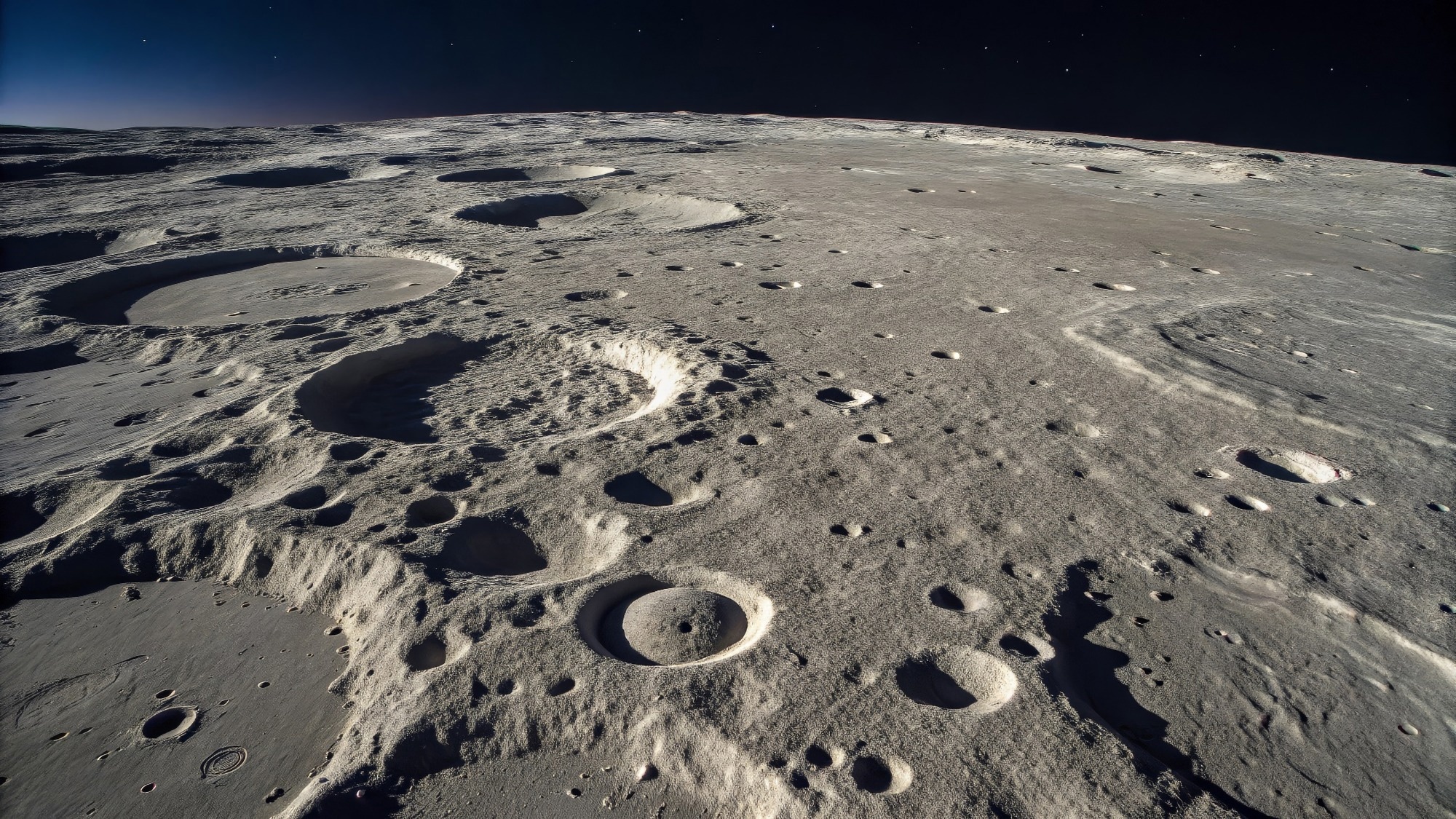 Image Credit: Naim uddin Id 6667907/Shutterstock.com
While the chosen regolith composition is key, equally important is the way such structures are built.
There are three main strategies:
- Using autonomous additive manufacturing on the lunar surface
- Creating compacted or sintered regolith walls
- Piling loose regolith over pre-made habitats
Terrestrial proof-of-concept experiments have demonstrated the success of robotic 3D printing of structural elements using lunar regolith simulant, where the printed mass serves simultaneously as structure and radiation shield, reducing dependence on Earth-supplied materials and construction crew time.
Sintering with laser sources at fine resolution has also been tested in labs, yielding dense, thermally stable components.
Studies have shown that habitat geometry plays a similarly significant role in radiation dose reduction. For instance, habitats placed under a crater rim limit cosmic ray exposure to only the sky, cutting radiation intake to about one-sixteenth of that in open areas. This design can reduce the required regolith thickness and construction time.3,9,10
Engineering Toward Practical Limits
Bringing all these strategies together into a working habitat means matching shielding design to mission duration, crew size, and acceptable risk level.
For short missions lasting a few days, a layer of regolith alongside a specific storm shelter with dense, hydrogen-rich walls is enough. For long-duration outposts, the 1.5 to 2.0 meters of regolith cover needed to reduce occupant dose to levels comparable to terrestrial radiation worker standards establishes the baseline construction target.
Active monitoring of solar particle events forecasts allows crews to retreat to the storm shelter during high-flux periods, reducing the shielding mass required for the main habitat volume. The compaction state of regolith also matters, as laboratory results confirm that higher compaction density increases radiation dissipation per unit thickness; robotic compaction should be a regular step in construction.
The combination of in situ resource use, multilayer material science, additive manufacturing, and site-intelligent design is the practical path toward lunar habitats that can sustain human health over the years-long missions that a permanent lunar presence will require.5,6
References and Further Reading
- George, S. P. et al. (2024). Space radiation measurements during the Artemis I lunar mission. Nature, 634(8032), 48-52. DOI:10.1038/s41586-024-07927-7, https://www.nature.com/articles/s41586-024-07927-7
- Matthiä, D., & Berger, T. (2024). Radiation Exposure and Shielding Effects on the Lunar Surface. Space Weather, 22(12), e2024SW004095. DOI:10.1029/2024SW004095, https://agupubs.onlinelibrary.wiley.com/doi/full/10.1029/2024SW004095
- Thomas Herzig. Protection from Radiation. Pneumo Planet. https://moonhabitat.space/protection-from-radiation/
- Meurisse, A. et al. (2020). Neutron radiation shielding with sintered lunar regolith. Radiation Measurements, 132, 106247. DOI:10.1016/j.radmeas.2020.106247, https://www.sciencedirect.com/science/article/abs/pii/S1350448720300111
- Akisheva, Y. et al. (2024). Regolith-based lunar habitats: an engineering approach to radiation shielding. CEAS Space Journal 16, 667–676. DOI:10.1007/s12567-024-00540-4, https://link.springer.com/article/10.1007/s12567-024-00540-4
- Roberts, K. et al. (2024). Radiation Dissipation Capacity of Lunar Regolith Simulants for Efficient GCR and SPE Protection for Sustained Habitat Formation. Earth and Space 2024: Engineering for Extreme Environments. DOI:10.1061/9780784485736.004, https://ascelibrary.org/doi/10.1061/9780784485736.004
- Mrozek, M. et al. (2025). Concept and preliminary structural analysis of a crater-covering dome for future lunar habitats. Scientific Reports, 15(1), 24744. DOI:10.1038/s41598-025-07901-x, https://www.nature.com/articles/s41598-025-07901-x
- Kunja, L. et al. (2025). Capability of lunar regolith with hydrogenous materials as shielding material against GCR and SPE on the surface of Moon studied using OLTARIS. Advances in Space Research, 76(5), 2951-2959. DOI:10.1016/j.asr.2025.06.059, https://www.sciencedirect.com/science/article/pii/S0273117725006714
- Isachenkov, M. et al. (2021). Regolith-based additive manufacturing for sustainable development of lunar infrastructure – An overview. Acta Astronautica, 180, 650-678. DOI:10.1016/j.actaastro.2021.01.005, https://www.sciencedirect.com/science/article/abs/pii/S0094576521000060
- Farries, K. W. et al. (2022). Direct laser sintering for lunar dust control: An experimental study of the effect of simulant mineralogy and process parameters on product strength and scalability. Construction and Building Materials, 354, 129191. DOI:10.1016/j.conbuildmat.2022.129191, https://www.sciencedirect.com/science/article/abs/pii/S0950061822028471
Disclaimer: The views expressed here are those of the author expressed in their private capacity and do not necessarily represent the views of AZoM.com Limited T/A AZoNetwork the owner and operator of this website. This disclaimer forms part of the Terms and conditions of use of this website.