*Important notice: This news reports on an unedited version of the paper which has been accepted. and is awaiting final editing. Scientific Reports sometimes publishes preliminary scientific reports that are not fully edited and, therefore, should not be regarded as conclusive or treated as established information.
Machine learning models predict compressive strength of slag-based concrete using large datasets. This approach improves mix optimization, reduces errors, and enables sustainable construction using industrial byproducts.
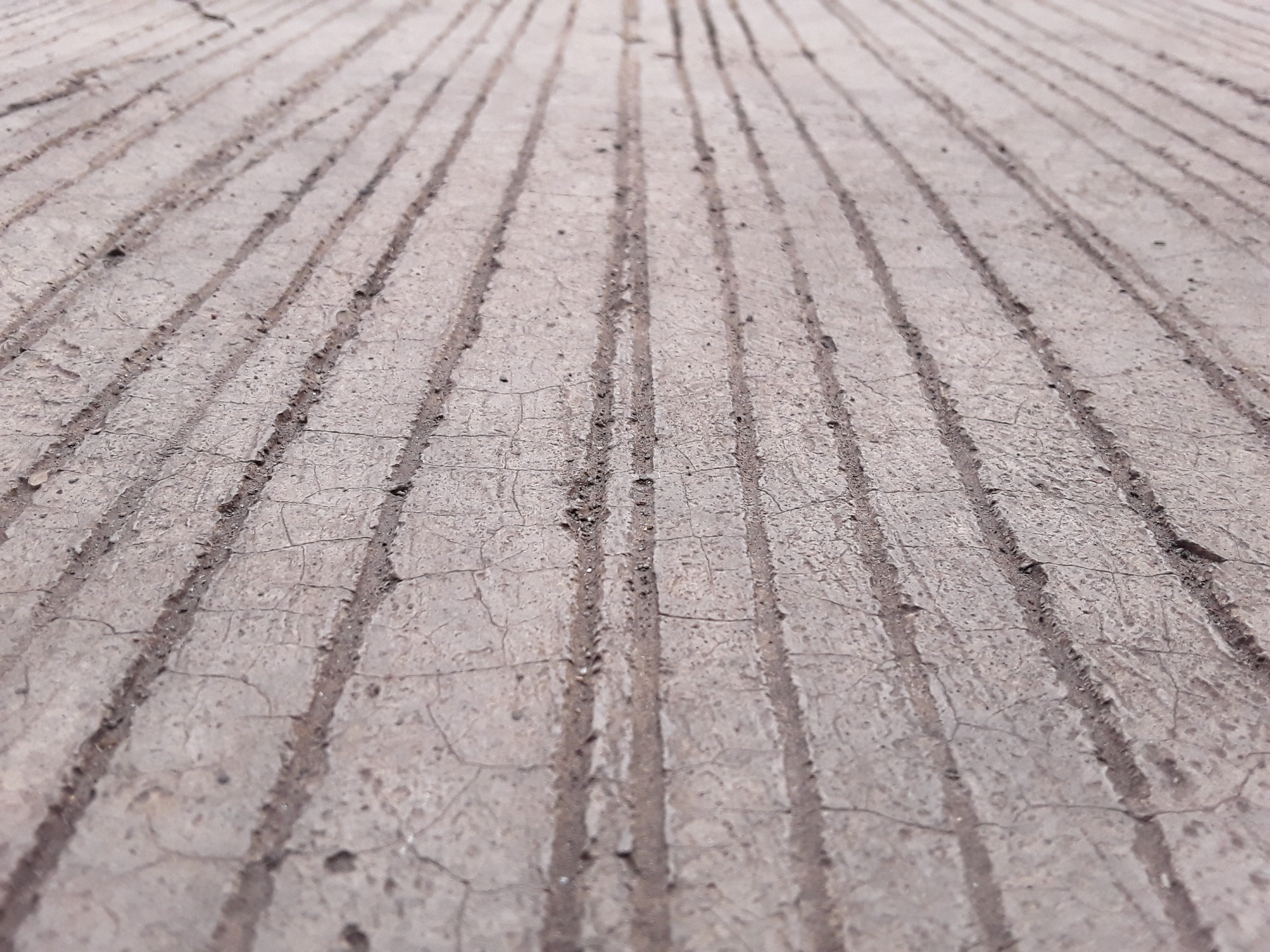 Study: Hybrid Machine learning-based modeling to predict and optimize the compressive strength of electric arc furnace slag-modified concrete. Image Credit: Maihagallery/Shutterstock
A paper recently published in Scientific Reports proposed a hybrid machine learning (ML) model to optimize and forecast the compressive strength of concrete modified with electric arc furnace (EAF) slag.
EAF Slag in Construction
EAF oxidizing slag, ladle furnace slag (LFS), and blast furnace slag (BFS) are commonly used in the construction sector. EAF slag has been studied by researchers for potential applications in construction owing to its widespread production worldwide.
For instance, concrete incorporating EAF slag as a total replacement for aggregates displays higher water absorption and specific density than concrete using only natural aggregates. Yet, the slag demonstrated an acceptable level of contaminant leaching and decreased volumetric expansion.
Similarly, concrete using EAF slag as fine aggregate led to higher water penetration depths than traditional limestone aggregate mixtures, while EAF slag as coarse aggregate showed reduced water penetration depth.
Role of ML Models
ML can predict critical attributes like workability, durability, and strength in concrete research. ML-based approaches improve the prediction accuracy of concrete properties by reducing errors compared to conventional experimental methods.
Several ML approaches, including random forest (RF), k-nearest neighbors (KNN), artificial neural networks (ANN), decision trees (DT), and Gradient Boosting Machines (GBM), have been employed in studies. Additionally, hybrid models have been developed that combine the best features of various methodologies to improve predictive accuracy.
Other methods, such as multi-model-based approaches, have also been studied to simulate the complex, nonlinear interactions that affect tangible attributes. Software platforms simplifying material testing and design operations further supplement these models.
The Proposed Forecasting Framework
In this work, researchers introduced an innovative framework for forecasting the compressive strength of EAF slag concrete. The framework used advanced ML models such as RF, AdaBoost (ADB), extreme gradient boosting (XGB), hybrid XGB-ADB, and hybrid XGB-RF.
These ML methods were assessed to determine the most effective ML model for predicting the compressive strength of EAF slag concrete. The objective of the study was to address the limited attention given to EAF slag concrete in previous research. Existing studies on concrete incorporating EAF slag are constrained by limited input variables or by small datasets.
Additionally, the integration of advanced interpretability tools for understanding the impact of individual mixture constituents on strength development has been limited to a few studies.
Researchers created a complete dataset of 730 samples, containing key input parameters like aggregates and binders, with compressive strength as the expected outcome. They used 80% of the dataset for training, 10% for validation, and 10% for testing.
Researchers used the validation set to assess the model's consistency and robustness on unseen data, reducing the risk of overfitting. Python (version 3.12.7) was used as the programming language, with well-documented, widely recognized Python libraries employed at various stages of the research.
Model interpretability analysis was performed using the SHAP library. Scikit-learn, along with the models' specified standard libraries, was used for ML model training, evaluation, and development.
Visualization tasks were performed with Seaborn and Matplotlib, while numerical computations and data preprocessing were performed with Pandas and NumPy. Researchers performed all analyses using the Anaconda Navigator distribution.
Key Findings of the Research
Researchers developed and evaluated several ML models to predict the compressive strength of EAF slag concrete using a comprehensive dataset compiled from published literature. All evaluated ML models demonstrated robust generalization abilities and exceptional performance, making them highly reliable for predicting compressive strength.
Specifically, the XGB model achieved the lowest average error across all stages and delivered the highest forecasting accuracy, with R² values of 0.945 on validation and 0.951 on testing, confirming its reliability and robustness.
Download the PDF of this page here
Hybrid models XGB-RF and XGB-ADB outperformed the standalone RF and ADB models, attaining R² values up to 0.947. These models significantly reduced prediction errors and improved predictive accuracy compared with previous methods. The hybrid models showed robust generalization capability, improved stability, and reduced overfitting.
SHAP analysis revealed that EAF slag concentration up to 130 kg/m³ had a minor effect on strength, whereas fine aggregate (700–880 kg/m³) exhibited a decreasing trend with superplasticizer usage.
Partial dependence plot (PDP) analysis indicated that compressive strength increases with cement content, curing time, and superplasticizer content. A 45% increase in compressive strength (from 33 to 48 MPa) was observed at 200–500 kg/m³ cement content. Arc furnace slag increased the strength by 12% at 160 kg/m³.
In conclusion, the findings of this study will pave the way for precise, ecologically conscientious, and efficient concrete design.
Journal Reference
Uddin, M. A. et al. (2026). Hybrid Machine learning-based modeling to predict and optimize the compressive strength of electric arc furnace slag-modified concrete. Scientific Reports. DOI: 10.1038/s41598-026-50606-y, https://www.nature.com/articles/s41598-026-50606-y
Disclaimer: The views expressed here are those of the author expressed in their private capacity and do not necessarily represent the views of AZoM.com Limited T/A AZoNetwork the owner and operator of this website. This disclaimer forms part of the Terms and conditions of use of this website.