*Important notice: This news reports on an unedited version of the paper which has been accepted. and is awaiting final editing. Scientific Reports sometimes publishes preliminary scientific reports that are not fully edited and, therefore, should not be regarded as conclusive or treated as established information.
Seismic modeling of over 200,000 structures identifies vulnerable older buildings and resilient modern designs. This approach supports safer urban planning, targeted retrofitting, and improved earthquake risk management.
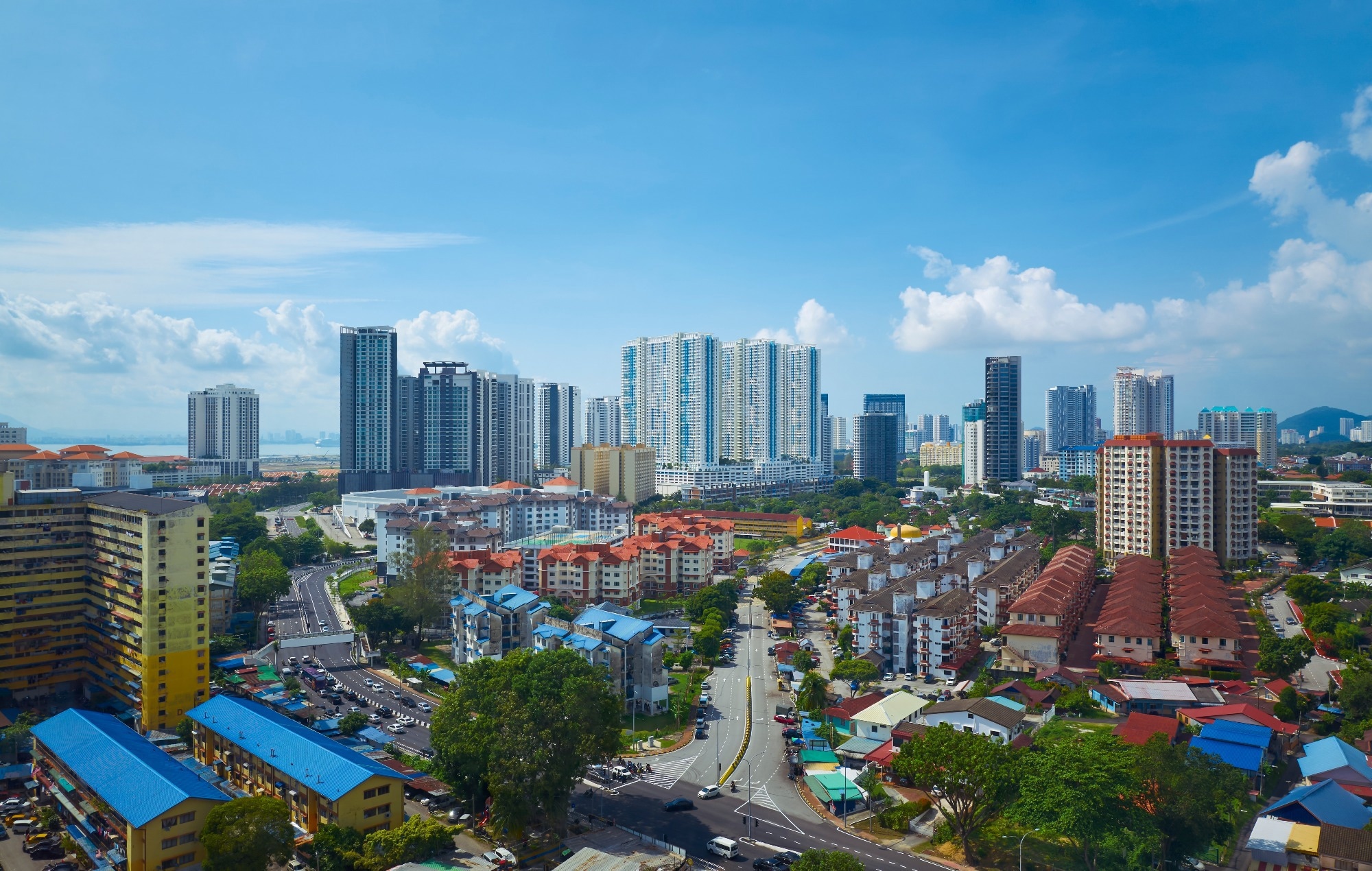 Study: Seismic risk assessment of Tashkent's residential infrastructure. Image Credit: jamesteohart/Shutterstock
Urban areas worldwide remain highly vulnerable to seismic hazards, posing major risks for infrastructure and public safety. A recent study published in the journal Scientific Reports conducted a deterministic seismic risk assessment of Tashkent’s residential buildings.
Researchers simulated a Mw 5.5 earthquake based on the historic 1966 Tashkent earthquake, which struck Uzbekistan's capital. They evaluated more than 200,000 structures to estimate potential damage. The outcomes showed that approximately 4.0% of older buildings are at risk of catastrophic failure. In contrast, modern monolithic construction demonstrates strong resistance to ground motions up to intensity VIII on the MSK-64 scale.
Tectonic Frameworks and Historical Seismic Events
Central Asia lies in a highly active tectonic zone due to the intercontinental collision of the Indian Plate and the Eurasian Plate. This interaction creates a significant seismic risk for Tashkent, which is situated near major fault systems, such as the Karzhantau Fault.
The region has historically experienced earthquake intensities up to IX on the MSK-64 scale. The 1966 Tashkent earthquake remains a defining event. It originated at a shallow depth of about 8 km and destroyed more than 2 million square meters of housing. These historical records provide a key baseline for evaluating the seismic resilience of modern infrastructure.
Digital Twin Integration and Nonlinear Structural Analysis
Researchers developed a digital model of Tashkent city’s-built environment. Using the architecture geographic information system (ArcGIS), they created a three-dimensional (3D) database covering 197,740 single-story and 11,283 multi-story residential buildings. This “digital twin” enabled systematic classification of structures.
Buildings were grouped into 18 typologies based on the Global Earthquake Model (GEM) taxonomy. These included traditional adobe (ADO), unreinforced masonry (URM), and modern systems such as reinforced concrete (RC) and large-panel (RCPC).
Structural performance of the city’s buildings was evaluated using LIRA-SAPR software. Nonlinear Time-History Analysis (NTHA) and Incremental Dynamic Analysis (IDA) were applied to assess inter-story drift ratios (ISDRs) and monitor the behavior of different materials, including fired brick, monolithic concrete, and timber, under seismic loading.
Furthermore, the study incorporated geotechnical data from 722 measurement sites to map shear wave velocity (Vs30). This ensured an accurate representation of soil amplification effects within the OpenQuake framework. This integrated approach provides a high-resolution understanding of how different building types respond to earthquakes.
Analysis of Structural Vulnerability and Risk Distribution
The simulation effectively mapped how different building types responded under seismic stress. Peak Ground Acceleration (PGA) across Tashkent is estimated between 0.1g and 0.29g for a magnitude Mw5.5 event. Older structures showed the highest vulnerability.
Unreinforced masonry (URM1, URM4) and adobe (ADO) buildings constructed before 1966 had a high probability of complete collapse (Dmg_5), due to the absence of seismic reinforcement to withstand the shear forces generated by a shallow-focus earthquake. In contrast, modern reinforced concrete systems (RC3-RC7), representing monolithic and reinforced-concrete frame structures between 9 and 20 stories, demonstrated strong resilience.
These mid- to high-rise structures are expected to remain operational even near the epicenter. Spatial analysis highlighted uneven risk distribution. Southwestern and central districts contained the largest share of vulnerable buildings, while northern and northeastern areas experienced stronger ground motion due to lower (Vs30) values, which amplify shaking.
Applications for Urban Planning and Building Safety
This research has significant implications for urban planning and construction. The data is currently being integrated into public digital platforms such as pasportbino.uz and toshkent.simulyatsiyasi.uz. These systems support the “passportization” of buildings, creating a detailed inventory of structural risk. This enables authorities to prioritize retrofitting and identify areas where outdated structures immediately require replacement.
For developers, the findings reinforce the long-term safety and value of monolithic reinforced concrete over traditional masonry. The study also supports disaster preparedness and insurance modeling. Damage forecasts (from Slight to Destruction) allow better allocation of emergency resources across neighborhoods.
It further supports the adoption of the QMQ 2.01.03-19 standard, which promotes earthquake-resistant design. Overall, this framework helps ensure that future urban development is guided by verified structural safety.
Future of Seismically Safe Architecture
In summary, this study provides a clear framework for improving the seismic resilience of urban housing in hazardous regions such as Tashkent. It shows that combining 3D building databases with nonlinear structural analysis enables accurate prediction of damage and collapse.
Download the PDF of this page here
Older unreinforced masonry and adobe structures pose significant safety risks, whereas modern monolithic construction offers strong earthquake resistance. Future work should include estimating economic losses and casualty modeling to support more comprehensive risk planning. The adoption of digital building passports can enable smarter urban management and targeted mitigation strategies. As the city continues to grow, applying these methods will be critical to protecting infrastructure and population from future seismic events.
Journal Reference
Aravind Unni, M.S., Akhil, V.M. & Philip, S. (2026). Two stage AI framework for strength prediction and generative LLM for geopolymer concrete. Sci Rep. DOI: 10.1038/s41598-026-49329-x, https://www.nature.com/articles/s41598-026-49329-x
Disclaimer: The views expressed here are those of the author expressed in their private capacity and do not necessarily represent the views of AZoM.com Limited T/A AZoNetwork the owner and operator of this website. This disclaimer forms part of the Terms and conditions of use of this website.