An alkali-activated polymer binder replaces traditional cement, significantly reducing carbon emissions. This construction material maintains strength and workability while enabling sustainable, scalable building using abundant raw materials.
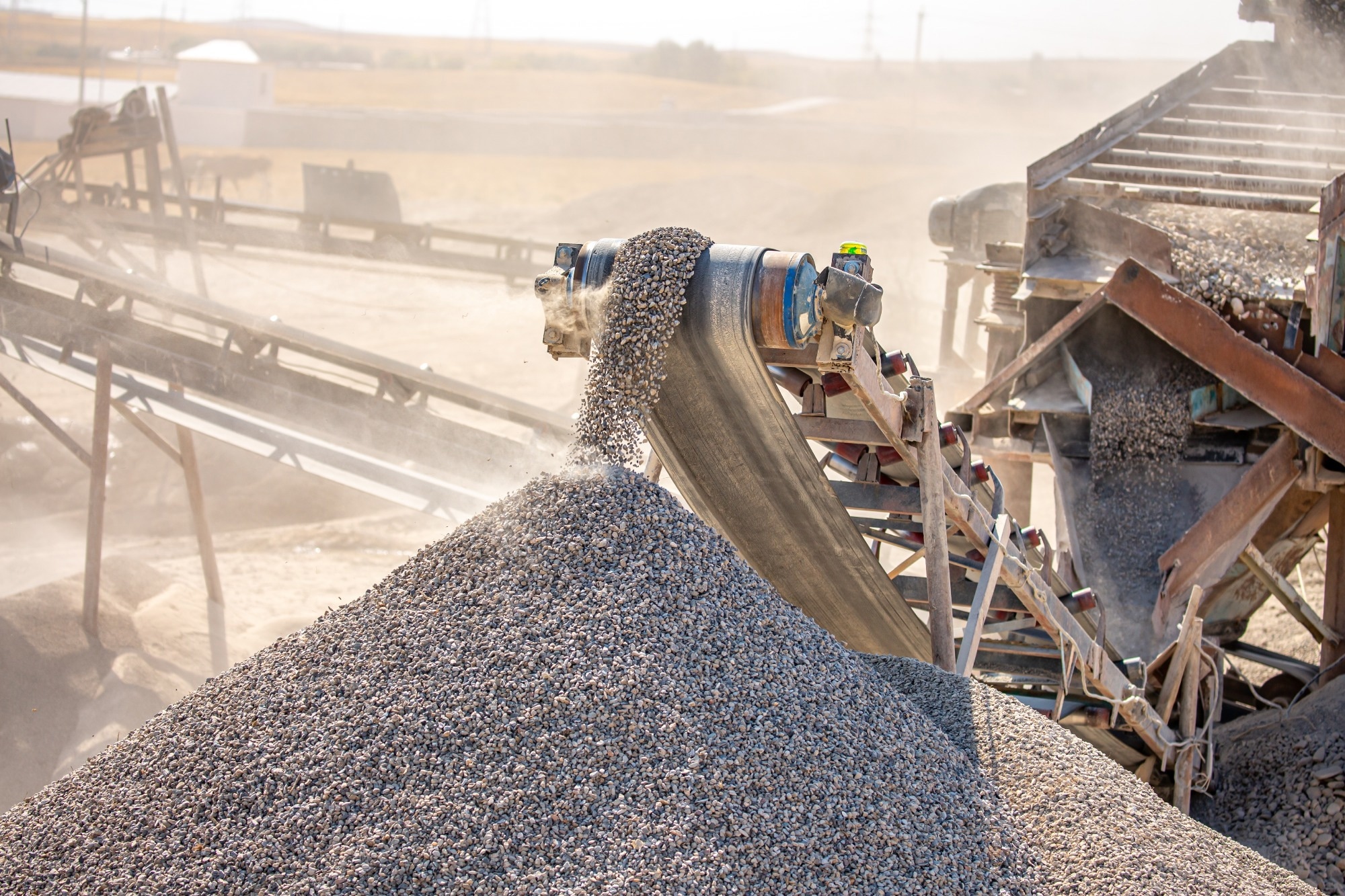 Study: A polymer of calcium aluminate and water glass as cement substitute. Image Credit: Vera Larina/Shutterstock
Global infrastructure development produces approximately 8% of total human-generated carbon dioxide (CO2) emissions, primarily due to the production of Ordinary Portland Cement (OPC). To address this environmental challenge, a recent study published in the journal Scientific Reports introduced a sustainable inorganic polymer binder.
Researchers developed this material using calcium aluminate cement (CAC) and alkali-activated water glass to create a high-strength alternative to conventional concrete. Their findings indicate that the new polymer can maintain the workability of traditional cement while reducing the industry’s global carbon emissions from 8% to less than 2%.
The Need for Sustainable Cement Alternatives
The construction industry relies heavily on OPC due to its ease of use and reliable structural performance. However, every ton of OPC produced releases approximately half a ton of CO2, with about 60% of these emissions stemming from the calcination of limestone.
Previous attempts to develop geopolymers and soil cements have utilized byproducts such as fly ash and blast-furnace slag. However, the supply of these materials has become uncertain due to changing energy policies and the 2015 Paris Agreement. Thus, there is a growing need for a binder system that employs widely available raw materials while avoiding carbon-intensive chemical reactions involved in traditional clinker production.
The Synthesis of Inorganic Polymers
Researchers focused on the exothermic reaction between tetrahedral aluminum from calcium aluminate cement and tetrahedral silicon from water glass, consisting of aqueous sodium or potassium silicate. They used several high-alumina calcium aluminate cements, including Almatis CA 14 M, CA 270, and Gorkal 70, to identify the optimal chemical balance for stability. The main component of the liquid phase was Betol 38/40, a water glass solution with a modulus of 3.4. Sodium hydroxide (NaOH) was added to activate the polymerization.
Analytical methods, including Attenuated Total Reflectance Fourier Transform Infrared (ATR-FTIR) spectroscopy and solid-state Nuclear Magnetic Resonance (NMR) spectroscopy, were employed to examine the chemical transformations at the molecular level. To evaluate its suitability for construction applications, the study molded the polymer into 4 cm3 cubes and evaluated their compressive strength using a Zwick/Roell Z250 testing machine. Aggregates, including local construction sand and uncleaned dune sand from China, were also analyzed.
Performance Characteristics and Reaction Dynamics
Optimal reactions occurred when the silicon-to-aluminum (Si/Al) ratio was close to 1:1. The NMR analysis confirmed that tetrahedrally coordinated aluminum (Al IV) in the calcium aluminate cement reacted with silicate groups to form a stable silicoaluminate network.
A broad signal at 65 ppm in the NMR spectra indicated the formation of the Al-O-Si structure, resembling the durable structure found in ancient Roman concrete. Octahedrally coordinated aluminum, such as in γ-Al2O3, remained unreactive at room temperature, highlighting the necessity of tetrahedral aluminum structures for effective hardening.
The analysis demonstrated that solution alkalinity significantly influenced performance, with the fastest setting rate for all tested calcium aluminate cements occurring at a sodium-to-silicate (Na+/Si) ratio of approximately 1:1, corresponding to a water glass modulus of 2.0. In terms of mechanical performance, the polymer achieved compressive strengths exceeding 40 MPa, comparable to high-grade OPC concrete used in modern buildings. The material also exhibited strong thermal stability and hardened effectively between 4 °C and 65 °C, making it suitable for various climates without additional curing methods.
Applications in Sustainable Construction
The low viscosity of the initial polymer mixture facilitates the easy incorporation of various additives, creating opportunities for specialized construction materials. Researchers produced high-strength bricks using uncleaned dune sand, which is typically considered too fine for conventional concrete. This approach could support construction in desert regions where river sand is limited. The polymer was also able to bind materials like wood chips, cotton, and industrial waste to produce lightweight boards and insulation panels.
Additionally, the study demonstrated that incorporating biochar produced by the pyrolysis of wood or straw can create carbon-negative building blocks. These biochar-based bricks can store more than 1 ton of CO2 per cubic meter, allowing buildings to function as carbon sinks and thereby directly reducing atmospheric carbon levels.
Path Forward for Widespread Adoption
In summary, the study presents a practical and scalable solution to the cement industry’s carbon emissions problem. Because the new polymer has workability similar to OPC, it can be adopted without significant changes to existing equipment or workforce training.
Download the PDF of this page here
Replacing traditional calcination with this alkali-activated calcium aluminate cement system, while utilizing solar energy to produce materials such as NaOH, could reduce global cement-related emissions by more than 75%. The precise chemical control of the raw materials provides a level of consistency that many earlier green cement alternatives lacked. Although OPC remains the global standard, the stability of the Si-O-Al network and the availability of abundant materials such as dune sand suggest that this polymer could become a practical replacement, thereby supporting a carbon-neutral construction industry.
Journal Reference
Spangenberg, B., Epping, J.D. (2026). A polymer of calcium aluminate and water glass as cement substitute. Sci Rep 16, 14042. DOI: 10.1038/s41598-026-50294-8, https://www.nature.com/articles/s41598-026-50294-8
Disclaimer: The views expressed here are those of the author expressed in their private capacity and do not necessarily represent the views of AZoM.com Limited T/A AZoNetwork the owner and operator of this website. This disclaimer forms part of the Terms and conditions of use of this website.