The Need for Floating Roads
Advantages of Floating Roads
Constructing Floating Roads on Peat
Floating Roads on Water
Disadvantages of Floating Roads
A New Development
Importance of Floating Roads
References and Further Reading
Globally, flood-prone cities increasingly face transportation challenges owing to heavy rainfall, rising sea levels, and inadequate drainage systems. Floating roads, which are designed to rise and fall with varying water levels, represent a novel solution to mitigate these challenges.1-4
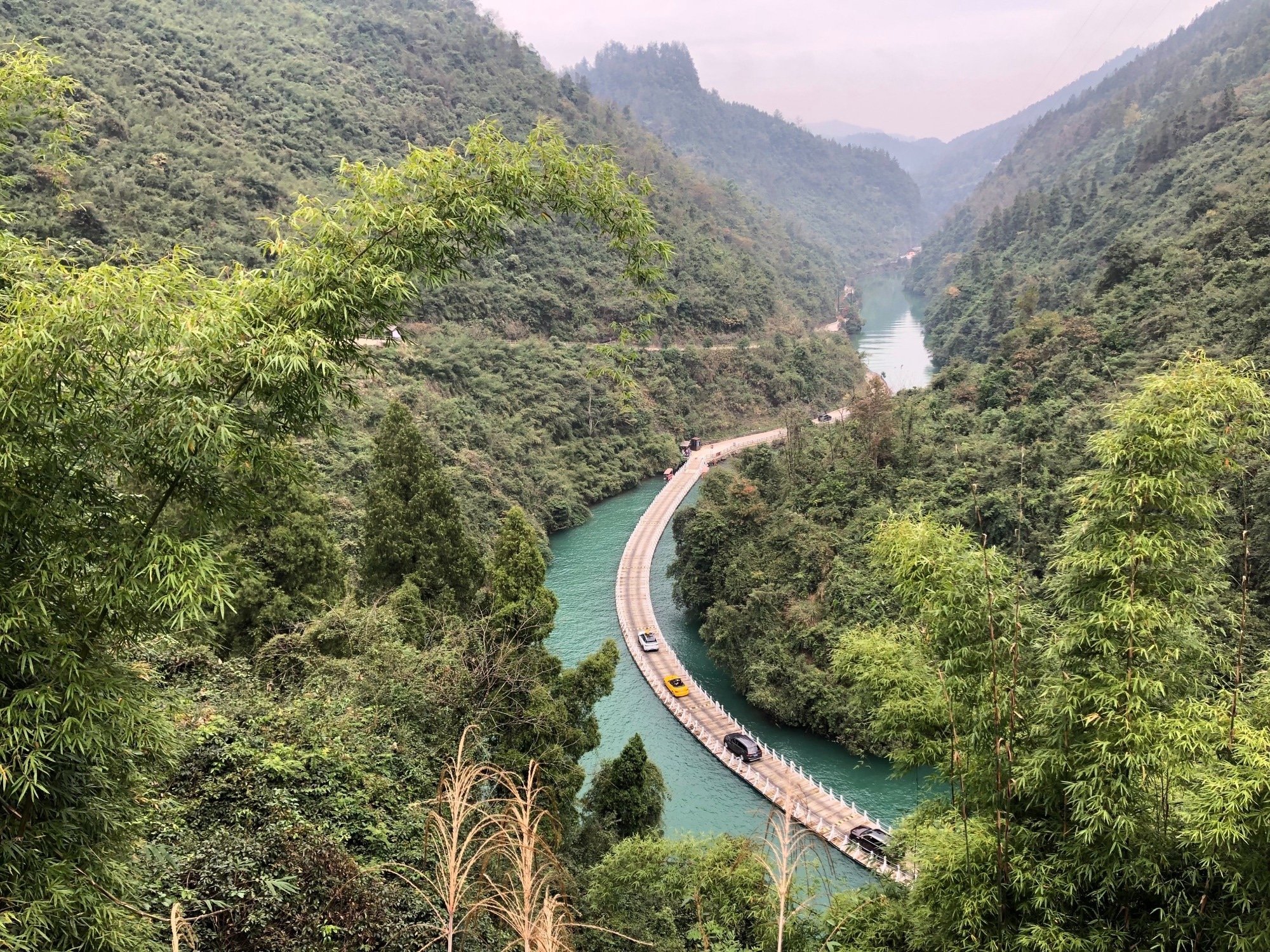
Image Credit: konrakban/Shutterstock.com
These roads remain functional during floods, ensuring continuous connectivity of the road network, accessibility to affected areas, and less economic impact. As flood risks intensify with climate change, floating roads play a critical role in creating safer and more resilient cities.1-4
No time now? Download a free PDF to read later!
The Need for Floating Roads
In flood-prone cities, road transportation infrastructure needs to be flood-proofed to reduce the adverse effects of extreme weather events on transport routes. The use of appropriate materials and design, and the implementation of structural protection measures such as flood-protection barriers, can reduce those impacts.1
Floating roads are also a suitable approach, as they ensure climate resilience for road transportation. They can be built on unstable substrates such as peat or be designed to float on water. They serve as both permanent and temporary solutions in flood-prone cities, where building traditional roads is difficult or impossible due to unfavorable conditions.1
Advantages of Floating Roads
Floating roads are more flexible than elevated roads or bridges. They occupy less space than traditional alternative solutions and can be assembled quickly and relocated easily. They also serve as bypasses for different causes of road blockages, including flooding.1
When built on water, floating roads are mounted on pontoons, allowing them to move and adjust to changing water levels. Structural elements, such as two layers of geogrids, are required on unstable solid substrates to ensure structural integrity.1
Floating roads in flood-prone zones and in intermittently or permanently flooded areas support climate change adaptation and disaster risk management. For instance, floating roads were used in Scotland to access wind farm sites built on peat bogs.1
Constructing Floating Roads on Peat
The construction sequence of a floating road involves site preparation, geogrid placement, placement of aggregate and backfill, and compaction.2
Initial steps in site preparation include marking out the road line; installing advanced drainage before construction; clearing major obstructions such as trees, rocks, and bushes; and retaining local surface soils and vegetation wherever possible.2
Subsequently, a local lightweight fill, like logs or a combination of suitable material and lightweight fill, is used to fill local depressions and hollows. This is followed by covering very wet areas, areas with high fines content, and broken vegetation surfaces using a separator-grade geomembrane to avoid contamination of the aggregate layers.2
During geogrid placement, geogrids are directly unrolled onto the prepared area, and then the adjacent geogrids are overlapped using a simple overlapping arrangement, with a minimum longitudinal overlap of one meter. These overlaps are protected and maintained during road construction.2
In the aggregate and backfill placing phase, the first layer of a suitably sized “well-graded material” is placed on the geogrid. Then, the materials are carefully cascaded onto the geogrid to realize the maximum possible interlocking effect.2
The thickness of the first layer must be at least 150 mm. However, when working with very weak soils, the first layer needs to be 450 mm to ensure enough trafficability to build the remaining road layers.2
In the compaction stage, the placed layers are compacted without using vibratory compaction. The compaction degree applied to the lowest layer of fills is reduced while dealing with extremely soft areas; in such cases, the aggregates are compacted by transferring them in by the tracks and wheels of the construction plant.2
Floating Roads on Water
Floating pontoons are used to construct floating roads on water. For instance, in Canary Wharf, London, there is an 80 m × 15 m floating road with a modular steel roadway deck spanning 81 modular Linkflote pontoons.3
To minimize impacts on the existing dock wall, a pontoon lateral restraint system and linkspan ramps for vehicle access were designed to connect to the ground-floor structure of the Newfoundland Building.3
Structural components were designed as modular steel assemblies, as constructability was a principal issue. Using standard road vehicles, these assemblies were transported and then assembled on site.3
A structural model, including all interfaces and components, was produced to develop the design, produce fabrication and installation drawings, and ensure integration with the permanent works.3
Floating roads are thought to have longer lifespans when advanced technologies are employed during construction, and the infrastructure is properly maintained. However, as transportation needs evolve and climate change poses new challenges, roads may require partial rebuilding or adaptation over time.3
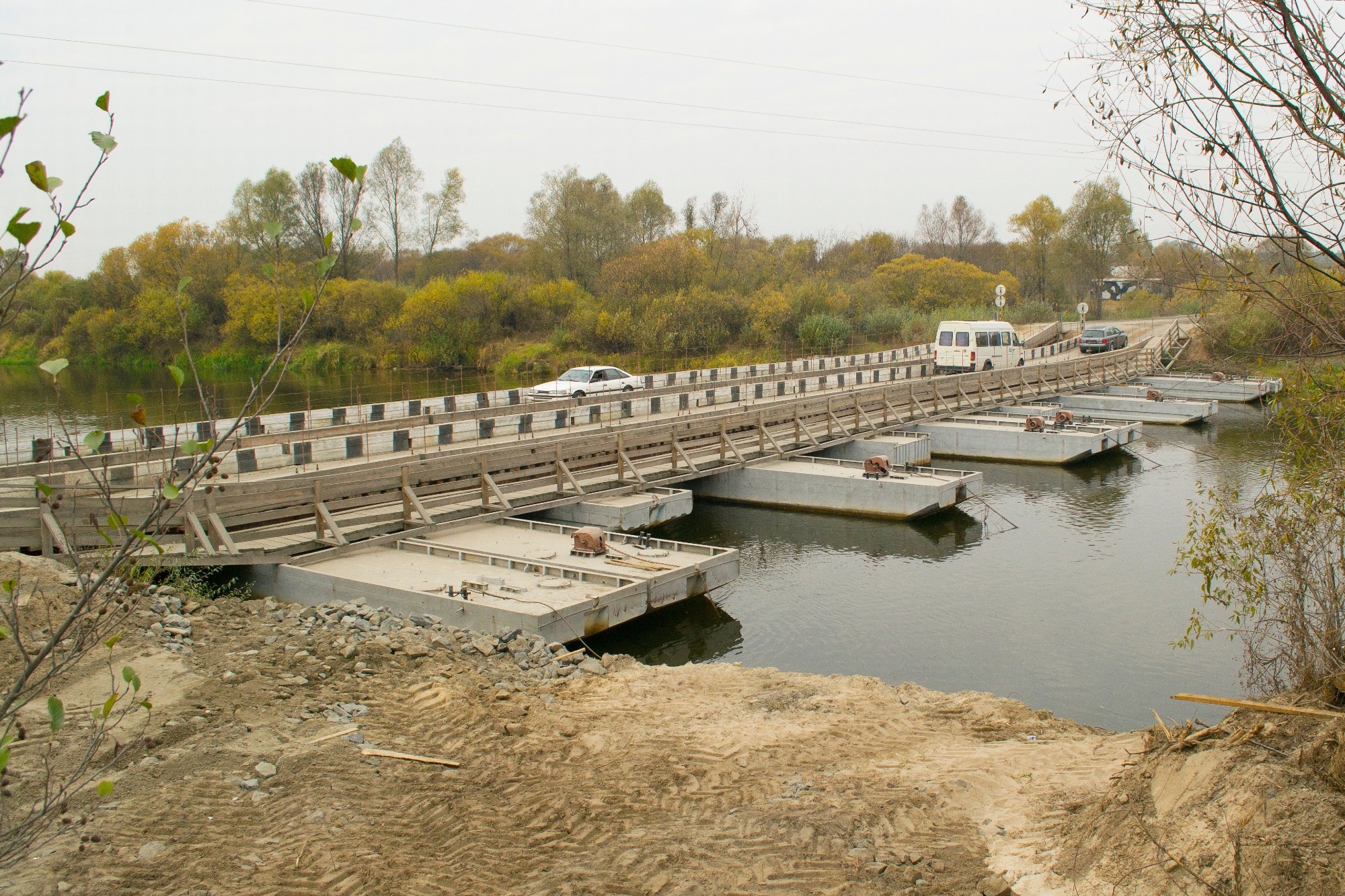
Image Credit: Azimuth_A/Shutterstock.com
Disadvantages of Floating Roads
Floating roads require steady and adequate funding, as they are more expensive to build than ground-level roads and require regular maintenance. Administrative support and permissions from the relevant transportation authorities are critical.1
These roads can create mismatches with regional transportation strategies and conflict with other land uses, such as residential, recreational, and agricultural uses.1
Additionally, floating roads can lead to environmental impacts such as air and noise pollution or fragmentation/destruction of habitats during the building and operation phases.1
Thus, careful consideration and implementation of mitigation measures are necessary. These roads compromise the integrity of the local landscape and contribute to transportation emissions when floating roads are preferred over less carbon-intensive modes of transport.1
Major success factors for floating roads include gaining the support of transport infrastructure administrative bodies, securing sufficient funding, and engaging stakeholders, such as environmental and transport experts, in the design and construction process.1
A New Development
The major problems in constructing roads on saturated soft soils are primarily caused by the soil’s large settlement and low bearing capacity. Such problems can be addressed by installing piled box culverts-geofoam.4
In a study published in the IOP Conference Series: Earth and Environmental Science, researchers proposed a new strategy for floating road construction on soft soil, modeling the pile box culvert-geofoam as a raft foundation.4
Researchers developed a prototype raft-pile foundation and slowly loaded it to a maximum vertical load of 20 kN to conduct the experimental study. Various geofoam thicknesses were used to study the impact of thickness on the settlement.4
This work investigated a small-scale model of a floating construction on soft soil using geofoam and without geofoam under gradual loading. A laboratory prototype consisting of a reinforced concrete raft-pile-geofoam foundation was investigated in a 1.5 × 1.2 × 1.2 m glass-wall tank.4
At first, the geofoam-raft-pile foundation was analyzed using FEM Plaxis and validated against laboratory results. The model was vertically loaded using manually added steel weights up to 20 kN.4
Concrete with 20 MPa strength, 8 mm diameter reinforcement steel (fy = 240 MPa), and EPS40 geofoam with 16 kg/m³ density, 40 kPa elasticity limit, and 4 MPa Young’s modulus were used.4
Results showed a significant reduction in the settlement of the piled raft by the addition of geofoam. A difference in settlement was also observed when the culvert was built with and without geofoam.4
Thicker geofoam led to smaller settlement. This experiment demonstrated the existence of a major relation between the reduction in settlement of the piled raft and hydrostatic uplift.4
Importance of Floating Roads
Floating roads provide a resilient transportation solution for flood-prone cities by maintaining connectivity during floods, adapting to changing water levels, and supporting climate change adaptation. Their flexible construction methods enable use in unstable soils and flooded areas where conventional roads are challenging.
While they require higher investment, maintenance, and careful environmental management, advanced designs such as geofoam-supported foundations improve stability and reduce settlement.
References and Further Reading
- (2024). Floating or elevated roads. [Online] Climate ADAPT. Available at https://climate-adapt.eea.europa.eu/en/metadata/adaptation-options/floating-or-elevated-roads (Accessed on 22 June 2026).
- (2010). Floating Roads On Peat. [Online] Scottish Natural Heritage and Forest Commission Scotland. Available at https://www.roadex.org/wp-content/uploads/2014/01/FCE-SNH-Floating-Roads-on-Peat-report.pdf (Accessed on 22 June 2026).
- Ohl, C., Radcliffe, B., Richardson, H., and Handley-Collins, A. (2018). Briefing: Design and construction of Canary Wharf temporary floating road, London, UK. Proceedings of the Institution of Civil Engineers-Maritime Engineering. 170(34). pp. 96-101. https://www.sciencedirect.com/org/science/article/pii/S1741759718000026.
- Gultom, J., Pratikso, and Rochim, A. (2022). Floating road construction on soft soil. IOP Conference Series: Earth and Environmental Science. 955(1). https://iopscience.iop.org/article/10.1088/1755-1315/955/1/012016.
Disclaimer: The views expressed here are those of the author expressed in their private capacity and do not necessarily represent the views of AZoM.com Limited T/A AZoNetwork the owner and operator of this website. This disclaimer forms part of the Terms and conditions of use of this website.