A Faster Path to Completion
How Concrete Emerged as the Most Practical Material
Metal Printing Remains a Costly Frontier
Speed Versus Structural Quality
Sustainability Comes with Trade-Offs
Working on a Case-by-Case Basis
References and Further Reading
3D printing is making a significant impact on the construction sector by reducing project timelines from several months to just a few days. However, this rapid pace often compromises material quality and adherence to long-term sustainability objectives.
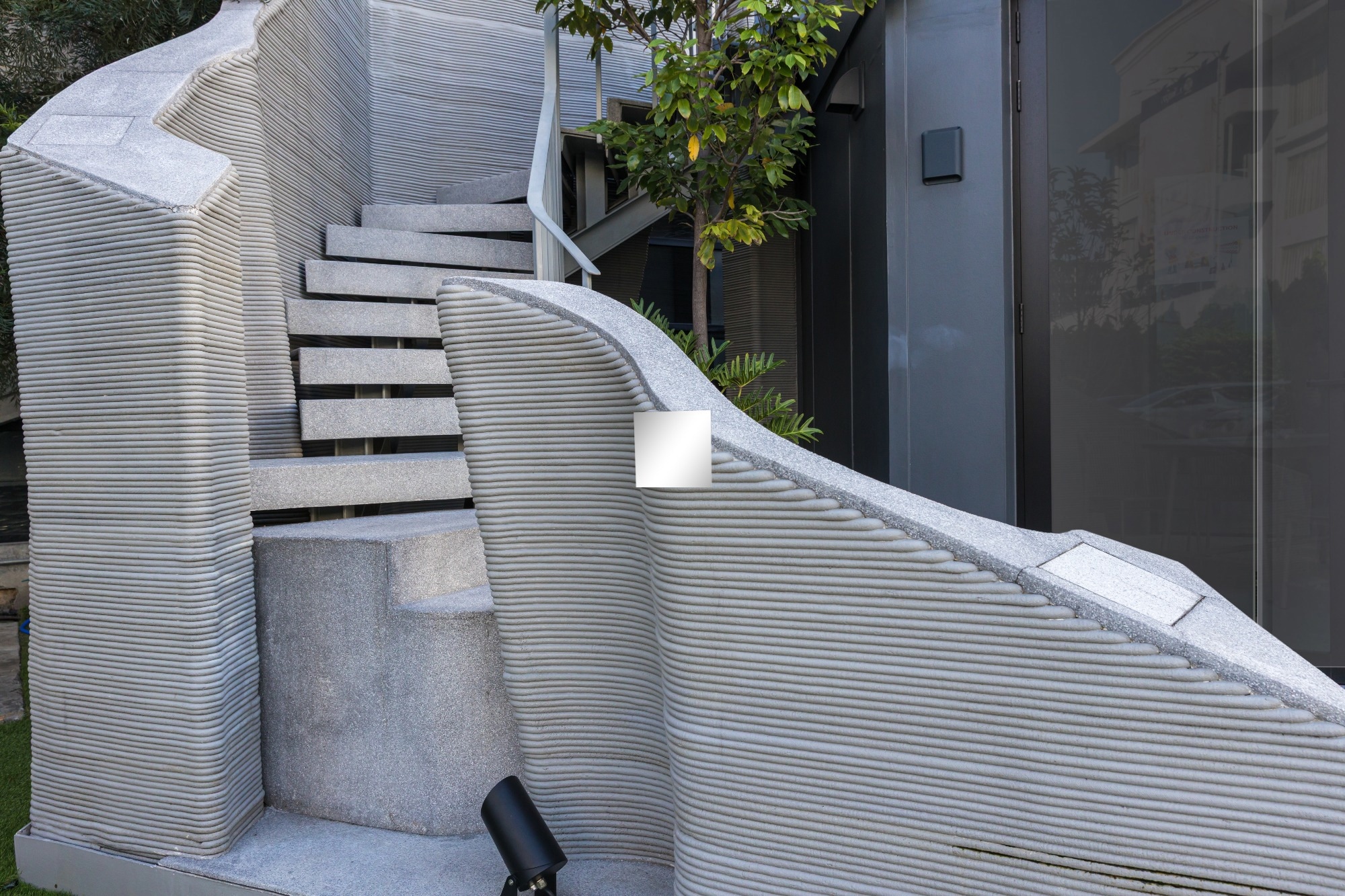
Image Credit: kckate16/Shutterstock.com
Currently, concrete is the primary material used for large-scale additive manufacturing due to its practicality and versatility. On the other hand, metal additive manufacturing has not achieved the same level of scalability, largely due to high costs and the technical complexities of metal processing.
A Faster Path to Completion
Using 3D printing methods, construction firms are printing entire buildings in a fraction of the time required by traditional methods. In Portugal, Havelar completed a 500 m2 public building in nine days using a COBOD BOD2 printer operated by a four-person crew, a project the company said required roughly a third of the time, materials, and labor of conventional construction.1
The speed advantage extends beyond single buildings. Havelar has since printed 32 housing units in Porto, with 53 more homes scheduled for later this year. It shows that printing timelines can scale across residential programs rather than remain limited to demonstrative projects.1
Saving this for later? Download a PDF here.
Research shows that printing allows multiple trades to work in parallel because structural elements emerge directly from a digital model. This reduces the delays that typically occur between finishing a structure and starting follow-on work like electrical or plumbing installation, and it lets crews stay small compared with a conventional site.1
The building in Portugal also included curved exterior walls, a feature that adds cost under conventional formwork methods. Printing produced this geometry directly from the digital design without extra labor or material, and the curves served a structural role by helping manage solar gain on the building.1
How Concrete Emerged as the Most Practical Material
Concrete has proven the most economical material for construction printing because it can be pumped, extruded, and layered using robotic arms or gantry systems without requiring extreme heat. A recent review in Nature describes how large gantry printers have built houses near 100 m2 and structures exceeding 1000 m2, including bridges spanning up to 30 meters.2
With topological optimization, printed concrete structures can save up to 70% of material compared with formwork-based construction, since material gets placed only where load-bearing performance requires it. Costain implemented this principle in a UK road project, where a printed headwall structure supported a wildlife corridor along the A30 in Cornwall.2,3
In a carbon capture project on Teesside in the North East of England, Costain collaborated with Hyperion Robotics to print 90 concrete pipe support bases. This innovative approach reduced the use of concrete and steel by 40% and lowered carbon emissions by up to 50% compared to traditional precast alternatives. The printed supports were also up to 10 times stronger while weighing 60% less, which significantly improved handling safety on site.3
Costain's previous projects included the UK's first 3D-printed concrete water chamber for United Utilities, which served as an early test that helped the company build confidence before applying the technology to larger civil infrastructure programs.3
Metal Printing Remains a Costly Frontier
Metal additive manufacturing offers design freedom that concrete cannot match, including internal stiffening, variable microstructures, and complex geometries produced through controlled heating and cooling. A review of metal 3D printing in construction found these properties give engineers new tools for creating efficient structural shapes and functionally graded elements.4
Metal printing still demands specialized equipment, high energy input, and skilled operators, which keeps costs above concrete printing for most building applications. The same review found that construction professionals need deeper computational analysis skills and new inspection methods before metal printing sees wider adoption across the industry.4
A recent report published in the Journal of Materials Science found that achieving consistent ductility and fatigue performance remains difficult. The layer-by-layer heating and cooling process changes the microstructure of the metal in ways that traditional rolled steel does not experience. Some fabricators now use post-processing heat treatments to recover ductility losses observed in early printed steel samples.5
Because metal printing works best for smaller connective elements rather than full structures, it complements conventional steel fabrication instead of replacing it. Researchers expect hybrid approaches, where printed metal joints reinforce traditionally manufactured beams, to be increasingly used in the foreseeable future.4
Speed Versus Structural Quality
Faster construction raises legitimate questions about long-term structural performance. According to an article published in Automation in Construction, printed concrete layers can create weak points between successive passes, since each layer must bond properly with the one below before curing begins.6
Mix design becomes critical at high printing speeds. Formulations need to be fluid enough to pump through a nozzle yet stiff enough to hold their shape once extruded; this is known as the buildability challenge. If these qualities are not balanced, the material may crack or sag, especially in taller structures where the lower layers must support the weight above. These issues are less likely to occur in traditional pouring methods that use formwork.6
Industry researchers argue that project delivery models themselves need rethinking, since traditional planning sequences assume slower construction and different levels of contractor involvement.
An Engineering Proceedings study concluded that early contractor engagement and revised design processes are necessary to fully capture printing benefits without sacrificing reliability. Regulators and insurers are now developing testing standards specifically for printed elements, since existing building codes were written for cast or rolled materials rather than layered ones.7
Sustainability Comes with Trade-Offs
Printed concrete often uses less overall material, yet the mix itself carries a higher environmental cost per unit than standard concrete. Printed concrete requires a higher proportion of cement to maintain pumpability and buildability, which raises embodied carbon even as total material volume shrinks.6
This creates a genuine tension for the building industry. While 3D printing reduces formwork waste and enables lighter structural designs, the cement-heavy mixtures and energy-intensive robotic deposition processes can diminish some of these environmental benefits. To address this issue, it may be necessary to use low-carbon binders instead of standard cement in the printing mix.2
Researchers working on low-carbon printing inks point to waste-derived materials as one path forward, since substituting industrial byproducts for a portion of the cement content can decrease the life cycle impact of printed structures. Adoption of these alternative mixes remains limited compared with standard cement-based formulas used across most current projects.2
Costain frames its approach as production thinking, combining offsite manufacturing with printing to reduce both waste and delivery time. The company integrates printing with carbon management frameworks, such as PAS 2080, and is continuously exploring alternative cement options that can sequester carbon in the final concrete. This innovation provides asset owners with greater confidence in the long-term performance of their projects.3
Working on a Case-by-Case Basis
Project teams increasingly select printing materials based on the specific demands of each structure rather than applying one method universally. Concrete suits foundations, walls, and repeatable civil elements like pipe supports, while metal printing fits smaller, high-stress connections that benefit from custom geometry.3,4
This material-specific approach reflects where the technology currently stands. Concrete printing has moved from isolated pilot projects into programs producing dozens of housing units and civil infrastructure elements. Similarly, metal printing remains concentrated in research settings and specialized structural components.1,3
The construction industry seems to be establishing a trend where the speed advantages of printing align most effectively with concrete applications. On the other hand, metal printing is advancing toward broader structural use in the coming years. Success in both cases depends on matching material choice to structural demand, supported by mix design research and revised delivery models that account for how printed structures actually perform over time.3,6
References and Further Reading
- Brown, A. (2026). Havelar 3D prints public building in Portugal in nine days. [Online] Construction Briefing. Available at: https://www.constructionbriefing.com/news/havelar-3d-prints-public-building-in-portugal-in-nine-days/8124522.article.
- Zhang, Y. et al. (2025). 3D printing technology in concrete construction. Nature Reviews Clean Technology, 1(4). https://www.nature.com/articles/s44359-025-00047-z.
- Small, G. (2026). 3D vision: Printing concrete for a more sustainable future. [Online] Costain. Available at: https://www.costain.com/insights/2026/3d-vision-printing-concrete-for-a-more-sustainable-future/.
- Buchanan, C., & Gardner, L. (2019). Metal 3D printing in construction: A review of methods, research, applications, opportunities and challenges. Engineering Structures, 180. https://www.sciencedirect.com/science/article/abs/pii/S0141029618307958.
- Haghdadi, N. et al. (2021). Additive manufacturing of steels: a review of achievements and challenges. Journal of Materials Science, 56. https://link.springer.com/article/10.1007/s10853-020-05109-0.
- Hassan, H. et al. (2024). Towards innovative and sustainable buildings: A comprehensive review of 3D printing in construction. Automation in Construction, 163. https://www.sciencedirect.com/science/article/abs/pii/S0926580524001535.
- Placzek, G., & Schwerdtner, P. (2023). From Process to System: A Review on the Implications of Concrete 3D Printing on Project Delivery. Engineering Proceedings, 53(1). https://www.mdpi.com/2673-4591/53/1/54.
Disclaimer: The views expressed here are those of the author expressed in their private capacity and do not necessarily represent the views of AZoM.com Limited T/A AZoNetwork the owner and operator of this website. This disclaimer forms part of the Terms and conditions of use of this website.