From Lab Success to Real-World Challenges
Can Bacteria Repair Concrete Cracks?
Concrete That Heals Like the Human Body
Tiny Capsules, Big Repair Potential
What's Holding Self-Healing Concrete Back?
The Road to Self-Healing Infrastructure
References and Further Reading
Concrete is the backbone of construction worldwide, prized for its compressive strength, durability, and affordability. However, it has a critical weakness: tension. Factors like shrinkage, heavy loads, and temperature fluctuations can create fine cracks through which water, chlorides, and other harmful agents can infiltrate and corrode the steel reinforcement.
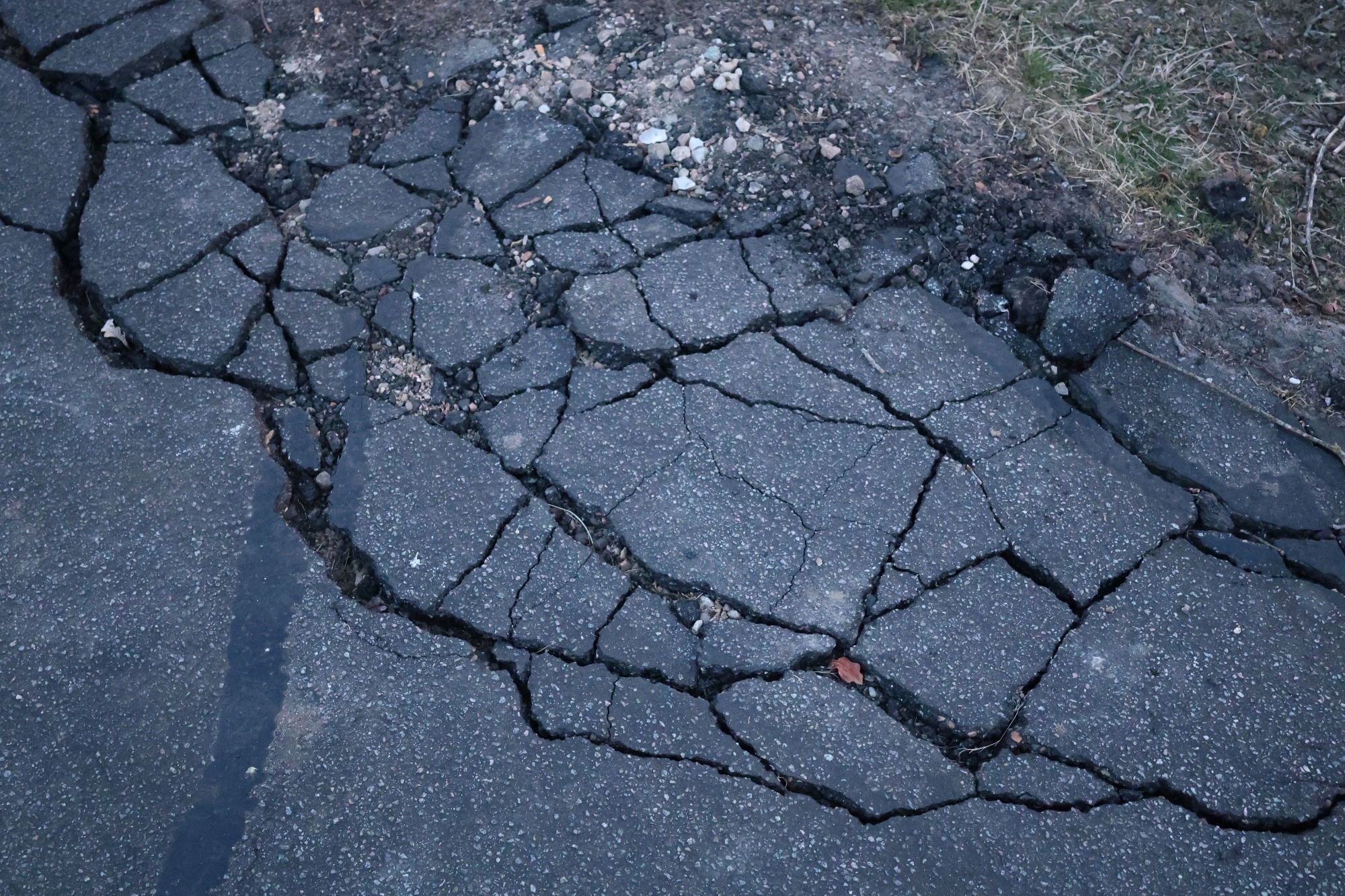
Image Credit: Nikolai Christiansen/Shutterstock.com
Thereafter, corrosion shortens the structure’s service life, and manual repairs can be expensive, disruptive, and sometimes impossible in hard-to-reach places. Self-healing concrete addresses this issue by sealing cracks on its own, without human intervention. Researchers have developed several approaches, and many perform well in laboratory tests.1
This article explores three leading self-healing technologies and evaluates their field trials. It also discusses the cost, carbon, and standardization challenges that hinder broader adoption in the industry.
Download a free copy of this page here!
From Lab Success to Real-World Challenges
Concrete can partially repair itself when cracks form. If water enters a crack, unreacted cement grains continue to react, and dissolved calcium combines with carbon dioxide to create calcium carbonate. This natural repair process, called autogenous healing, mainly closes cracks narrower than about 0.2 mm and depends heavily on moisture. Engineered systems can add healing agents to fix larger cracks in different conditions.1
Most research so far has been done on small samples kept in water or high humidity, where healing agents have ideal conditions to react. A report published in International Materials Reviews argues that the field needs evidence of reliable healing under realistic, aggressive exposures and in actual structures before products reach the market. Real buildings face freeze-thaw cycles, dry spells, salt spray, and repeated loading that laboratory tests rarely reproduce.2
Can Bacteria Repair Concrete Cracks?
Bacterial concrete contains dormant spores of alkali-tolerant species, often from the Bacillus genus, along with a calcium-based nutrient such as calcium lactate; when water enters a crack, the spores germinate. Their activity produces carbonate ions that mix with calcium ions to form calcite, filling the crack. The spores need protective carriers because the pore fluid in concrete can reach an alkaline pH of about 13.1
Belgium was one of the first places to use bacteria in a large-scale project. Within the project, researchers created a roof slab for an inspection pit using a bacterial mixture prepared in a large mixer. Laboratory tests showed that samples sealed over 90% of their cracks after being exposed to water for 27 weeks. One year after the slab was made, it had no visible cracks, so its healing ability has not yet been tested in actual use.1
Similarly, researchers in China used microbial concrete in the sidewalls of underground structures, where the risk of cracking is high. An automated system added healing particles to the concrete mix, and monitoring showed fewer, narrower, and shallower cracks, with calcite confirmed in the healed zones. The concrete reached a strength of 43.8 MPa after 28 days, meeting its design grade and showing that standard plant equipment can produce bacterial concrete.1
Concrete That Heals Like the Human Body
The design of vascular systems is inspired by blood vessels. Engineers embed a network of tubes in the concrete and pump a liquid healing agent, such as polyurethane, through it when cracks
appear. Since the network can be refilled, one structure can heal multiple times. Early versions used brittle glass or ceramic tubes that had to break to release fluid, which made them fragile during casting and difficult to scale.3
A European team tested a sturdier design on the Henneaulaan Bridge replacement project in Zaventem, Belgium. Nine trial walls, each 2 m2 and 10 cm thick, were cast under normal site conditions, with polymer tubes fixed to the reinforcement. Gelatin plugs sealed small holes along the tubes until the fluid dissolved them, and exposed tube ends allowed the healing agent to be injected after hardening.4
The trial confirmed that a construction crew could install the system and that it sealed cracks effectively. For a single repair, its life-cycle assessment found no meaningful environmental advantage over manual crack injection. However, the benefits grew substantially across several repair cycles, suggesting that the value of vascular healing depends on how often a structure is expected to crack.3
Tiny Capsules, Big Repair Potential
Capsule-based systems store healing agents like polyurethane, sodium silicate, or bacterial spores within small shells distributed throughout the mix.
When a crack passes through a capsule, it ruptures, and the released agent reacts to fill the gap. For example, sodium silicate reacts with calcium hydroxide to form an extra binding gel. The main challenge is to ensure that each shell survives the mixing process yet breaks easily when a crack forms.1
Cement-based macrocapsules provide a practical solution. In combined simulation and laboratory work, capsules about 3 mm wide, with a 350 μm shell, dosed at 10% by volume, sealed cracks up to 0.5 mm wide. Water permeability decreased by 90% after 28 days. Dosage still requires care, as several studies report that excessive capsule content reduces strength and creates weak zones around the shells.1
What's Holding Self-Healing Concrete Back?
Cost is often the biggest obstacle for self-healing concrete. Estimates suggest that self-healing concrete costs about 20–70% more than regular concrete. A recent life-cycle assessment published in Developments in the Built Environment found that a cubic meter of the evaluated bacteria-based concrete had a 36% larger carbon footprint than conventional concrete. This increase is mostly due to the calcium nitrate and polyvinyl acetate used for healing.1,5
The same study identified a smarter deployment strategy. Placing bacterial concrete only in the cover zones of reinforced structures and accepting wider early-age cracks there reduces the non-structural steel required for crack control. This approach can save up to 51 kg of CO2/m3, an approximately 12% reduction in embodied carbon, with improvements of up to 50% across other environmental impact categories.5
Another challenge is the lack of standards; engineers and clients need to agree on testing methods before they can choose a product. Labs have only recently validated shared procedures for measuring healing. Interviews with stakeholders across the value chain found that commercialization is still in its infancy, with barriers appearing at every stage, from research to the end user.6
The Road to Self-Healing Infrastructure
Self-healing concrete has moved beyond laboratory curiosity to a viable construction material with clear industrial applications. Bacterial mixes have been batched in industrial equipment, site crews have installed vascular networks, and capsule designs have been optimized with simulation. However, further evidence is required before routine adoption of these techniques.
In the near term, the application of self-healing concrete is expected to focus on infrastructure where crack repairs can be costly, including tunnels, basements, and marine structures. 1
References and Further Reading
- Galal, M. K., Mourad, A. I., & Rana, S. (2026). Challenges and advancements in self-healing concrete: Mechanisms, applications, and scalability in sustainable construction. Journal of Building Engineering, 119. DOI:10.1016/j.jobe.2025.115097. https://www.sciencedirect.com/science/article/pii/S2352710225033340
- Cappellesso, V. et al. (2023). A review of the efficiency of self-healing concrete technologies for durable and sustainable concrete under realistic conditions. International Materials Reviews, 68(5). DOI:10.1080/09506608.2022.2145747. https://www.tandfonline.com/doi/full/10.1080/09506608.2022.2145747
- Shields, Y. et al. (2024). Non-destructive evaluation of ductile-porous versus brittle 3D printed vascular networks in self-healing concrete. Cement and Concrete Composites, 145. DOI:10.1016/j.cemconcomp.2023.105333. https://www.sciencedirect.com/science/article/pii/S0958946523004079
- Self-Healing Concrete: Innovating Concrete Repair. (2023). [Online] BESIX. Available at: https://www.besix.com/en/news/self-healing-concrete-innovating-concrete-repair
- Justo-Reinoso, I. et al. (2023). Bacteria-based self-healing concrete− A life cycle assessment perspective. Developments in the Built Environment, 16. DOI:10.1016/j.dibe.2023.100244. https://www.sciencedirect.com/science/article/pii/S2666165923001266
- Barros, L. B. et al. (2023). An analysis of the commercialisation barriers of self-healing concrete. MATEC Web of Conferences, 378. DOI:10.1051/matecconf/202337810001. https://www.matec-conferences.org/articles/matecconf/abs/2023/05/matecconf_smartincs2023_10001/matecconf_smartincs2023_10001.html
Disclaimer: The views expressed here are those of the author expressed in their private capacity and do not necessarily represent the views of AZoM.com Limited T/A AZoNetwork the owner and operator of this website. This disclaimer forms part of the Terms and conditions of use of this website.