*Important notice: This news reports on an unedited version of an accepted paper and is awaiting final editing. Therefore, the paper should not be regarded as conclusive or treated as established information.
A novel ultrasound carbonation technique has been used to fabricate multifunctional submicron-scale porous water-foamed cementitious materials. These materials demonstrated refined pore structures, enhanced mechanical strength, improved acoustic performance, and increased uptake of CO2. The researchers published their findings in the journal Nature Communications.
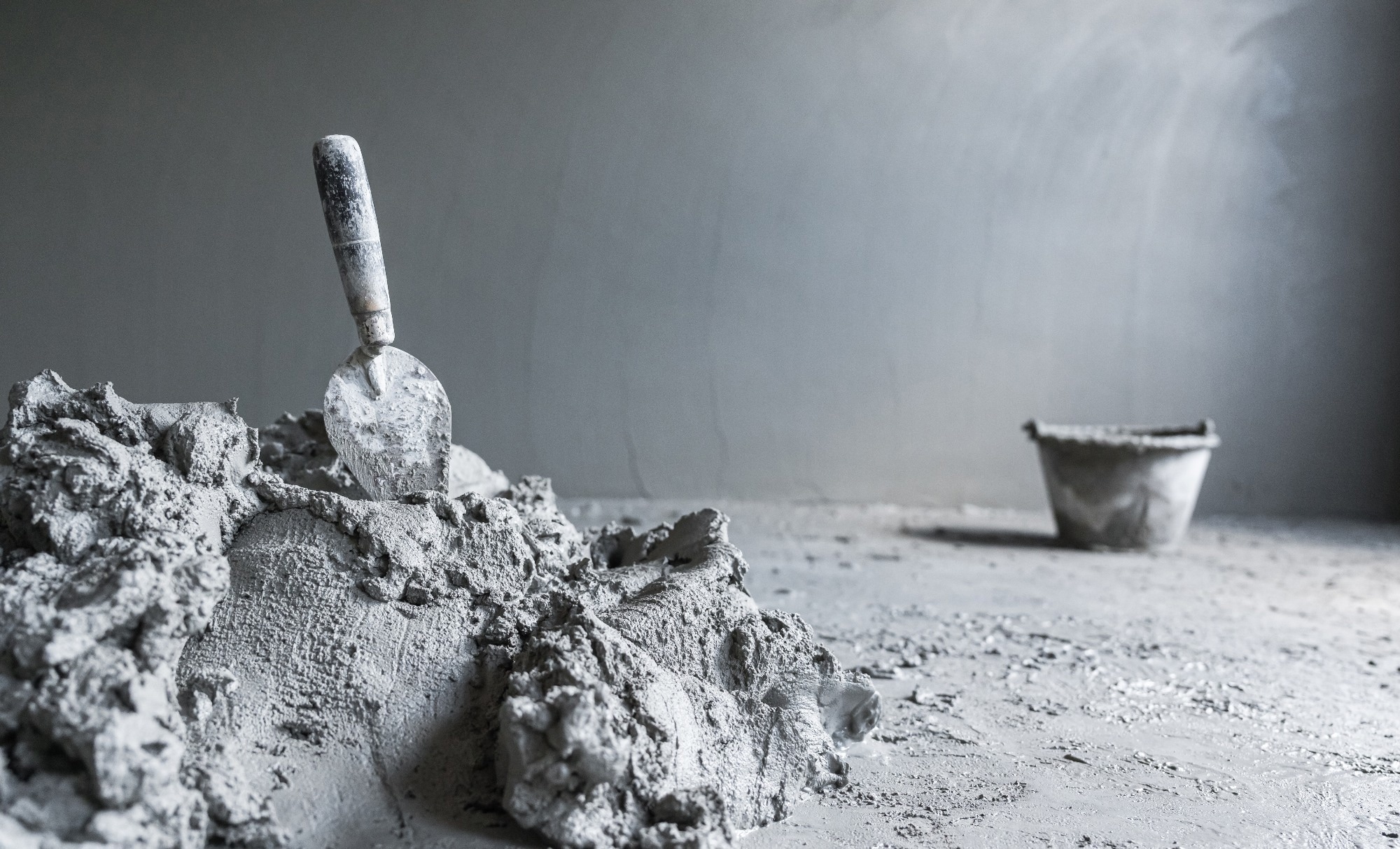 Study: Multifunctional submicron-scale porous water-foamed cementitious materials. Image Credit: Nature Peaceful/Shutterstock.com
Challenges in Cement Porosity Control
Conventional cement-based materials face a fundamental challenge in achieving low density without compromising mechanical strength, primarily due to difficulties in controlling pore structures.
Traditional foamed concrete relies on unstable air bubbles, producing unevenly distributed micrometer-scale pores that weaken strength and durability. Water can also generate finer pores during cement hydration, but at high water-to-cement ratios, bleeding disrupts pore formation and structural integrity.
Inspired by solvent confinement in aerogels and biomimetic cement materials, the researchers proposed using CO2 carbonation to strengthen particle interactions, convert free water into bound water, and refine pore architecture.
However, carbonation alone cannot adequately prevent bleeding at high water contents. To address this limitation, ultrasound is introduced during carbonation. Through acoustic cavitation, ultrasound enhances cement particle dispersion, improves CO2 transport, accelerates carbonation reactions, and promotes cohesive gel formation and particle bridging.
This combined approach aims to produce lightweight cementitious materials with finer, more stable pores and improved mechanical performance.
Saving this for later? Download a free copy here!
Ultrasound Carbonation Fabrication Process
The study designed a three-step fabrication process to produce water-foamed cementitious materials. Firstly, cement and water were mixed at a relatively high w/c ratio of 0.80 under simultaneous ultrasound and CO2 injection (ultrasound carbonation). This facilitated a stable, confined water distribution inside an enhanced flocculated particle network.
Second, rapid gelation and carbonate precipitation reinforced this network by improving colloidal interactions, increasing packing density, and promoting the formation of calcium-silicate-hydrate (C–S–H) gels that bridged particles. Third, standard curing and drying removed trapped water, leaving a hardened material with refined submicron pore architecture.
For experimental comparison, samples were prepared using conventional mixing (ordinary mixing, ultrasound only, carbonation only) and ultrasound carbonation under different mixing durations (five to 20 minutes).
Further parametric studies varied ultrasonic power, CO2 injection rate, frequency, and water-to-cement ratios. Cement pastes were initially mixed under controlled laboratory conditions, and CO2 (>99.9% purity) was injected through diffusers while ultrasound was applied via a titanium horn-type probe at 20 kHz.
Comprehensive characterization probed the pore structure, mechanical strength, acoustic properties, and CO2 uptake. Mercury intrusion porosimetry and focused ion-beam scanning electron microscopy (FIB-SEM) quantified pore-size distributions, revealing the proportions and connectivity of submicron pores.
Mechanical strength tests (compressive, flexural, and fracture toughness) evaluated structural performance. Sound transmission loss was measured across a range of frequencies using impedance tube methods, and CO2 uptake was determined by mass changes resulting from carbonation.
Submicron Pore Structure and Performance
The ultrasound carbonation process produced a distinctly refined pore network with nearly all pores located below the submicron scale. The UC15 sample, prepared using 15 minutes of ultrasound
carbonation, exhibited a refined pore network with 96.8% of pores smaller than 200 nm and 98.5% smaller than 1000 nm.
By contrast, control samples made by conventional carbonation mixing showed many micron-scale pores and defects. SEM and FIB-SEM imaging confirmed a sponge-like, highly interconnected submicron pore morphology in ultrasound-carbonated samples. This refined microstructure blocked typical bleeding channels, reduced interparticle spacing, and led to a more uniform water state, which facilitated homogeneous hydration reactions.
These structural refinements translated into significantly enhanced mechanical and multifunctional properties. The UC15 material exhibited a specific compressive strength of 22.5 kN·m·kg-1, an increase of up to 162% compared to the study’s density-matched foamed concrete control.
It also showed improved fracture toughness and flexural strength due to more stable and tortuous resistance to crack propagation, confirmed through acoustic emission and strain mapping analyses.
Acoustically, UC15 achieved sound transmission loss gains of 131.8% and 107% at frequencies of 2000 Hz and 4000 Hz, respectively, compared to the laboratory foamed concrete control. These results are attributable to the fine pore size and increased tortuosity disrupting sound wave passage.
Furthermore, the material demonstrated favorable environmental performance: cumulative CO2 uptake after 28 days reached 7.11% per unit mass of cement, indicating that the simultaneous in situ carbonation process effectively sequestered CO2, though the study did not explicitly assess overall environmental impact.
The parametric studies demonstrated that the process could produce refined pore structures under a range of experimental conditions. However, performance depended on the processing parameters, and further research is needed to establish its suitability for large-scale production.
Implications for Lightweight Cementitious Materials
This work introduces a new fabrication technology for lightweight cementitious materials by harnessing ultrasound-assisted carbonation to control water confinement within the cement’s early-age flocculated structure.
This study lays the foundation for a new class of high-performance lightweight cementitious materials engineered through confined-water regulation. The approach thus opens promising avenues for next-generation green building materials with improved structural and environmental performance.
Journal Reference
Xiong, G., et al. (2026). Multifunctional submicron-scale porous water-foamed cementitious materials. Nature Communications. DOI: 10.1038/s41467-026-78691-7, https://www.nature.com/articles/s41467-026-78691-7.