Could Bayer red mud (BRM) be the secret to stronger, greener concrete? A new study says yes - if you use just the right amount.
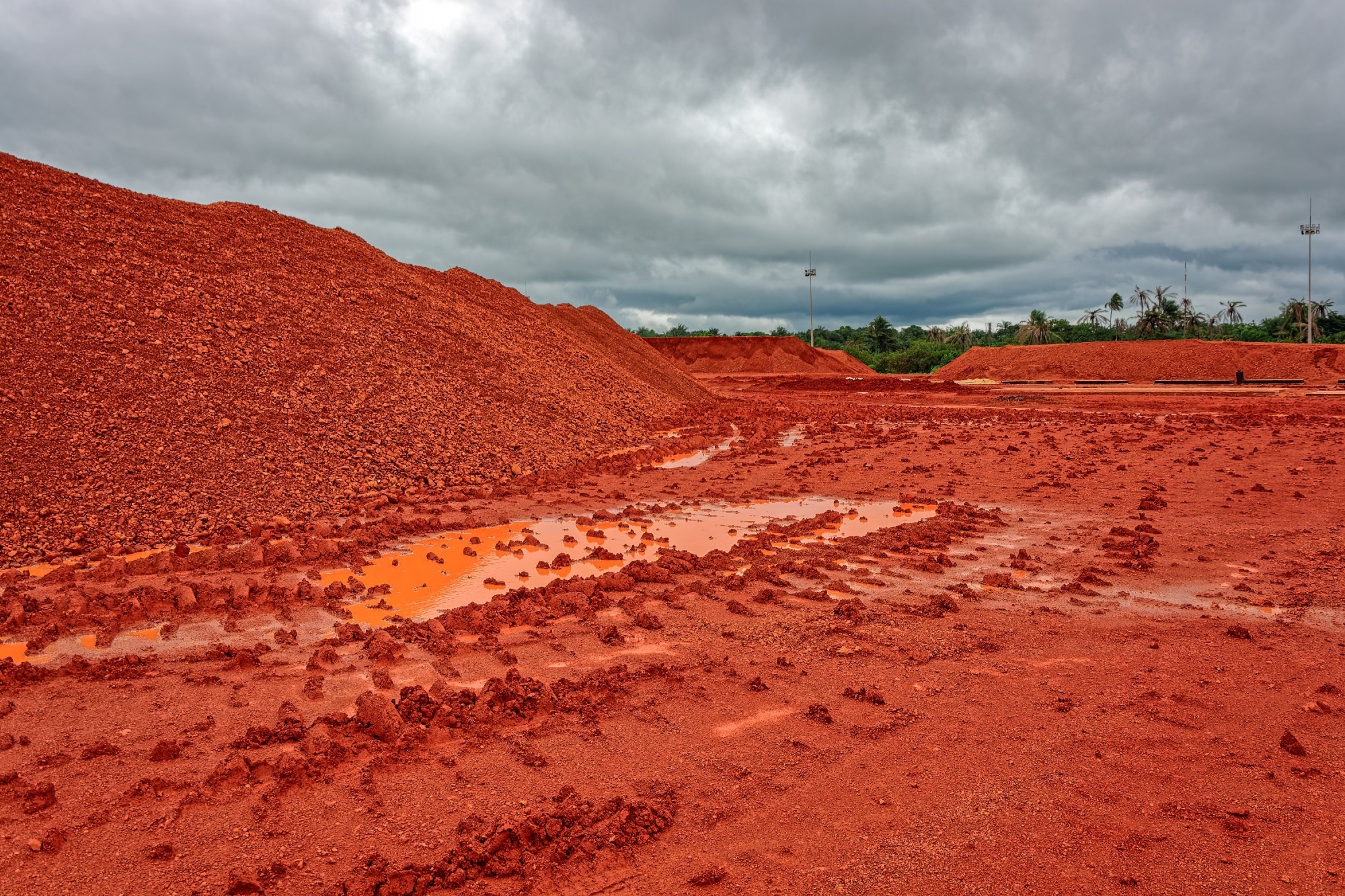
Study: Performance of cementitious composites with Bayer red mud as a partial cement replacement. Image Credit: Igor Grochev/Shutterstock.com
A paper recently published in Scientific Reports explores how BRM from the Shandong Xinfa Group can be used as a partial replacement for cement in concrete. The research focuses on both the environmental implications and the mechanical performance of incorporating this industrial byproduct into cementitious composites.
Why BRM Matters
Red mud is the primary solid waste generated during alumina production, and Bayer red mud accounts for roughly 70 % of it. Highly alkaline and rich in iron but low in calcium, BRM poses significant challenges for reuse. Its high sodium content and strong alkalinity limit its safe application, making responsible disposal and potential resource recovery a priority.
China, which produces 55 % of the world’s alumina, generates millions of tons of red mud annually. Yet, only about 9.8 % is currently reused; the rest ends up in environmentally hazardous stockpiles. Finding viable uses for BRM is therefore both an environmental and industrial imperative.
BRM’s Role in Cement-Based Materials
Past research has explored how red mud can be integrated into cement systems. For example, it has been used as an alkaline activator in alkali-activated materials, as feedstock in Portland clinker production, as well as as a supplementary cementitious material. However, increasing BRM content often leads to drawbacks: higher water absorption, lower mechanical strength, and reduced reaction temperatures, particularly when the content exceeds 20 %.
Some studies have shown that using up to 15 % red mud - either dry or calcined - can still yield acceptable microstructures and strength for civil engineering applications. However, much depends on the specific chemical and mineral makeup of the red mud, which varies based on the source of the bauxite and processing techniques used.
The Study: Testing Cement Substitution Levels
In this work, the research team investigated the use of Xinfa BRM as a partial cement replacement/supplementary cementitious material by replacing cement partially at 15 %, 10 %, 5 %, 1 %, and 0.5 % by mass. with 100% pure cement used as the control. They examined effects on 3- and 28-day compressive strength, setting time, and microstructural characteristics.
The BRM used was dried and milled using a high-speed FII-1000C mill, resulting in a much finer particle size than cement - D50 values were 1.06 µm for red mud versus 19.5 µm for cement. These fine, spherical BRM particles acted as micro-fillers and provided nucleation sites that helped strengthen the hardened matrix. BRM’s specific surface area (689.7 m2/kg) was also significantly greater than that of cement (393.1 m2/kg), increasing water demand for hydration.
Compressive strength testing followed ASTM C109 standards, while setting time was measured with a Vicat apparatus. X-ray diffraction (XRD) and thermogravimetric/differential thermogravimetric (TG/DTG) analyses helped identify hydration products, and scanning electron microscopy (SEM) was used to assess microstructural changes. Heavy metal leaching was evaluated using the toxicity characteristic leaching procedure (TCLP).
Findings
Adding BRM increased setting times but remained within the limits specified in China’s GB 175-2007 standard. Compressive strength at 3 and 28 days was comparable to the control group for BRM contents below 5 %, with 1 % BRM achieving the highest 28-day strength. This boost was attributed to enhanced matrix densification and the micro-filler effect. Strength declined at BRM levels above 10%.
Despite dosage differences, hydration products after 28 days were largely consistent across all mixes, as confirmed by XRD. TG-DTG analysis showed peaks corresponding to calcium silicate hydrate, ettringite, monosulfoaluminate, calcium hydroxide, and calcium carbonate. SEM revealed denser microstructures at low BRM levels and increased porosity at higher dosages.
Importantly, TCLP results showed that heavy metal leaching remained well below regulatory thresholds (TCLP and GB 5085.3-2007), confirming the environmental safety of using Xinfa BRM in this context.
Conclusion: A Viable Path for Red Mud Reuse
This study demonstrates that when used in controlled amounts, BRM can safely and effectively substitute a portion of cement in concrete mixtures. An optimal performance was observed at just 1 % BRM, where mechanical strength was maximized and environmental safety ensured.
However, for large-scale implementation, questions around long-term durability, life-cycle performance, and broader environmental impacts remain open. Continued research will be essential to validate these findings at an industrial scale.
Journal Reference
Gu, H., Tang, M., Wu, S., Wang, H., & Meng, Z. (2025). Performance of cementitious composites with bayer red mud as a partial cement replacement. Scientific Reports. DOI: 10.1038/s41598-025-29623-w, https://www.nature.com/articles/s41598-025-29623-w
Disclaimer: The views expressed here are those of the author expressed in their private capacity and do not necessarily represent the views of AZoM.com Limited T/A AZoNetwork the owner and operator of this website. This disclaimer forms part of the Terms and conditions of use of this website.