A new study shows that GFRP confinement can not only offset the strength loss in rubberized concrete but also substantially improve its strength and ductility.
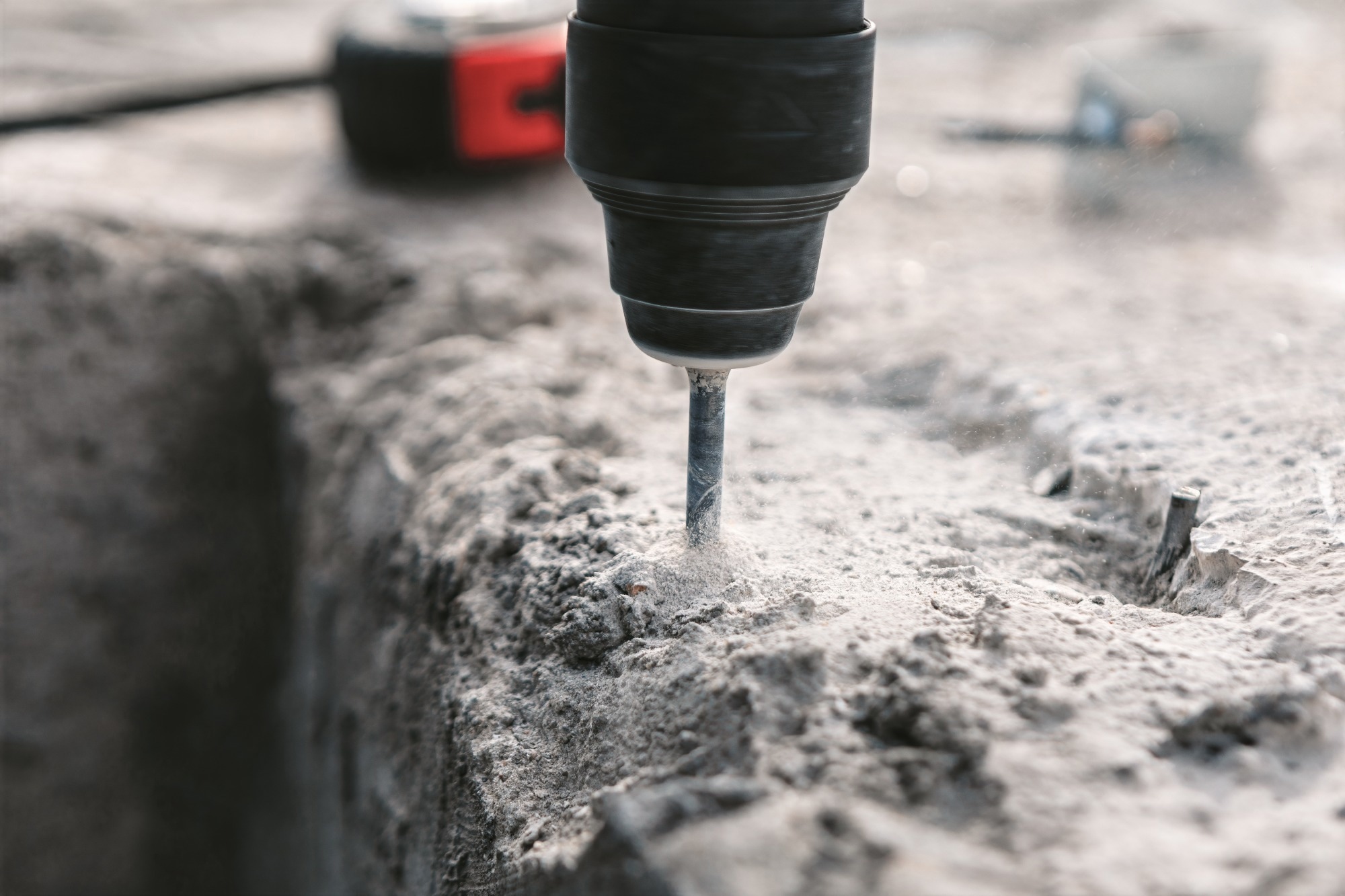
Study: Cost-effective FRP solutions for enhancing strength and strain of sustainable concrete made with waste tyre rubber. Image Credit: Wailani/Shutterstock.com
Concrete made with waste tyre rubber has long been limited by reduced strength. But, new research has shown that GFRP confinement can not only recover that loss, but significantly enhance both strength and ductility.
A recent study published in Scientific Reports presents a systematic investigation into the use of glass fiber-reinforced polymer (GFRP) jackets to improve rubberized concrete made with waste tire rubber.
Environmental Challenges in Concrete Production
The construction industry continues to face mounting pressure related to resource scarcity and environmental impact. Traditional concrete depends heavily on natural aggregates, while the disposal of end-of-life tires (ELTs) remains a persistent environmental issue.
Incorporating recycled tire rubber into concrete offers a viable solution - it reduces waste, lowers environmental impact, and improves properties such as impact resistance and energy absorption.
However, rubberized concrete typically suffers from reduced mechanical strength. This is largely due to weak interfacial transition zones (ITZs), caused by the hydrophobic nature of rubber particles.
To address this limitation, GFRP confinement has emerged as an effective strategy. GFRP provides a high strength-to-weight ratio, strong corrosion resistance, and cost advantages over carbon fiber-reinforced polymers (CFRP), making it well-suited for large-scale applications. The study also highlights that GFRP delivers greater strength gains per unit cost compared to CFRP, reinforcing its economic appeal. By combining rubberized concrete with GFRP confinement, the material achieves improved strength, ductility, and durability - supporting more sustainable construction practices.
Investigating GFRP-Confined Rubberized Concrete
The researchers carried out experimental testing on 42 cylindrical specimens, including natural aggregate concrete (NAC) and rubberized concrete (RuC) with 20 % crumb rubber replacement. Two rubber particle sizes (0.425 mm and 2.0 mm) were used. Each specimen measured 150 mm in diameter and 300 mm in height and was cured for 28 days.
Both unconfined and GFRP-confined samples were tested to isolate the effects of rubber content, particle size, and confinement. GFRP jackets were applied using both full and strip wrapping configurations, with 2, 4, and 6 layers applied through a wet lay-up process to ensure proper bonding. Axial compression tests were conducted following ASTM C39 standards using a servo-controlled universal testing machine.
In parallel, analytical models were developed to predict stress-strain behavior. Separate formulations were created for NAC and RuC, linking GFRP confinement pressure to improvements in strength and ductility. Notably, the study evaluates the combined effects of rubber particle size, confinement configuration, and cost-performance relationships.
Findings: Strength and Ductility Improvements
The results show that GFRP confinement significantly improves both strength and ductility in NAC and RuC specimens.
- For NAC, full GFRP wrapping increased compressive strength by up to 62.6 % and strain by more than 1150 %.
- For RuC, strength gains reached up to 89.6 %, with ultimate strain improvements exceeding 1360 %, particularly in mixes with finer rubber particles.
The findings confirm that GFRP confinement changes the behavior of concrete from brittle to more ductile and energy-absorbing.
Full wrapping delivered the highest performance gains, while strip wrapping provided moderate improvements, suggesting a potential balance between efficiency and material use. Rubber particle size also played a role: finer particles increased deformability but led to greater strength reductions due to weaker bonding, while coarser particles showed lower enhancement due to less effective stress transfer.
The analytical models closely matched experimental data, with correlation coefficients (R2) ranging from 0.84 to 0.99, supporting their reliability for predicting confined concrete behavior within the tested range.
Practical Applications for Sustainable Construction
These findings have clear implications for sustainable construction. Using waste tire rubber reduces dependence on natural aggregates and helps address waste management challenges. When combined with GFRP confinement, the resulting material offers improved strength, ductility, and energy absorption.
Potential applications include seismic-resistant structures, highway barriers, and retrofitting existing buildings, all of which are areas where durability and impact resistance are essential. GFRP also presents a cost-effective alternative to traditional reinforcement methods, making it particularly relevant for resource-constrained regions.
In addition, the study provides a foundation for developing design guidelines for GFRP-confined rubberized concrete, supporting broader adoption in infrastructure projects.
Conclusion and Future Directions
Overall, the study demonstrates that combining waste tire rubber with GFRP confinement significantly enhances the mechanical performance of concrete while contributing to sustainability goals. It offers a practical approach to integrating recycled materials into high-performance construction systems.
That said, the research is limited to circular specimens under monotonic axial loading at a fixed rubber replacement level. Further work is needed to validate these findings across a wider range of conditions.
Future research should explore long-term durability under environmental exposure, behavior under cyclic loading, and the effects of varying rubber content and particle sizes. Investigating non-circular structural elements would also expand potential applications.
The results position GFRP-confined rubberized concrete as a strong candidate for sustainable infrastructure, aligning with circular economy principles while meeting modern performance requirements.
Journal Reference
Saingam, P., & et al. (2026). Cost-effective FRP solutions for enhancing strength and strain of sustainable concrete made with waste tyre rubber. Sci Rep. DOI: 10.1038/s41598-026-42110-0, https://www.nature.com/articles/s41598-026-42110-0
Disclaimer: The views expressed here are those of the author expressed in their private capacity and do not necessarily represent the views of AZoM.com Limited T/A AZoNetwork the owner and operator of this website. This disclaimer forms part of the Terms and conditions of use of this website.