*Important notice: This news reports on an unedited version of the paper which has been accepted. and is awaiting final editing. Scientific Reports sometimes publishes preliminary scientific reports that are not fully edited and, therefore, should not be regarded as conclusive or treated as established information.
Plastic-reinforced concrete uses EPS waste, microsilica, and fibers to improve strength and ductility. This construction approach reduces waste while maintaining structural performance for sustainable building applications.
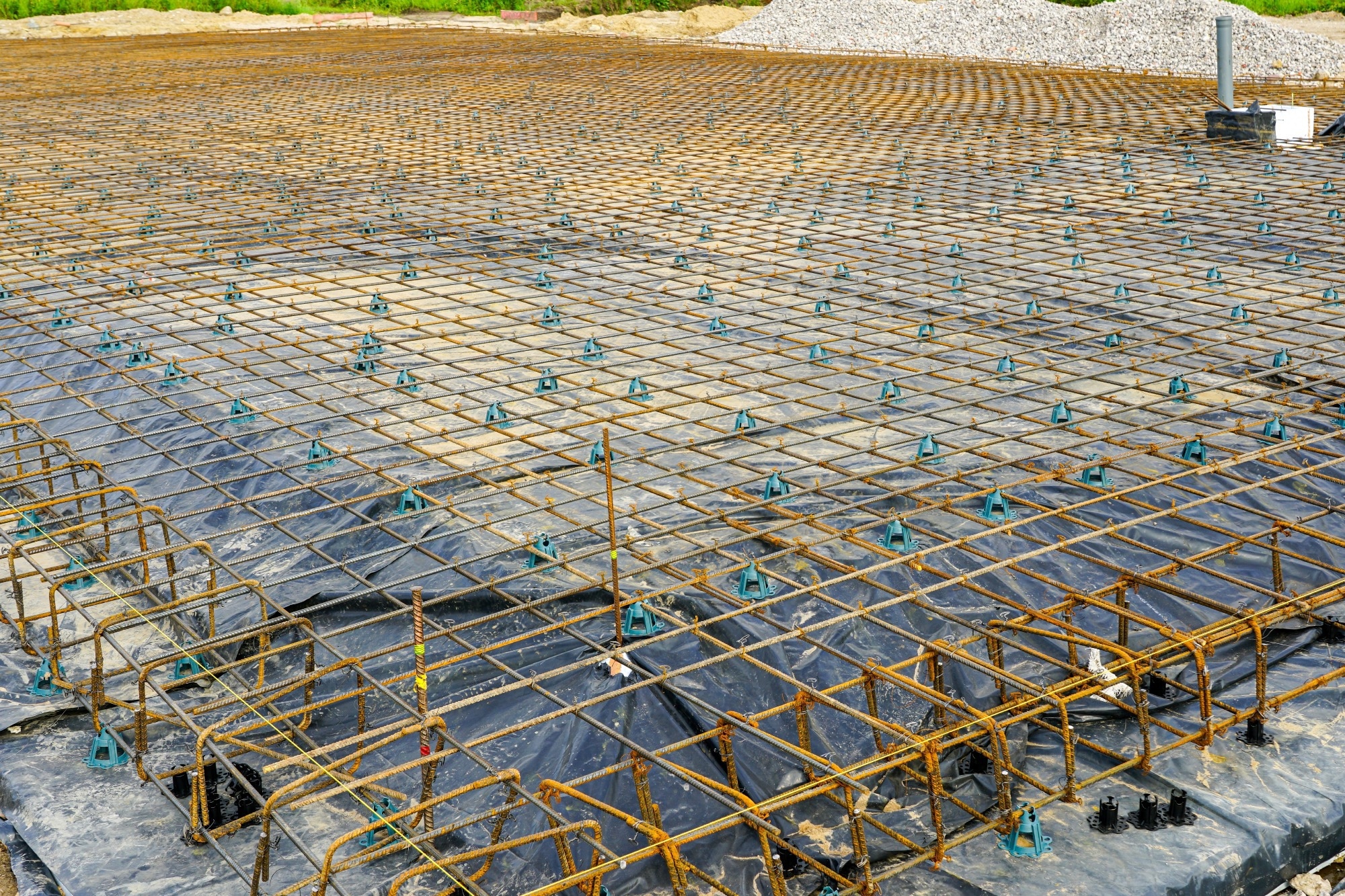 Study: Dual mitigation of extruded plastic sack waste in green concrete via microsilica and recycled polypropylene fibers. Image Credit: Zigmunds Dizgalvis/Shutterstock
A paper recently published in Scientific Reports investigated the feasibility of using valorizing extruded plastic sack (EPS) waste in concrete as a partial aggregate replacement to promote a circular economy. The study employed a dual-mitigation approach using microsilica and waste polypropylene (PP) fibers to address the mechanical deficiencies of smooth-surfaced plastics.
EPS Waste in Concrete mitigates the mechanical deficiencies of smooth-surfaced plastics
In construction and civil industries, concrete is a commonly used material owing to its high durability and strength. Yet, concrete production leads to excessive natural resource extraction and environmental pollution, making eco-friendly and sustainable materials increasingly important.
Environmental pollution can be reduced using recycled and green materials. Using recycled materials in concrete as binding agents alongside cement and as natural aggregate replacement has gradually become common.
In concrete, plastic waste is used as additives, such as plastic fibers, and as an aggregate replacement, thereby reducing overextraction of natural resources and preventing plastic waste from entering the environment.
Studies have shown that the tensile and compressive strengths of concrete blocks improve when 5% of the fine aggregate is replaced with plastic waste. While several studies validated concrete strength enhancement through plastic aggregate incorporation, some reported contradictory results, with significant compressive strength reductions due to the use of polyethylene waste in concrete.
While the performance of plastic waste used in concrete has been investigated comprehensively, the specific performance of plastic waste streams remains underexplored. For instance, common plastics such as polyethylene terephthalate have been extensively studied, whereas EPS waste has not been adequately explored.
Download the PDF of this page here
EPS, a common industrial packaging byproduct, has a smooth, unique extruded surface texture, which leads to porous and weak interfacial transition zone (ITZ) formation in the cement matrix owing to poor chemical adhesion and mechanical interlock, creating a unique challenge.
The Dual-mitigation Approach
In this work, researchers investigated the valorization of EPS waste as a partial aggregate replacement (5–20% by volume) in concrete. The objective was to assess the mechanical performance of EPS containing concrete. All prepared concrete specimens were evaluated for workability, water absorption, and mechanical strength.
They employed a dual-mitigation strategy using two distinct waste streams, including waste PP fibers (0.5%) and microsilica (10%), to compensate for the expected mechanical deficiencies of the smooth-surfaced plastic, with the microsilica refining the matrix pore structure. They recycled PP fibers providing crack-bridging reinforcement throughout the flawed ITZ.
The combination of waste PP fibers’ crack-bridging capability and microsilica’s matrix-densifying properties could improve the composite’s environmental and economic profile and restore mechanical integrity, while simultaneously reducing raw material costs and the embodied carbon linked with conventional concrete production.
In line with eco-efficient production principles, the proposed strategy conserves natural quarry resources and prevents the disposal of nonbiodegradable industrial waste in landfills.
Thus, the construction sector can shift from a linear consumption model to a circular economy by integrating EPS waste into concrete, thereby reducing aggregate transportation and extraction-related carbon footprint.
The Research Effort
Type II Portland cement conforming to American Society for Testing and Materials (ASTM) C150, microsilica, crushed sand as fine aggregate, natural crushed stone as coarse aggregate, EPS waste aggregate as a recycled additive, PP fibers, a superplasticizer, and potable tap water were used as starting materials for concrete specimen preparation.
All aggregates used in this work conformed to ASTM C33. Researchers selected an optimal microsilica content of 10% by weight of cement based on earlier research. EPS waste aggregate was used to improve concrete properties, while recycled waste-material-derived PP fibers were used to enhance concrete tensile and flexural strength.
Additionally, a chloride-ion-free superplasticizer with a pH of 3.9 and a specific gravity of 1.06 g/cm³ was used to enhance workability and reduce the water-to-cement ratio, which affects concrete strength. The mix design followed the American Concrete Institute Standard, and researchers considered five mix series.
These include concrete incorporating silica fume, EPS waste, and PP fibers; concrete containing PP fibers and EPS waste; concrete containing silica fume and EPS waste; concrete with varying EPS waste percentages replacing coarse aggregate; and plain concrete (control specimen).
Overall, researchers prepared 17 diverse mix designs, with each being assessed at 7 and 28 days of curing age.
Effectiveness of this Approach
Results showed that increasing EPS replacement significantly reduced mechanical performance due to a weak ITZ, with compressive strength declining by 78% at 20% replacement. However, the combined use of 10% microsilica and 0.5% PP fibers proved effective in mitigating these effects.
Microsilica densified the cement matrix through filler and pozzolanic actions, while PP fibers bridged microcracks originating from the weak ITZ. This dual approach transformed the failure mode from brittle to more ductile, improving energy absorption.
Specimen M13 (5% EPS, 10% microsilica, 0.5% PP) emerged as the optimal mix, surpassing the control specimen’s flexural and tensile strengths by 15% and 3.6%, respectively. In conclusion, these findings demonstrated the feasibility of the approach in transforming a waste-laden, brittle matrix into an eco-efficient, ductile composite suitable for semi-structural applications.
Journal Reference
Lotfollahi, S., Omranzadeh, R., Bakhtiari, P., & Khavari, H. (2026). Dual mitigation of extruded plastic sack waste in green concrete via microsilica and recycled polypropylene fibers. Scientific Reports. DOI: 10.1038/s41598-026-45577-z, https://www.nature.com/articles/s41598-026-45577-z
Disclaimer: The views expressed here are those of the author expressed in their private capacity and do not necessarily represent the views of AZoM.com Limited T/A AZoNetwork the owner and operator of this website. This disclaimer forms part of the Terms and conditions of use of this website.