Researchers have developed an AI-driven method to design stronger, lower-carbon concrete by combining metakaolin with advanced predictive modeling.
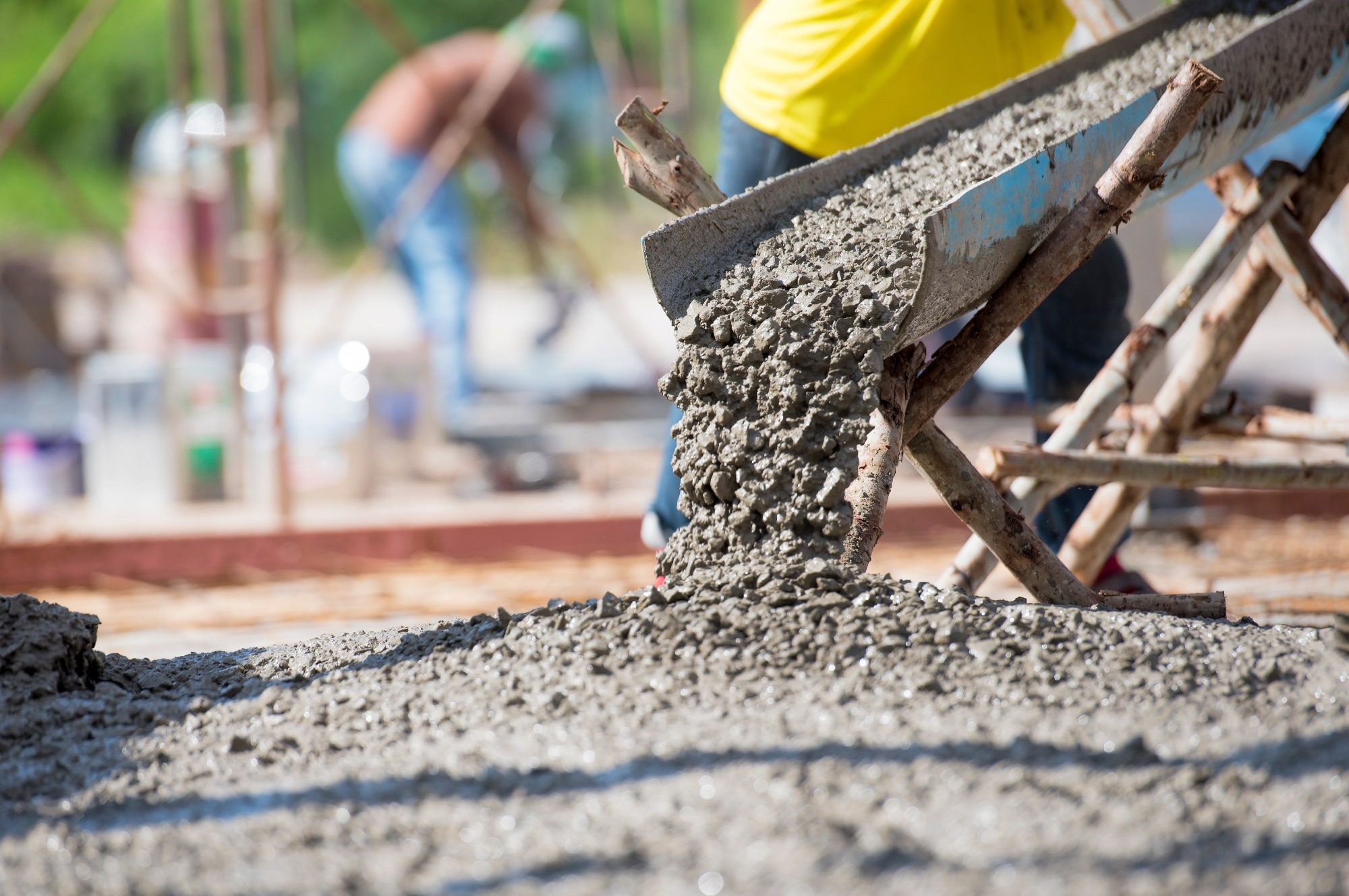
Study: AI-driven sustainable strength prediction and experimental evaluation of high-performance fiber-reinforced concrete incorporating metakaolin. Image Credit: Bannafarsai_Stock/Shutterstock.com
A new study published in Scientific Reports examines high-performance fiber-reinforced concrete (FRC) that partially replaces cement with metakaolin, a more sustainable alternative. The work focuses on improving both mechanical performance and environmental impact, two priorities as the construction sector faces increasing pressure to reduce emissions linked to Ordinary Portland Cement (OPC).
At the center of the study is a deep learning model that goes by the name of Adaptive Pyramid Dilated Dense Long Short-Term Memory with Sparse Attention (A-PDDLSTM-SA), and it is designed to predict concrete strength with high precision.
The model achieved accuracy levels of up to 96.13 %, offering a more efficient way to evaluate material performance. While it does not eliminate the need for lab testing, it significantly reduces the scale of experimental work required.
Smarter Materials, Stronger Concrete
The study builds on the growing use of supplementary cementitious materials (SCMs) to reduce cement consumption. Metakaolin, produced by calcining kaolin clay, stands out for its high reactivity and ability to improve compressive strength and durability.
To address concrete’s inherent brittleness, researchers incorporated fibers like steel, glass, nylon, and polypropylene into the mix. These fibers improve tensile strength and ductility while helping control crack formation and propagation.
When combined, metakaolin and fiber reinforcement produce high-strength fiber-reinforced concrete (HSFRC), a material suited to demanding applications such as bridges and high-rise structures where durability and structural integrity are critical.
Testing the Mix
The research team developed multiple concrete mixes using 10 % metakaolin as a cement replacement, alongside varying fiber types and dosages. All samples followed an M60 grade design with a water-cement ratio of 0.32 to maintain consistency.
Both standard and fiber-reinforced specimens were tested under controlled conditions. Mechanical performance was evaluated through compressive, split tensile, and flexural strength tests at curing intervals of 7, 28, 56, and 90 days, capturing how strength evolved over time.
The AI model analyzed these results to identify patterns between mix composition and performance. It was further refined using the Updated Random Number-based Hiking Optimization Algorithm (URN-HOA), which improved prediction accuracy by tuning model parameters. The analysis pointed to an optimal mix of 10 % metakaolin and 1 % steel fiber.
Performance Gains and Trade-Offs
The results show measurable gains across all key strength metrics. The optimal mix delivered the best overall performance, with steel fibers increasing compressive strength by around 12.5 % while also improving toughness and ductility.
However, more is not always better.
Higher fiber content reduced performance due to poor dispersion and fiber clustering. Each fiber type contributed differently: glass fibers strengthened the matrix, nylon fibers enhanced crack-bridging, and polypropylene fibers reduced shrinkage cracking.
Metakaolin played a central role by refining the concrete’s microstructure, further boosting durability.
On the modeling side, the A-PDDLSTM-SA system outperformed conventional approaches, including RNN, GRU, SVM, and standard LSTM models, achieving a Mean Error Percentage (MEP) of 25.747. Notably, it maintained reliability even with limited datasets, reinforcing its value as a practical design tool.
Implications for the Construction Industry
The findings point to a more efficient approach to concrete design. By using AI to simulate and evaluate mix configurations, engineers can reduce material waste, lower costs, and shorten development timelines.
The improved properties of HSFRC make it well-suited for infrastructure exposed to heavy loads and harsh environments, while the use of metakaolin helps cut carbon emissions associated with cement production.
More broadly, the integration of machine learning into material design signals a shift toward data-informed construction practices where performance, sustainability, and efficiency are addressed simultaneously.
What Comes Next
While the results are promising, the study is limited by its dataset size and focus on specific fiber combinations. Future work is expected to expand the data, explore hybrid fiber systems, and assess long-term durability under varying environmental conditions.
Even so, the research provides a clear direction for combining sustainable materials with AI-driven modeling to streamline concrete design while improving performance.
Journal Reference
N.S, N.P., P, K. & P, S. (2026). AI-driven sustainable strength prediction and experimental evaluation of high-performance fiber-reinforced concrete incorporating metakaolin. Sci Rep. DOI: 10.1038/s41598-026-41115-z, https://www.nature.com/articles/s41598-026-41115-z
Disclaimer: The views expressed here are those of the author expressed in their private capacity and do not necessarily represent the views of AZoM.com Limited T/A AZoNetwork the owner and operator of this website. This disclaimer forms part of the Terms and conditions of use of this website.