Tests suggest a hybrid binder made with fly ash, slag, coir biomass ash, and graphene can cut embodied carbon by nearly 45 % while improving strength and durability.
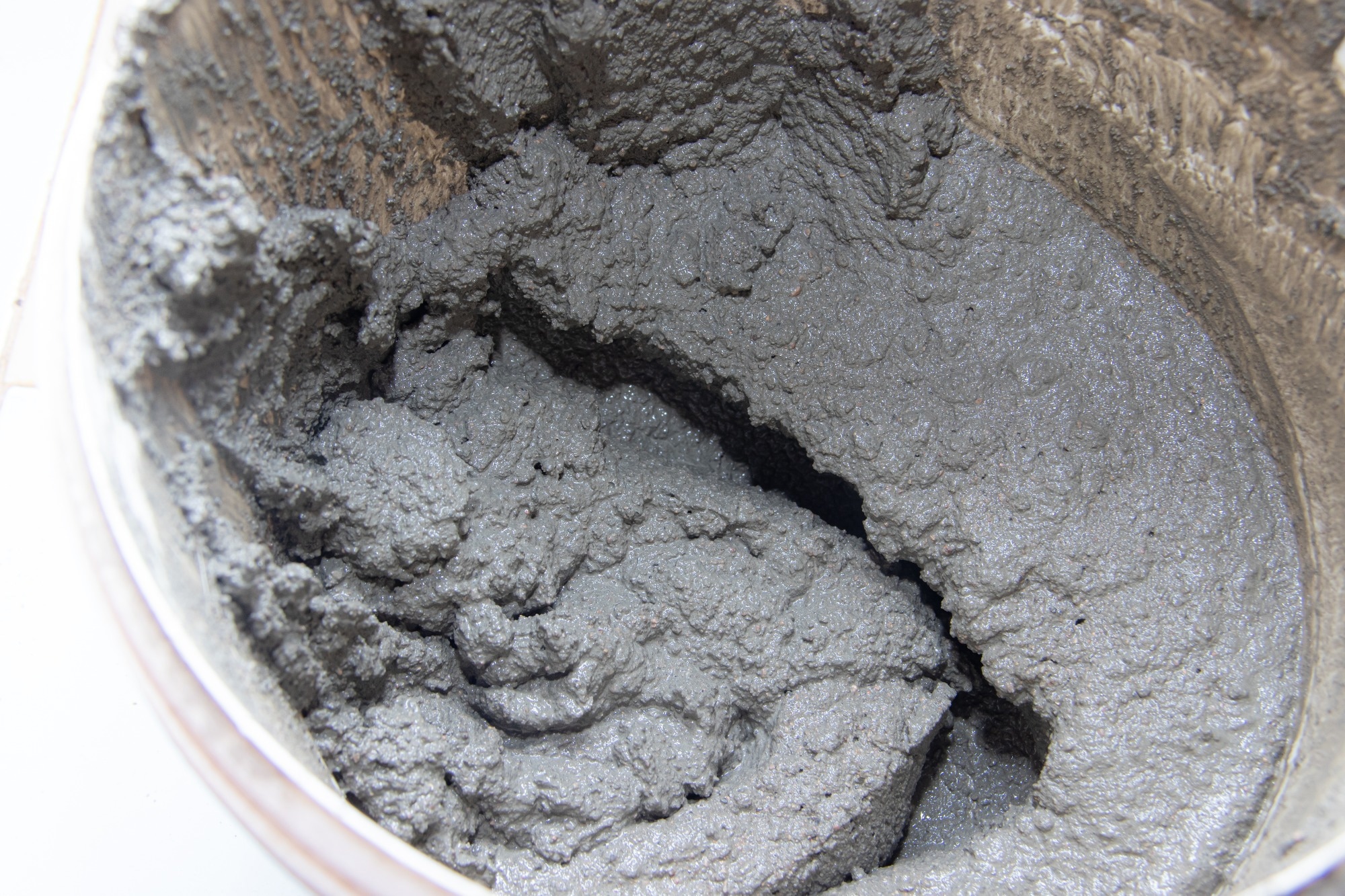 Study: Data-driven optimization of sustainable high-performance concrete incorporating SCMs, biomass ash, and graphene nanoplatelets. Image Credit: alenka2194/Shutterstock.com
A study in Scientific Reports reports a high-performance concrete mix that sharply reduces embodied carbon while outperforming a conventional control in strength and chloride resistance by combining industrial byproducts, biomass ash, and graphene nanoplatelets.
Saving this for later? Download a PDF here.
Concrete is essential to modern infrastructure, but the cement it relies on has a significant carbon footprint. Ordinary Portland cement remains a major source of global carbon dioxide emissions because clinker production is energy-intensive.
One established way to reduce that impact is to replace part of the cement with supplementary cementitious materials such as fly ash and ground granulated blast-furnace slag. This approach works, but only up to a point.
High fly ash contents can slow early strength development, and the benefits of single additives often flatten at higher dosages. This study attempts to build a more effective low-carbon binder by combining materials that work at different scales inside the concrete matrix.
Developing a Hybrid Binder
The team developed a hybrid binder using fly ash (FA), ground granulated blast-furnace slag (GGBS), thermally treated coir biomass (TTCB), and graphene nanoplatelets (GNPs). FA and GGBS are industrial byproducts already used in lower-carbon concrete. TTCB is a bio-derived ash made from coconut coir waste, while GNPs were added in very small amounts to improve nanoscale matrix development.
The idea was to combine their effects rather than treat each material in isolation:
- TTCB contributes reactive silica and microfilling effects, and may also help support nanoparticle dispersion
- GNPs, meanwhile, can assist with nucleation and crack-bridging in the cement matrix
- FA and GGBS support long-term hydration and pore refinement
The researchers prepared M40-grade concrete mixes and tested a control alongside a broader experimental program of ten mix designs. The optimized mixes highlighted in the paper used 30 % SCM replacement, TTCB at 5 % to 10 %, and GNP dosages of 0.08 % to 0.12 %.
Performance was assessed through compressive, tensile, and flexural strength tests, along with rapid chloride permeability, water uptake, and residual strength after exposure to 300 °C.
Strength and Permeability Value
The optimized mix reached 55 MPa compressive strength at 28 days, compared with roughly 44-45 MPa for the control, an improvement of about 23 %.
It also delivered a rapid chloride permeability value of about 505 C, around 42 % lower than the control, and water absorption of 2.8 %, about 40 % lower.
The paper estimates that embodied carbon was nearly 45 % lower than for an ordinary Portland cement mix. Microstructural analysis supported those results, pointing to a denser internal structure and improved calcium-silicate-hydrate development.
Just as important, the gains were not open-ended. The study identified an optimal formulation window, beyond which higher additive content began to impair workability and overall performance.
A More Systematic Way To Design Mixes
Beyond the material formulation itself, the study is notable for its approach to mix design. The researchers paired laboratory testing with predictive modeling to explore trade-offs among compressive strength, durability, embodied CO2, and cost.
Among the models tested, XGBoost gave the strongest predictive accuracy for strength. For the optimization stage, however, the researchers used Random Forest as the surrogate model because it proved more stable for the small dataset.
They then combined that with multi-objective optimization methods to search for mixes that balanced competing goals rather than maximizing a single property.
The paper shows how a constrained, data-driven workflow can help narrow down promising formulations more efficiently inside a defined laboratory design space.
An Exploratory Framework, Not a Universal Predictor
The authors note that their framework is an exploratory surrogate approach tied to the mixes actually tested, not a universal predictor of concrete design more broadly.
The dataset is limited, and longer-term validation would still be needed before the approach could be extended confidently beyond the formulations examined here.
Even so, the work offers a practical example of how lower-carbon concrete design can be made more targeted, especially when multiple performance requirements must be balanced simultaneously.
Journal Reference
Anand, P., Singh, S. D., Pratap, S., Asaithambi, P., & Bidira, F. (2026). Data-driven optimization of sustainable high-performance concrete incorporating SCMs, biomass ash, and graphene nanoplatelets. Scientific Reports, 6, 10657. DOI: 10.1038/s41598-026-45032-z, https://www.nature.com/articles/s41598-026-45032-z
Disclaimer: The views expressed here are those of the author expressed in their private capacity and do not necessarily represent the views of AZoM.com Limited T/A AZoNetwork the owner and operator of this website. This disclaimer forms part of the Terms and conditions of use of this website.