*Important notice: This news reports on an unedited version of the paper which has been accepted and is awaiting final editing. Therefore, the study should not be regarded as conclusive or treated as established information.
A quantitative framework has been introduced to measure the complexity of historic architecture using multifractal analysis. The study’s researchers developed a reproducible computational approach that compares the multiscale geometry of 30 iconic heritage buildings through standardized floor plans and vertical drawings.
The framework captures how architectural complexity is distributed across different scales and uses these patterns to classify buildings into distinct morphological groups. The study was published in npj Heritage Science.
 Study: Multifractal analysis of heritage architecture: quantifying complexity in 30 iconic historic buildings. Image Credit: Rylee Nobles/Shutterstock.com
Moving Beyond Subjective Assessment of Heritage Architecture
Architectural heritage embodies centuries of cultural development, engineering expertise, and design innovation. Historic buildings often display highly organized geometric patterns that extend from their overall layouts to individual architectural elements.
Researchers have developed several computational methods to evaluate architectural form, including fractal geometry, space syntax, and morphological analysis.
No time now? Download a free PDF and finish later.
While these approaches have improved the quantitative assessment of building design, many reduce architectural complexity to a single numerical value. As a result, they often fail to distinguish between buildings that share similar overall complexity but differ in their spatial organization. The growth of digital heritage archives necessitates more robust methods for comparing architectural complexity.
Researchers in the present study developed a multifractal analysis framework that characterizes architectural complexity across multiple spatial scales and multifractal signatures that describe how geometric features are distributed throughout both floor plans and vertical building profiles. This multidimensional approach captures subtle variations in architectural organization that conventional methods often overlook.
Building a Standardized Framework for Heritage Analysis
The researchers developed a standardized analytical workflow by selecting 30 internationally recognized heritage buildings representing diverse architectural styles and geographical regions.
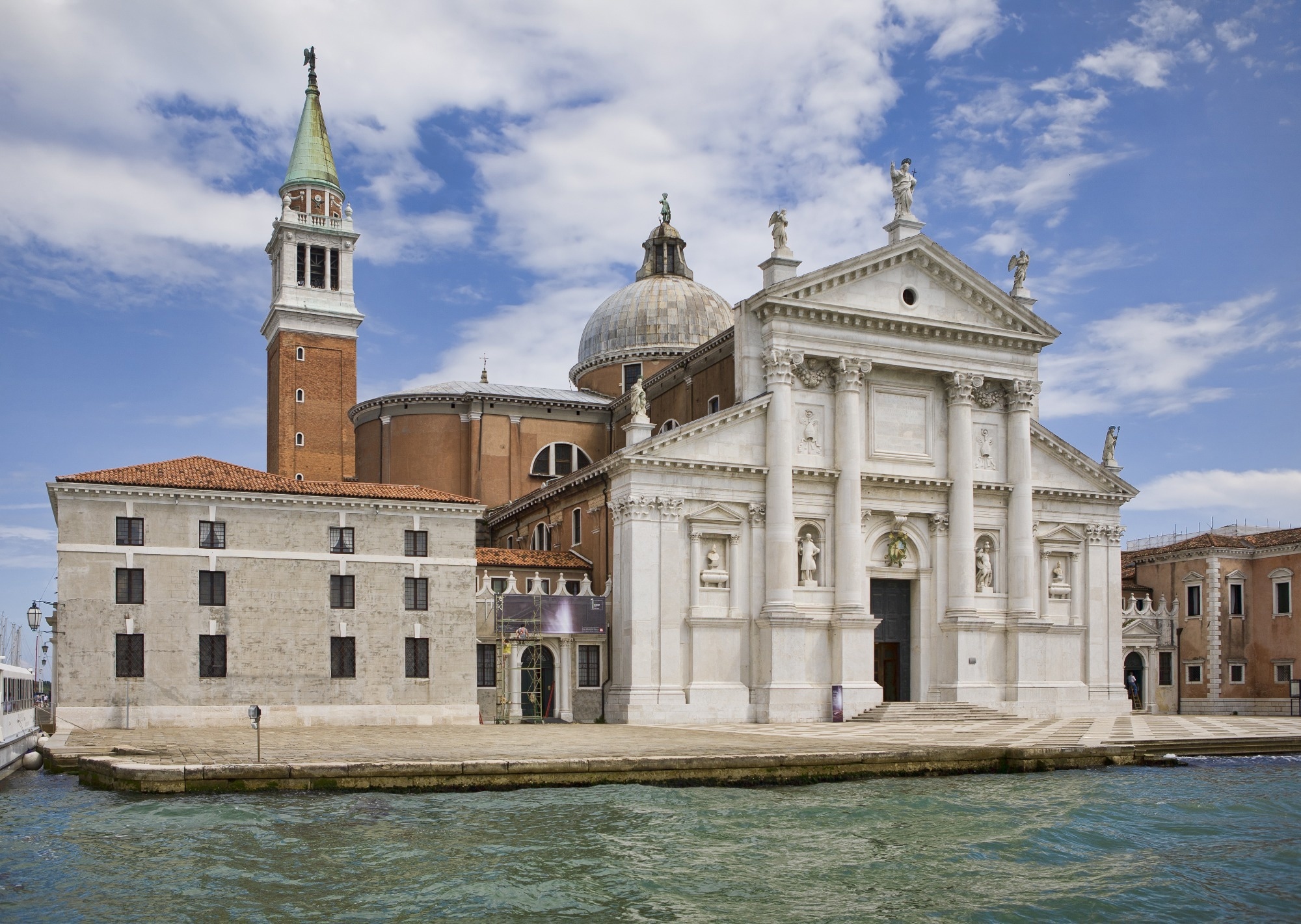
Image Credit: Dmitri Ometsinsky/Shutterstock.com
Two highly contrasting examples of buildings used in the study are the Church of San Giorgio Maggiore, built in Italy in the 16th century, and the Solomon R. Guggenheim Museum, constructed in New York in 1956. The Italian construction is distinctly late Renaissance in style, while the Guggenheim, designed by Frank Lloyd Wright, is an example of modernist architecture.
The researchers examined two standardized two-dimensional representations for each building: a representative floor plan and a vertical drawing (either an elevation or a section) that best captured the building's vertical organization.
Two versions of each drawing were prepared to evaluate the influence of architectural detail on measured complexity: a prototype and a refined version.
The prototype version retained only the primary geometric framework, including the building outline and major spatial divisions. The refined version was more detailed, incorporating additional architectural features such as walls, staircases, openings, columns, and balconies. Consistent drawing standards ensured fair comparisons across all case studies.
The researchers applied a box-counting multifractal algorithm to every drawing. Analysis of these images generated generalized fractal dimensions and singularity spectra that describe how geometric complexity changes across multiple spatial scales.
Principal component analysis (PCA) was used to identify the most informative descriptors and eliminate redundant variables. Hierarchical clustering then grouped buildings with similar multifractal signatures into distinct architectural families. The statistical analysis enabled consistent comparisons of buildings and uncovered recurring geometric patterns.
Understanding Historic Architecture Through Multifractals
The analysis confirmed that all 30 heritage buildings exhibited clear multifractal behavior, demonstrating that historic architecture contains organized geometric complexity across multiple spatial scales rather than random structural variation.
The generalized fractal dimensions consistently followed the expected relationship (D0 > D1 > D2). This stable scaling behavior supports the use of multifractal analysis for quantitative architectural comparison.
Adding finer architectural details consistently increased the measured complexity of both floor plans and vertical representations. However, these details preserved the underlying structural organization.
Floor plans also produced broader and, often, steeper multifractal spectra than elevations or sections, indicating greater geometric variation in horizontal layouts than in vertical organization.
The statistical analysis further showed that multifractal descriptors could support interpretable comparisons between architectural forms. PCA identified the most informative geometric parameters, while hierarchical clustering grouped the buildings into three major architectural families with several smaller subgroups.
The framework classified buildings based on measurable similarities in their multiscale geometry rather than on architectural style or geographic origin. These groupings closely aligned with established architectural characteristics, demonstrating that multifractal signatures capture meaningful aspects of building morphology.
This method also demonstrated consistent performance across a diverse collection of heritage buildings. The results show that multifractal analysis reveals subtle geometric relationships that conventional single-value fractal methods often miss. Together, these findings establish architectural complexity as a multiscale property and provide a richer, more objective description of historic building design.
Toward Smarter Heritage Conservation
This study demonstrates how multifractal analysis can objectively quantify architectural complexity. The resulting multifractal signatures provide detailed geometric profiles that enable meaningful comparisons between buildings with very different architectural forms.
This approach captures subtle design characteristics that traditional qualitative assessments and conventional fractal methods often overlook.
The framework has broad applications in building science, digital heritage, and architectural conservation. Standardized quantitative descriptors can strengthen heritage documentation, improve digital archiving, and help researchers identify relationships among buildings from different cultures, historical periods, and construction traditions.
The method can also complement existing conservation tools by providing objective evidence of architectural similarity and structural organization.
Future studies could extend the analysis to three-dimensional digital models, larger heritage datasets, and automated image-processing workflows. Integrating multifractal analysis with artificial intelligence (AI) and machine learning could further improve the classification and interpretation of complex architectural forms while reducing manual effort.
Overall, the study establishes multifractal analysis as a valuable tool for digital heritage research. As digital technologies continue to transform heritage conservation, this approach offers a practical foundation for evidence-based research and the long-term preservation of the built environment.
Journal Reference
Zhang, C., Li, W., et al. (2026). Multifractal analysis of heritage architecture: quantifying complexity in 30 iconic historic buildings. npj Heritage Science. https://www.nature.com/articles/s40494-026-02712-3.
Disclaimer: The views expressed here are those of the author expressed in their private capacity and do not necessarily represent the views of AZoM.com Limited T/A AZoNetwork the owner and operator of this website. This disclaimer forms part of the Terms and conditions of use of this website.