The ABS today released its national, state and territory population data for the 2025 calendar year, covering births, deaths and migration. This shows that population grew by 412,500 and Net Overseas Migration (NOM) by 301,000 in the calendar year.
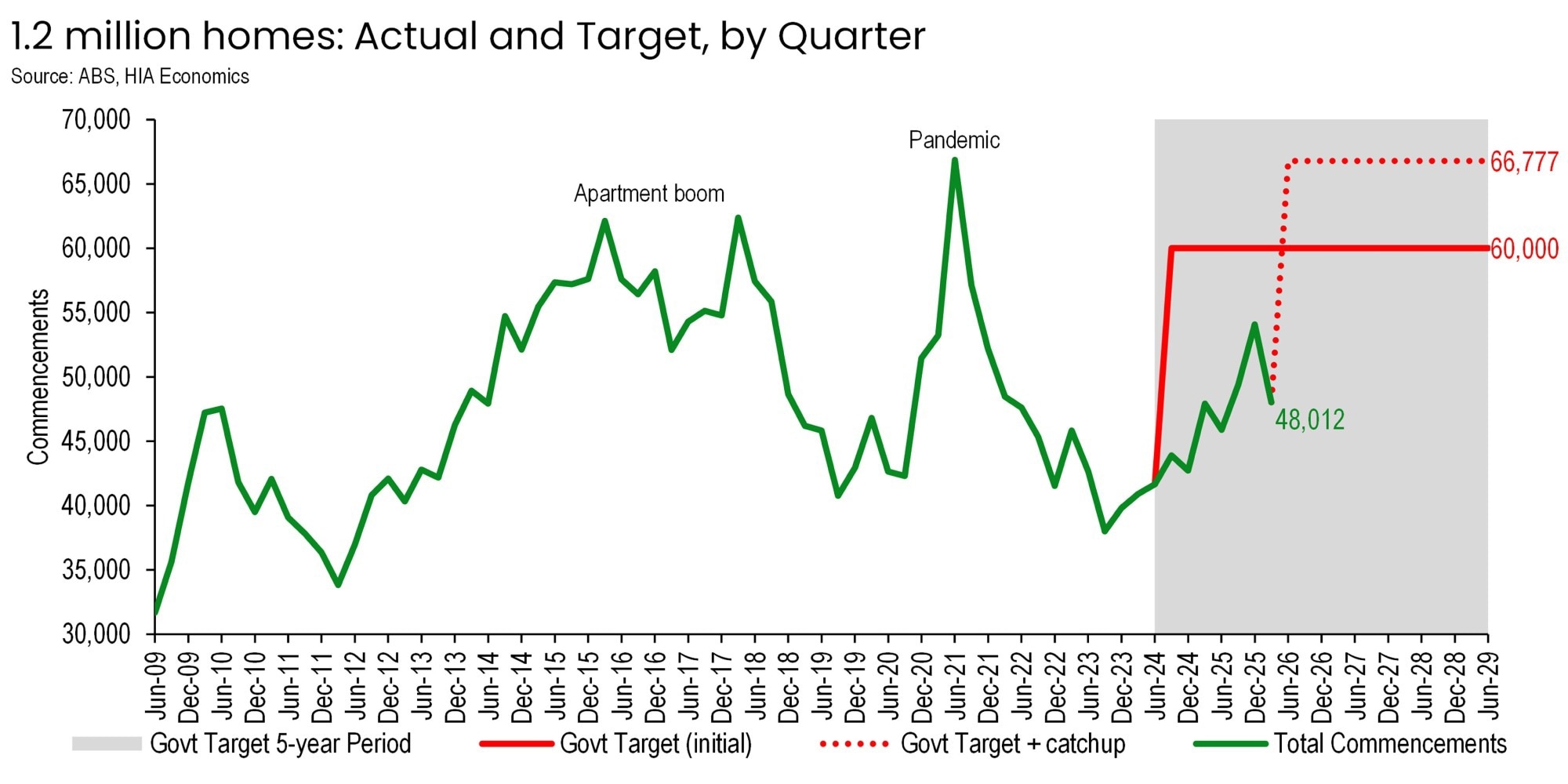 Image Credit: ABS, HIA Economics
“Despite still falling short of target, housing commencements were 12.0 percent greater than the 176,230 recorded a year earlier,” added Mr Devitt.
“There were 48,010 new dwellings that commenced construction in the first three months of 2026, down by 11.2 percent on the previous quarter. The decline in the commencement of new home starts in the March quarter of 2026 preceded the impact of rate increases, global uncertainty or the Federal Budget and likely reflects quarterly volatility.
“Home building had good momentum heading into 2026, picking up on the back of declining interest rates, low unemployment and existing shortages of housing across the country.
“Jurisdictions like Western Australia, Queensland, South Australia and the Northern Territory have been leading the national improvement in home building volumes and have a significant pipeline of new sales ready to commence. This will help smooth out on-the-ground activity through this year’s volatility.
“The southeastern state and territory recoveries have been delayed and are more vulnerable but as long as recent disruptions are short-lived, strong population growth and tight labor market fundamentals should support activity here too.
“This trajectory will not be sufficient to meet the Housing Accord Target, and Australia’s housing needs are even greater than this.
“Australia needs to meet housing demand not only from population growth but also shrinking household sizes, increasing knockdown-rebuild activity, ageing population and increasing dependence on overseas migrants who tend to live in smaller households.
“HIA estimates 250,000 home builds each year are required on a sustained basis to meet these demands and start addressing the pre-existing shortage of housing across the country.
“Achieving this depends on governments reducing the cost of delivering new homes to market.
“This includes reducing taxes on housing, not increasing them. Housing is one of the most heavily taxed items in our economy along with the ‘sin taxes’ of alcohol and tobacco,” concluded Mr Devitt.