A recent study has examined how different mixture and curing parameters affect the strength of concrete containing waste glass powders and sand. Artificial intelligence (AI) methods were used to identify the key factors influencing compressive strength, supporting more informed and efficient sustainable concrete design. These findings were published in Scientific Reports.
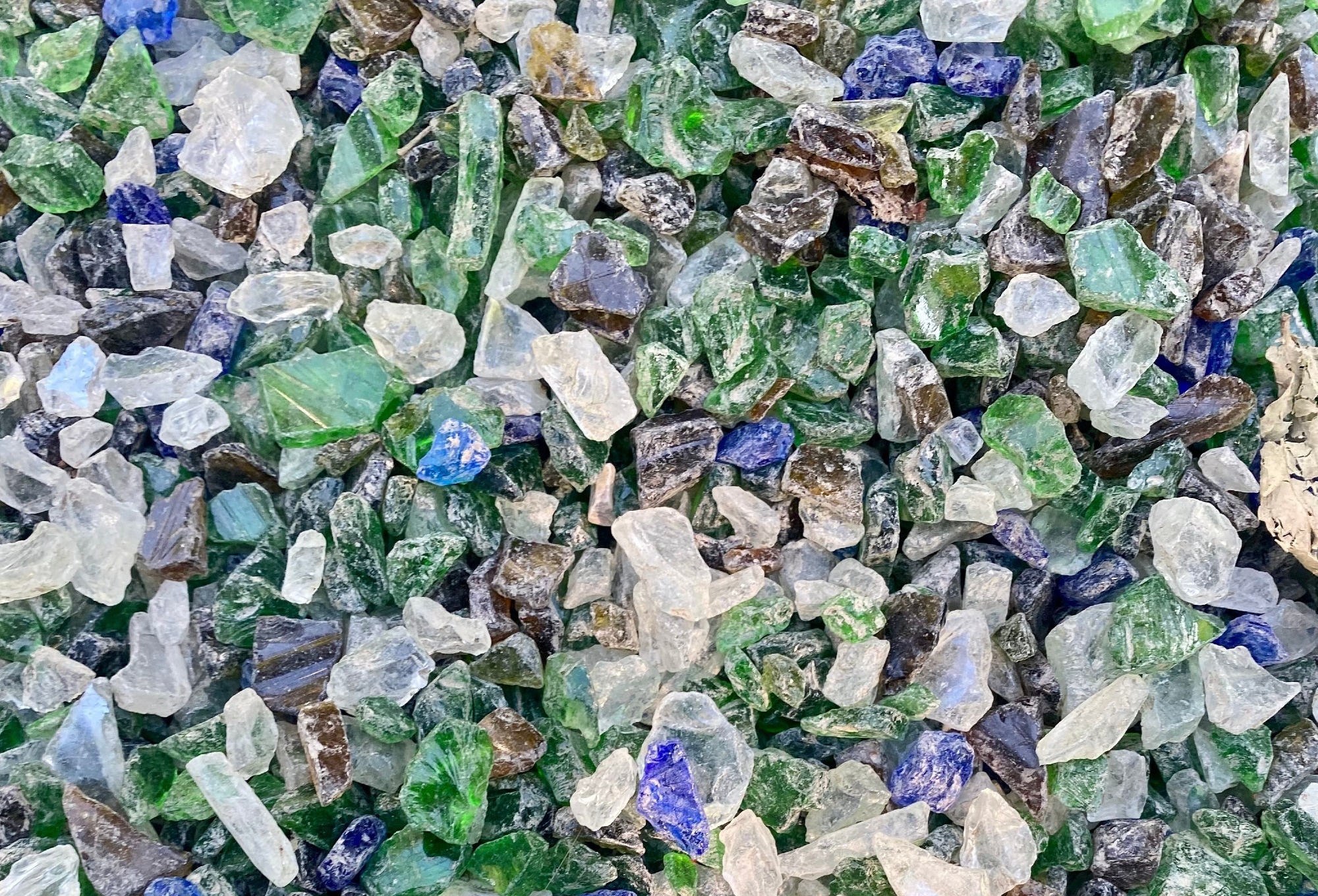 Study: Innovative sustainable concrete with waste glass materials: an explainable machine learning for compressive strength prediction. Image Credit: CCMP/Shutterstock.com
The Role of Waste Glass in Sustainable Concrete
Cement manufacturing contributes around 7–8% of global anthropogenic carbon dioxide emissions. The large quantities of waste glass entering disposal streams could prove beneficial to address this, as glass can serve as a useful material in cement-based construction; glass powder can replace part of the Portland cement, while glass sand can replace some of the natural fine aggregate.
The materials involved in construction, including cement, glass powder, glass sand, water, and aggregates, can interact in complex ways that affect density and strength, while curing time also plays an important role in strength development.
Conventional laboratory testing requires repeated mixture preparation and strength testing, but machine learning can reduce this effort by learning relationships within experimental data and predicting compressive strength for new mixtures.
Previous studies have shown that machine learning can predict the strength of concrete containing waste materials. However, prediction accuracy alone does not explain how individual mixture parameters affect the result. Engineers also need to understand which factors influence strength and how their effects change.
This study addresses this need by comparing five machine-learning models and applying hyperparameter optimization.
Click here to read about how construction waste is being turned into new materials, promoting a circular economy.
Building the Prediction Framework
The researchers developed the prediction models using experimental data from concrete containing waste glass. The database contained 270 compressive strength measurements from 30 concrete mixtures.
The mixtures used glass powder as a partial replacement for Portland cement and glass sand as a partial replacement for natural fine aggregate. Each mixture was evaluated after seven, 28, and 56 days of curing, with three specimens tested at each curing age.
The models used eight input variables: cement content, glass powder content, glass sand content, water content, concrete density, natural sand content, basalt content, and curing duration. Compressive strength served as the target variable.
The researchers divided the data by complete concrete mixtures rather than by randomly separating individual specimens. This approach kept specimens from the same mixture within the same dataset and reduced the possibility of information leakage.
The study compared the machine-learning models Random Forest, K-Nearest Neighbors, AdaBoost, LightGBM, and XGBoost, with Multiple Linear Regression as the baseline. The researchers optimized the machine-learning models through Grid Search and cross-validation.
They also standardized the input features within the modeling process to maintain consistent model evaluation. After training, each model was assessed using several statistical performance measures; from this, the strongest model was chosen for further interpretation.
Light Gradient Boosting Machine Provides the Best Predictions
The model comparison showed that LightGBM produced the strongest testing performance. It achieved an R2 of 0.964, an RMSE of 2.05 MPa, and an MAE of 1.68 MPa. XGBoost followed with an R2
of 0.955, while Random Forest achieved an R2 of 0.953. KNN and AdaBoost were less accurate.
These results show that LightGBM captured most of the variation in measured compressive strength. This performance demonstrates the potential of machine learning to estimate concrete strength without testing every possible mixture in the laboratory.
In order to capture nonlinear relationships within the concrete mixture data while controlling unnecessary complexity, the researchers adjusted some of LightGBM’s parameters: tree depth, boosting iterations, number of leaves, and minimum samples per leaf.
Curing duration had the greatest influence on compressive strength, with longer curing periods generally increasing the predicted strength. This was followed by cement content, with higher cement contents similarly producing stronger positive contributions.
Additions of glass sand and basalt showed moderate positive contributions, while natural sand showed a slightly negative trend at higher contents. Water content showed a predominantly negative relationship with strength: higher water levels can increase porosity within concrete, which can reduce the strength of the hardened material.
Glass powder had a comparatively weaker influence. Higher glass powder contents tended to produce slightly negative or marginal effects in the model, indicating that increasing glass powder alone does not guarantee higher strength. Rather, its influence depends on the overall mixture composition and replacement level.
Glass sand also showed both positive and negative contributions, suggesting that its effect changes with the quantity used.
However, the researchers caution against these results being taken as independent causal effects, and rather suggest they be interpreted as model-based associations.
The researchers also developed a user-friendly graphical interface based on the LightGBM model, with users able to enter concrete mixture parameters and obtain rapid compressive strength predictions. This feature could make the approach easier for construction professionals to use without specialist programming knowledge.
Toward Smarter and More Sustainable Concrete Design
The study shows that a framework combining the integration of waste glass in cement with a machine-learning approach could support more sustainable and efficient concrete development. Predictive models can help engineers screen potential mixtures and identify promising combinations before conducting extensive laboratory testing.
The Light Gradient Boosting Machine (LightGBM) provided reliable compressive strength predictions, while Partial Dependence Plot analysis identified the mixture and curing parameters that most influenced the results. This makes the approach more useful for concrete design because it provides both predictions and insight into the factors behind them.
The findings highlight curing duration and cement content as important factors in strength development. They also show that water and glass powder contents require careful control when developing waste-glass concrete mixtures. These insights can help engineers make better-informed mixture decisions and reduce unnecessary experimental work.
Future research should expand the dataset and examine properties such as tensile strength, flexural strength, and elastic modulus. Overall, the research presents a practical pathway toward smarter and more sustainable concrete design.
Journal Reference
Shams, A., Wani, S. R., et al. (2026). Innovative sustainable concrete with waste glass materials: an explainable machine learning for compressive strength prediction. Scientific Reports. DOI: 10.1038/s41598-026-64655-w. https://www.nature.com/articles/s41598-026-64655-w.
Disclaimer: The views expressed here are those of the author expressed in their private capacity and do not necessarily represent the views of AZoM.com Limited T/A AZoNetwork the owner and operator of this website. This disclaimer forms part of the Terms and conditions of use of this website.