Researchers have explored an AI-assisted approach combining artificial neural networks and response surface methodology to design more sustainable recycled aggregate concrete with enhanced resistance to chloride penetration. Their findings were published in the journal Scientific Reports.
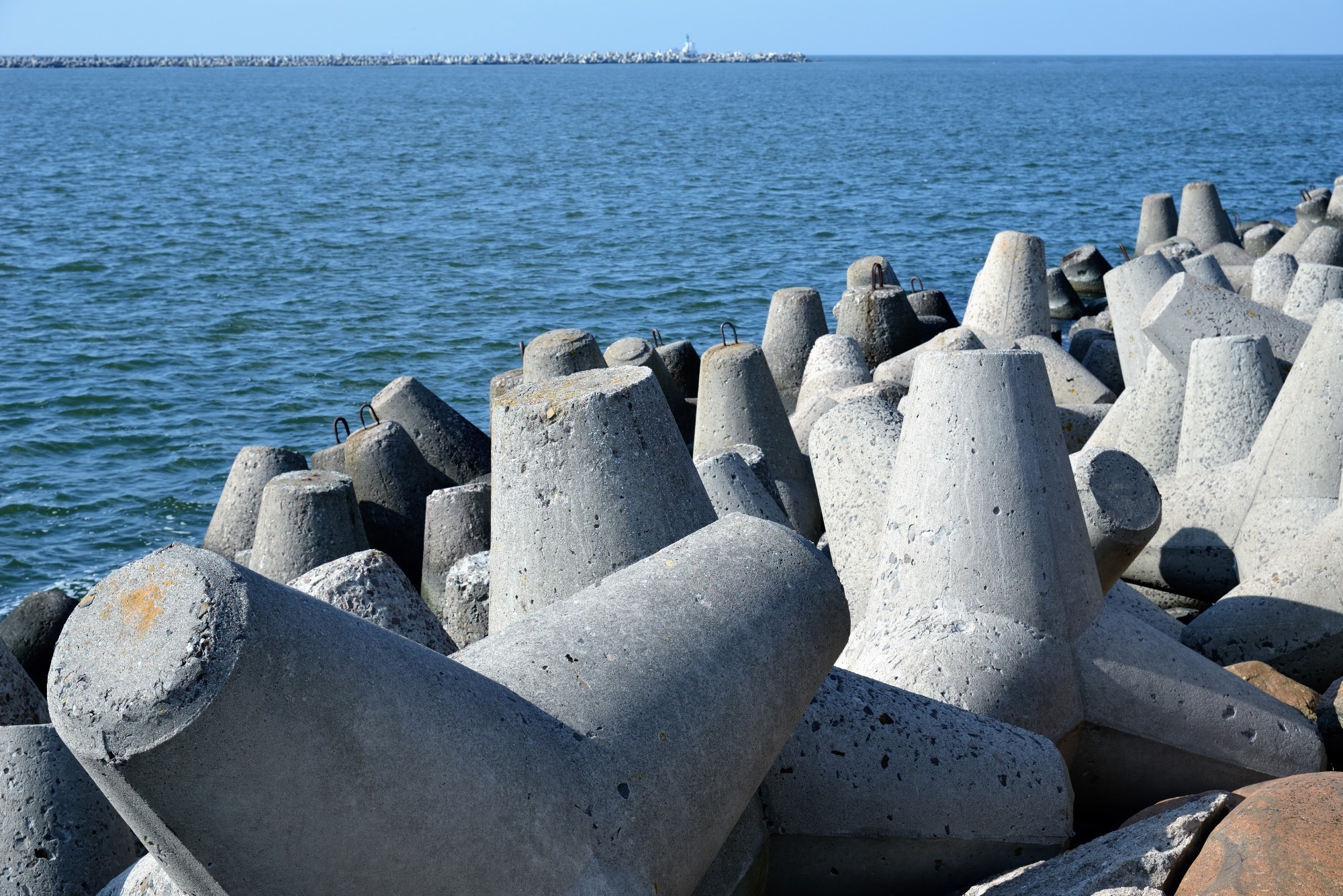 Study: Prediction and optimization of chloride ion penetration resistance in sustainable concrete incorporating supplementary materials using ANN and RSM. Image Credit: Gl0ck/Shutterstock.com
Rethinking the Durability of Recycled Concrete
Concrete infrastructure in coastal and chloride-rich environments faces a persistent durability problem: chloride ions can penetrate the concrete cover, disrupt the protective layer around reinforcing
steel, and initiate corrosion, eventually leading to cracking and deterioration.
The challenge becomes more complex when conventional materials are replaced with recycled or waste-derived alternatives. In this study, researchers investigated how recycled aggregate concrete (RAC) can be designed for improved chloride resistance while incorporating materials that reduce reliance on virgin resources.
Their approach brings artificial intelligence (AI) into sustainable concrete design, combining artificial neural networks (ANN) with response surface methodology (RSM).
Training AI on 729 Concrete Mixes
Rather than starting with a small new experimental campaign, the researchers assembled a substantial database of 729 recycled aggregate concrete mixtures reported in previous experimental studies.
The database covered six variables central to concrete production: ground granulated blast furnace slag (GGBFS), waste crumb rubber (WCR), recycled coarse aggregate (RCA), water-to-binder ratio (W/B), binder content (BC), and curing age (CA).
Duplicate or incomplete records were removed, while measurements at different curing ages were retained because age was itself treated as an influential parameter.
The underlying experiments used the rapid chloride migration test to determine the chloride diffusion coefficient, DCl−. Lower values represented better resistance to chloride penetration.
Concrete specimens were originally cast as cylinders with diameters of 100 mm and heights of 200 mm, which were cured for seven, 28, or 91 days and cut into 50 mm-high samples for migration testing. Three specimens were used for each mixture and curing age, with the average reported.
Two complementary prediction routes were then developed. The ANN was trained to recognize non-linear relationships between mixture composition, curing conditions, and chloride resistance.
Data was standardized and divided into 70% training, 15% validation, and 15% testing sets. After testing different network configurations, the researchers selected a 6-12-1 architecture: six input variables, 12 hidden neurons, and one predicted output. Ten-fold cross-validation was additionally used to test model stability.
RSM provided the second route. Unlike the ANN, it generated an explicit mathematical relationship that engineers can use to examine how individual variables and their interactions affect chloride transport.
Download a free copy of this page here!
AI Pinpoints What Makes Concrete More Durable
The study’s key finding is the ANN's accuracy. For the complete dataset, it reached an R2 of 0.9935, compared with 0.9717 for RSM. Its RMSE was 0.227 × 10⁻¹² m2/s, and MAE was 0.178 × 10⁻¹² m2/s, compared with 0.480 and 0.377 × 10⁻¹² m2/s, respectively, for RSM.
Approximately 98% of ANN predictions fell within ±6% of measured results, whereas about 86% of RSM predictions occupied the same error band. Ten-fold validation produced an average R2 of 0.969, providing further evidence that the ANN's performance was not dependent on one favorable division of the dataset.
Longer curing substantially reduced chloride diffusion, reflecting continued development of the cementitious matrix. GGBFS was the next major contributor.
Increasing slag content reduced chloride transport, which the authors associate with additional calcium-silicate-hydrate formation and a denser matrix that restricts pathways available to chloride ions.
RCA presented the opposite challenge. Increasing recycled coarse aggregate generally increased chloride diffusion because residual mortar associated with recycled aggregate can introduce more permeable zones and microcrack pathways.
Importantly, the modeling indicates that this disadvantage is not isolated from the rest of the mix design: supplementary materials, particularly GGBFS, can partly compensate for it. WCR produced a comparatively small reduction in chloride diffusion, while increasing the water-to-binder ratio tended to increase penetration.
Higher binder content and longer curing, meanwhile, improved resistance. These interactions illustrate why selecting recycled materials independently may not produce the most durable concrete; their combined proportions matter.
The optimization exercise translates these trends into a noteworthy mixture-design result. The selected solution contained 40% GGBFS by binder weight, 2.7% WCR by binder weight, and 3.5% RCA by coarse-aggregate weight, combined with a 0.35 water-to-binder ratio, 425 kg/m3 binder content, and 91-day curing age.
This combination produced a predicted chloride diffusion coefficient of 5.81 × 10⁻¹² m2/s, while reaching 46.2% supplementary-material incorporation under the study's optimization definition.
From AI Predictions to Better Concrete Design
The study demonstrates how data-driven modeling could shorten the route from accumulated laboratory evidence to more informed concrete mix design. ANN offered highly accurate predictions of chloride resistance, while RSM provided the interpretability and optimization needed to understand how construction-material choices interact.
The authors identify mechanical performance, workability, cost, CO2 emissions, shrinkage, and additional durability indicators as necessary targets for future multi-objective optimization; this is an important next step before such AI-assisted mixture design can move more directly into engineering practice.
Journal Reference
Kazemi R., Khalvati A.M. (2026). Prediction and optimization of chloride ion penetration resistance in sustainable concrete incorporating supplementary materials using ANN and RSM. Scientific Reports. 16. DOI: 10.1038/s41598-026-71280-0. https://www.nature.com/articles/s41598-026-71280-0.