The Architecture of Task Sequencing
Learning Sequences from Demonstration
LLM-Driven Sequence Planning
Failure Modes in Construction Robotics
Detecting Errors in Real Time
Recovery Through Replanning
Behavior Trees as a Recovery Architecture
Digital Twins as Coordination Infrastructure
Toward Sustained Autonomous Operation
References and Further Reading
Irregular and unstructured, construction sites are challenging environments for robots. Factor in real-life builders on-site and shifting loads, and construction becomes a much more complex setting than automated factories. Yet despite their complexity, autonomous robots are taking on structural assembly, timber framing, masonry, and deconstruction tasks that previously required skilled labor.
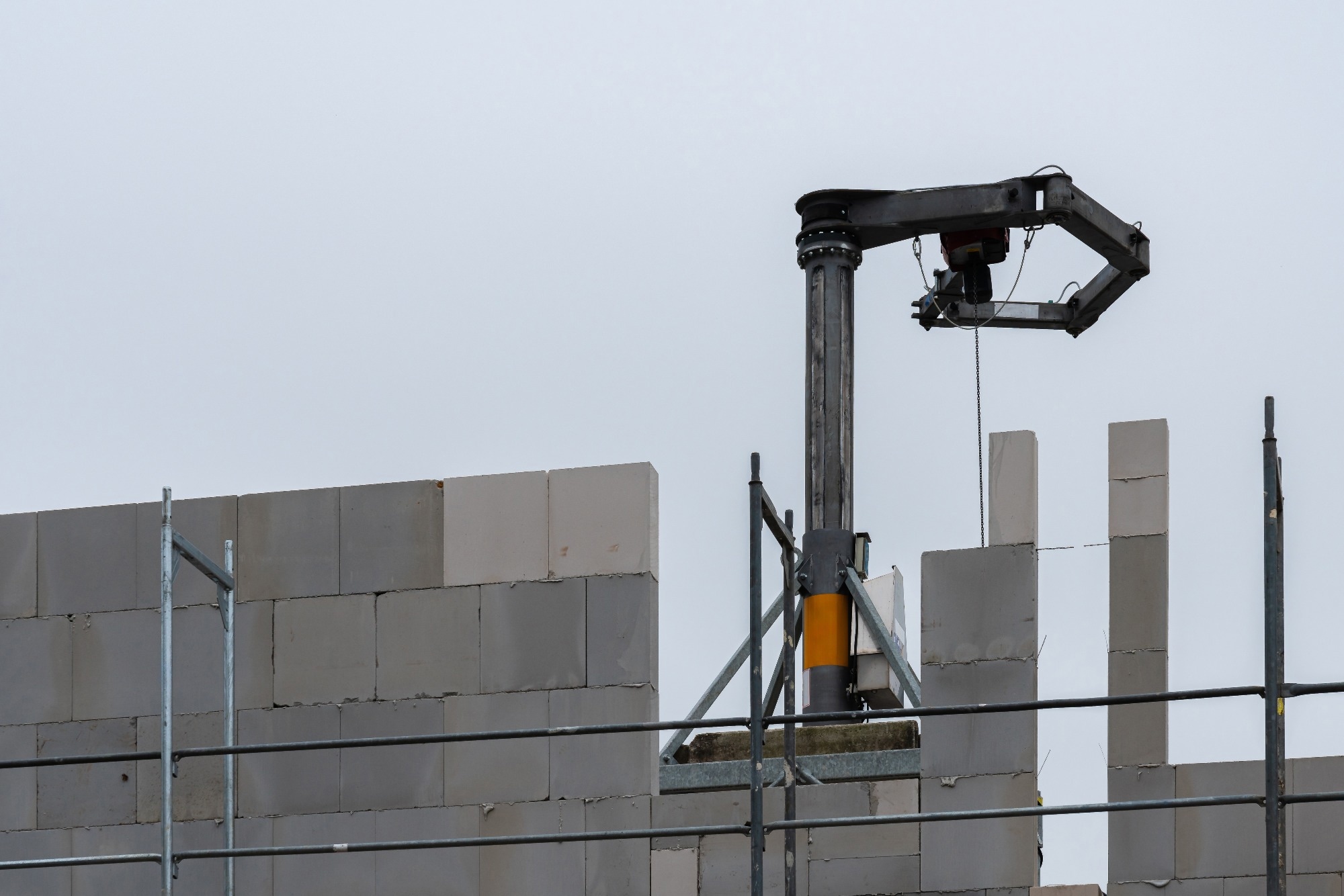 Image Credit: Viktor Kintop/Shutterstock.com
Two factors define whether robotic systems can operate independently on construction sites. The first is autonomous task sequencing, which decides the order of operations. The second - and just as important - is error recovery, which enables robots to identify and fix problems without stopping the entire process.
Saving this article for later? Download a PDF here.
The Architecture of Task Sequencing
In construction, task sequencing is the planning of the specific order of actions a robot must execute to complete a structural or assembly objective.
The main challenge is correctly cascading interdependencies between tasks: a wall sheathing panel cannot be fastened before the timber frame is erected, and a drywall joint cannot be taped before the board is set in place.
These dependencies form a constraint graph that the planning system must satisfy while also accounting for physical reachability, tool availability, and the evolving state of partially completed structures.
Early methods for task sequencing depended on predefined scripts or mathematical optimization. While these methods are accurate, they often struggle to adjust to changing site conditions during tasks.1,2
Learning Sequences from Demonstration
A more adaptive approach to robotic learning has emerged through Learning from Demonstration (LfD), in which robots acquire sequencing knowledge by observing human workers in action.
A recent study published in Automation in Construction introduced a framework where robots use a scene-distance array to identify the appropriate skill primitive for a given construction context, building a knowledge base from human-guided examples. This system allows robots to learn to sequence existing skills rather than starting from scratch, making training easier.
This framework was tested across three assembly tasks: exterior wall sheathing, drywall installation, and timber frame construction. The paper successfully demonstrated that knowledge from one setting can effectively transfer to related tasks.2
LLM-Driven Sequence Planning
A parallel development involves integrating large language models (LLMs) into construction sequence planning pipelines.
The RoboGPT system, introduced by OpenAI in 2023, uses ChatGPT's reasoning capabilities to automatically generate assembly sequences for construction tasks. Across 80 experimental trials, RoboGPT-driven robots successfully adapted their action sequences in real time when workspace conditions changed, a process that had previously required manual reprogramming.
The LLM functions as a high-level planner, translating natural-language task descriptions into ordered action sets that lower-level controllers then execute. This approach lowers the barrier to using robots for new construction tasks without requiring specialized programming expertise.3
Failure Modes in Construction Robotics
Execution errors are inevitable in unstructured construction environments. They can occur for a variety of reasons, i.e., misaligned components, tool slippage, unexpected obstacles, surface irregularities, and sensor noise.
Failures are categorized into two: planning failures, which arise from flawed sequencing, and execution failures, where the plan is correct but the physical execution deviates from expectations.
A report published in the Chinese Journal of Mechanical Engineering identified precise perception, gripper control, and error recovery as the three primary technical barriers to reliable robotic assembly, confirming that the research community treats error handling as a first-class engineering problem.4
Detecting Errors in Real Time
Error detection operates at two distinct levels: pre-execution verification and in-execution monitoring. Pre-execution verification checks whether all conditions are satisfied before a robot attempts the next action, preventing predictable failures. In-execution monitoring compares the robot's observed world state against a predicted state derived from a learned model or symbolic planner.
An IEEE study proposed scene-graph discriminators, which compare graph representations of the actual scene with the predicted scene at each action step, identifying deviations as they arise.
A visual language model (VLM)-based system called Guardian extends this by training on procedurally generated failure data, producing a model with fine-grained failure classification and step-by-step reasoning traces. Guardian achieved state-of-the-art detection performance across multiple benchmarks and improved task success rates in live robotic manipulation tests.5,6
Recovery Through Replanning
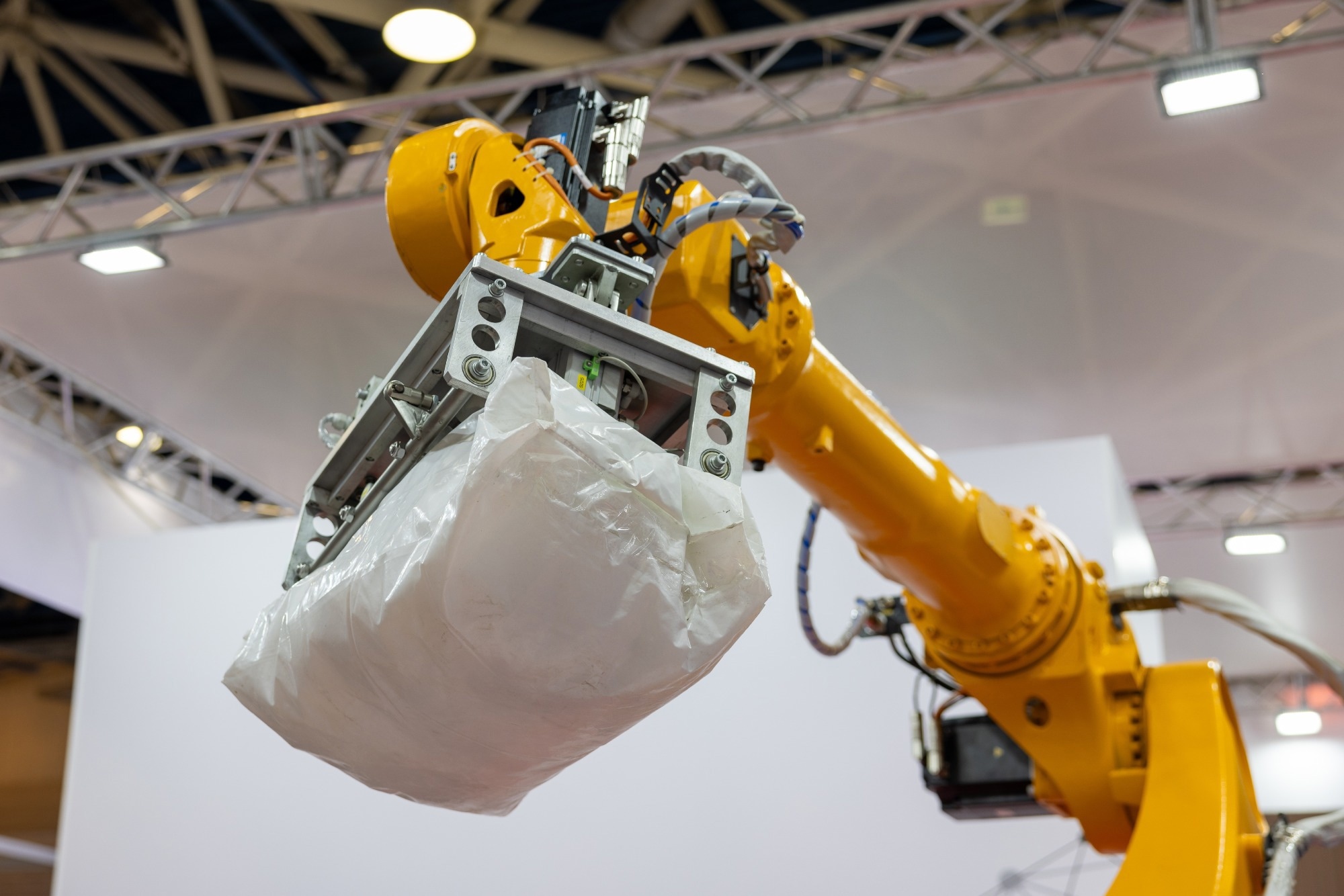 Image Credit: hodim/Shutterstock.com
Once a failure is detected, the robot must generate a recovery plan. Full replanning involves discarding the current sequence and generating a new one based on the environment's current state. While this method is reliable, it can be computationally expensive, especially for time-sensitive construction tasks.
Partial replanning is a more efficient alternative. Here, the system identifies the last correctly executed step and replans only from that point forward.
Reinforcement learning provides yet another path to recovery by training robots to navigate from a deviant state back to a nominal state through exploratory correction, embedding recovery behavior directly into the robot's execution policy without requiring symbolic world models.5,7
Behavior Trees as a Recovery Architecture
Behavior trees (BTs) are among the most widely used frameworks for managing execution logic and handling failures in robotic systems. A unified approach combines VLMs, a reactive planner, and BTs to address failures both before and during execution.
The reactive planner dynamically creates corrective BT branches via backchaining, starting from the recovery goal and working backward through skill preconditions until a feasible corrective sequence is found. Since BTs are modular, a corrective sub-tree can easily fit into the existing execution without affecting ongoing tasks.
Testing on an ABB YuMi robot with tasks such as peg insertion and object sorting showed that this combined method is more effective than either approach alone.8
Digital Twins as Coordination Infrastructure
Digital twins, continuously updated virtual replicas of physical construction sites, serve as the coordination layer that connects sequencing and error recovery. By simulating candidate action sequences before physical execution, a digital twin allows the planner to identify constraint violations and potential collisions in advance.
When sensors detect a discrepancy between the physical site and its digital counterpart, the system triggers targeted verification and correction routines.
This tight coupling between virtual and physical domains gives robots a structured basis for maintaining situational awareness across an entire construction workflow.2
Learn more about digital twins here!
A Future with Sustained Autonomous Operation
Combining autonomous sequencing with robust error recovery directly addresses sustained autonomous operation in environments that do not conform to the plan, a core requirement of real-world construction robotics.
The convergence of LLM-based planning, scene-graph error detection, reinforcement-trained recovery policies, and BT-organized execution has moved robotic construction systems toward the operational reliability required by complex job sites.
As perception hardware improves and planning models generalize across a wider range of structural conditions, the gap between controlled testing and field deployment will begin to close.3,4,8
References and Further Reading
- Champatiray, C. et al. (2023). Optimal robotic assembly sequence planning with tool integrated assembly interference matrix. Artificial Intelligence for Engineering Design, Analysis and Manufacturing, 37, e4. DOI:10.1017/S0890060422000282, https://www.cambridge.org/core/journals/ai-edam/article/abs/optimal-robotic-assembly-sequence-planning-with-tool-integrated-assembly-interference-matrix/4E39EA767B86CF6838657558284C4770
- Wang, X. et al. (2023). Automatic high-level motion sequencing methods for enabling multi-tasking construction robots. Automation in Construction, 155, 105071. DOI:10.1016/j.autcon.2023.105071, https://www.sciencedirect.com/science/article/pii/S092658052300331X
- You, H. et al. (2023). Robot-Enabled Construction Assembly with Automated Sequence Planning Based on ChatGPT: RoboGPT. Buildings, 13(7). DOI:10.3390/buildings13071772, https://www.mdpi.com/2075-5309/13/7/1772
- Qin, L. (2026). Recent progress and challenges of key technologies in robotic assembly. Chinese Journal of Mechanical Engineering, 39, 100032. DOI:10.1016/j.cjme.2025.100032, https://www.sciencedirect.com/science/article/pii/S100093452500032X
- Namasivayam, K. et al. (2024). Learning to Recover from Plan Execution Errors during Robot Manipulation: A Neuro-symbolic Approach. 2024 IEEE/RSJ International Conference on Intelligent Robots and Systems (IROS), Abu Dhabi, United Arab Emirates, pp. 12632-12639. DOI:10.1109/IROS58592.2024.10801831, https://ieeexplore.ieee.org/document/10801831
- Pacaud, P. et al. (2025). Guardian: Detecting Robotic Planning and Execution Errors with Vision-Language Models. HAL Science, hal-05392773 , v1. https://hal.science/hal-05392773v1
- Zhou, X. et al. (2024). Reset-Free Reinforcement Learning via Multi-State Recovery and Failure Prevention for Autonomous Robots. Tsinghua Science and Technology. ISSN:1007-0214, 14/24, pp:1481−1494. DOI:10.26599/TST.2023.9010117, https://ieeexplore.ieee.org/document/10517924
- Ahmad, F. et al. (2025). A Unified Framework for Real-Time Failure Handling in Robotics Using Vision-Language Models, Reactive Planner and Behavior Trees. 2025 IEEE 21st International Conference on Automation Science and Engineering (CASE), Los Angeles, CA, USA, pp. 887-894. DOI:10.1109/CASE58245.2025.11164021, https://ieeexplore.ieee.org/document/11164021
Disclaimer: The views expressed here are those of the author expressed in their private capacity and do not necessarily represent the views of AZoM.com Limited T/A AZoNetwork the owner and operator of this website. This disclaimer forms part of the Terms and conditions of use of this website.