Why Permafrost Complicates Construction
Foundation Strategies That Preserve Frozen Ground
Site Selection and Ground Preparation
Standards, Monitoring, and Regional Differences
Adapting to a Warming Climate
Local Materials and Labor
References and Further Reading
Building on permafrost takes careful planning from start to finish. The best projects keep heat away from the frozen soil, move water away from the foundation, and use designs that can adjust if the ground shifts.
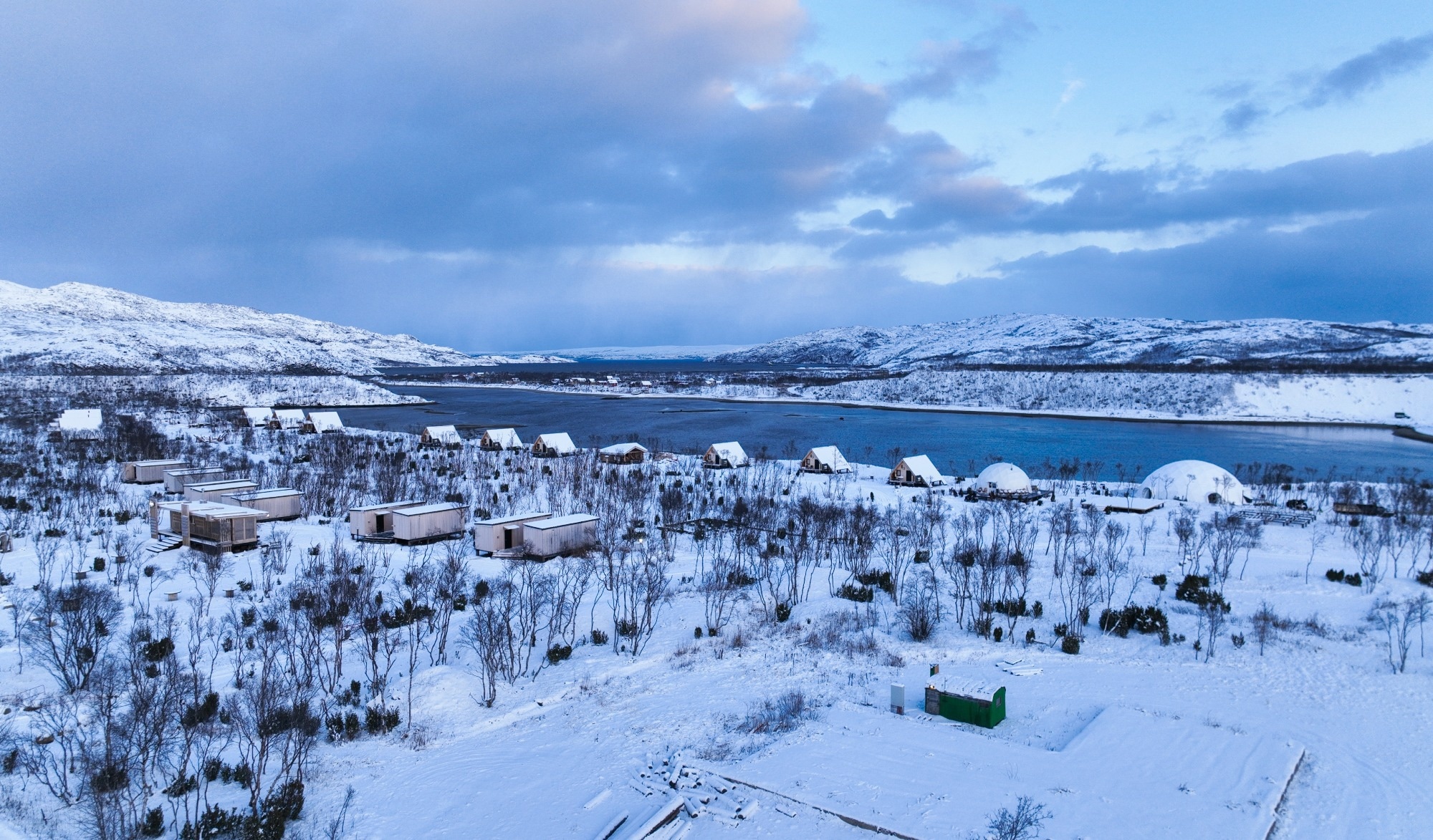
Image Credit: Collab Media/Shutterstock.com
In cold regions, strong buildings depend on maintaining the ground’s frozen condition and regularly monitoring it as the climate changes. This article explains how engineers select sites, prepare the ground, design foundations, and maintain structures on permafrost while reducing risks from heat, water, and long-term ground movement.
Why Permafrost Complicates Construction
Permafrost is ground that stays frozen for at least two years. It is primarily found across large parts of Alaska, Canada, and Russia. Above it is a thin layer called the active layer, which freezes in winter and thaws in summer. This seasonal cycling makes the ground behave differently from typical bedrock or compacted earth used for foundations.1
The real danger comes when permafrost thaws permanently rather than seasonally. When the ice inside the soil melts, the ground becomes weaker and can sink unevenly. This process is known as thaw settlement. If a building sits directly on this kind of ground, it can crack, lean, or even collapse as the soil shifts beneath it.2
Saving this for later? Download a free PDF now.
Heat from buildings is one of the main causes of permafrost thaw. Heat escaping through floors and foundations can move into the soil and slowly melt ground that has been frozen for many years. As a result, most construction methods in permafrost areas are designed to keep heat away from the ground.1
Foundation Strategies That Preserve Frozen Ground
Pile foundations are a particularly common solution across Arctic and subarctic regions. Builders drive or drill long supports deep into the permafrost, then rest the building on top of them. This leaves open space under the floor, so cold air can move through and help keep heat away from the frozen ground.1
Adfreeze piles work by freezing directly into the surrounding soil, forming a strong bond that transfers building loads outward into stable ground layers. Engineers install these piles where bedrock sits too deep to reach practically, and the bond strengthens as ground temperatures drop. Adjustable jacks placed on top of the piles let crews correct any settling that occurs over time.1
Post-and-pad foundations are a cheaper option in places where gravel is available. Builders create a gravel pad, add supports made from word, steel, or concrete, and connect the building with adjustable brackets. Like pile foundations, this setup leaves space under the structure so air can flow and heat does not build up near the ground. It is also easier to adjust if the ground shifts.1
Thermosyphons are a more mechanical response to the same challenge. These sealed tubes extract heat from the ground and release it into the atmosphere using a liquid-vapor cycle, requiring no electricity or moving parts. Engineers first applied this technology at scale during construction of the Trans-Alaska Pipeline System in the 1970s, and it now protects critical infrastructure across the circumpolar Arctic.3,4,5
Site Selection and Ground Preparation
Choosing the right site is just as important as choosing the right foundation. Ideal areas have stable permafrost and less ground ice; large ice wedges can cause serious uneven sinking if they melt. Natural ground cover, such as moss and shrubs, also helps insulate the soil, so removing it can make thawing more likely.2
Drainage is another major concern. Water pooling near a foundation accelerates thawing faster than almost any other factor, so builders grade sites to direct rain and snowmelt away from structures. Roof overhangs, gutters, and downspouts also keep water from soaking into the ground near the building.2
Timing construction around seasonal conditions also reduces damage to the surrounding permafrost. Heavy machinery can damage the ground, especially during warmer months when the surface is softer. Many crews perform excavation and foundation work during the coldest part of the year, when the ground is firmer and less likely to be disturbed.1,2
Standards, Monitoring, and Regional Differences
Construction codes for permafrost regions vary widely, and that inconsistency creates serious risks. Russia developed detailed permafrost construction guidelines as early as the 1950s, covering methods for preserving frozen ground and, in some cases, intentionally thawing it before construction. However, these standards were updated infrequently, about once per decade, which sometimes left engineers relying on outdated climate data.4
The 1940s construction of the Alaska Highway, which traverses through Alaska and Canada, took a different path, learning through costly failures rather than early codification. Engineers ignored known permafrost risks, and thaw damage forced rerouting of nearly a third of the road within months of completion. This failure spurred new research, leading to a stronger foundation and road-building methods still used today.4
Canada established its Northern Infrastructure Standardization Initiative in response to visible permafrost damage across its territories. The program develops guidelines for studying ground conditions and reducing permafrost risks. Today, monitoring networks in Alaska, Canada, and Russia track ground temperature and the thickness of the active layer, although the quality and funding of these systems still vary by region.4
Roadways and airfields present their own construction challenges. In response to these challenges, engineers use insulated embankments and air convection systems within roadbeds to prevent the weight and heat of traffic from thawing the ground below. The basic idea is the same as with buildings: keep heat away from the frozen soil as much as possible.6
Adapting to a Warming Climate
Warming temperatures are making permafrost construction more difficult. Warming rates in the Arctic have reached nearly four times the global average, reducing the bearing capacity of frozen ground across huge areas of Alaska, Canada, and Russia. Foundations designed decades ago under cooler conditions now face loads and thaw risks that the original engineers never anticipated.4
Adjustable foundation systems are now highly recommended, in part because of this uncertainty. Screw jacks, leveling brackets, and modular pile connections allow builders to correct settling as it occurs rather than replace entire structures. This flexibility becomes more important each year as permafrost conditions change faster than static designs can accommodate.1
Researchers and engineers are also calling for better data sharing and stronger climate planning across regions. Combining local knowledge from Indigenous communities with modern geotechnical monitoring produces more resilient designs than either approach alone.4
Local Materials and Labor
Local materials are significant in permafrost construction because shipping supplies, such as gravel, timber, steel, and prefabricated parts, to northern areas can be expensive and difficult. For this reason, builders prefer designs that are simple, efficient, and easy to assemble. Lightweight materials can also reduce pressure on the ground and limit heat transfer into the soil.1,4
Labor conditions are also challenging. Crews often work with short building seasons, limited daylight during winter, and strict safety requirements. Modular construction, careful planning, and preassembled parts help reduce delays and limit how long the ground is exposed or disturbed.2,4
Local knowledge strengthens these projects in practical ways. Residents understand snow patterns, drainage changes, wind exposure, and seasonal ground behavior in ways that improve siting and foundation choices. When builders combine engineering plans with that experience, they produce structures that fit the land and hold up longer under Arctic conditions.4
References and Further Reading
- FOUNDATIONS FOR BUILDING ON PERMAFROST. (2022). Cold Climate Housing Research Center. https://cchrc.org/wp-content/uploads/media/221201_Foundations_Snapshot.pdf.
- What do I need to be aware of when building on permafrost? [Online] Cold Climate Housing Research Center. Available at: https://yournorthernhome.cchrc.org/what-do-i-need-to-be-aware-of-when-building-on-permafrost/.
- Edwards, T. (2016). How To Build On Permafrost. [Online] UpHere. Available at: https://uphere.ca/articles/how-build-permafrost.
- Landers, K., & Streletskiy, D. (2023). (Un)frozen foundations: A study of permafrost construction practices in Russia, Alaska, and Canada. Ambio. 52(7). https://link.springer.com/article/10.1007/s13280-023-01866-9.
- Mosley, L., et al. (2021). Alyeska's 40-Plus Years of Experience with Heat Pipes on the Trans-Alaska Pipeline System. [Online] Elsevier Pure. Available at: https://inl.elsevierpure.com/en/publications/alyeskas-40-plus-years-of-experience-with-heat-pipes-on-the-trans/.
- Connor, B. et al. (2020). Gravel Roads and Airfields Constructed on Permafrost. Institute of Northern Engineering, Alaska University Transportation Center. https://rosap.ntl.bts.gov/view/dot/59181.
Disclaimer: The views expressed here are those of the author expressed in their private capacity and do not necessarily represent the views of AZoM.com Limited T/A AZoNetwork the owner and operator of this website. This disclaimer forms part of the Terms and conditions of use of this website.