Material Costs Keep Climbing
Labor Shortages Compound Cost Pressure
Why Prices Refuse to Normalize
Sustainability as a Cost Factor
Circular Economy Gains Ground
Advances in Sustainable Materials
Smart Buildings Add Another Layer
Where the Industry Is Heading
References and Further Reading
Rising material costs are changing how builders approach their projects. This increasing economic demand affects everything from planning to pricing and construction, pushing sustainability from a luxury to a key financial strategy. As a result, the building industry faces inflation, labor shortages, and a genuine move toward greener materials that promise long-term savings.
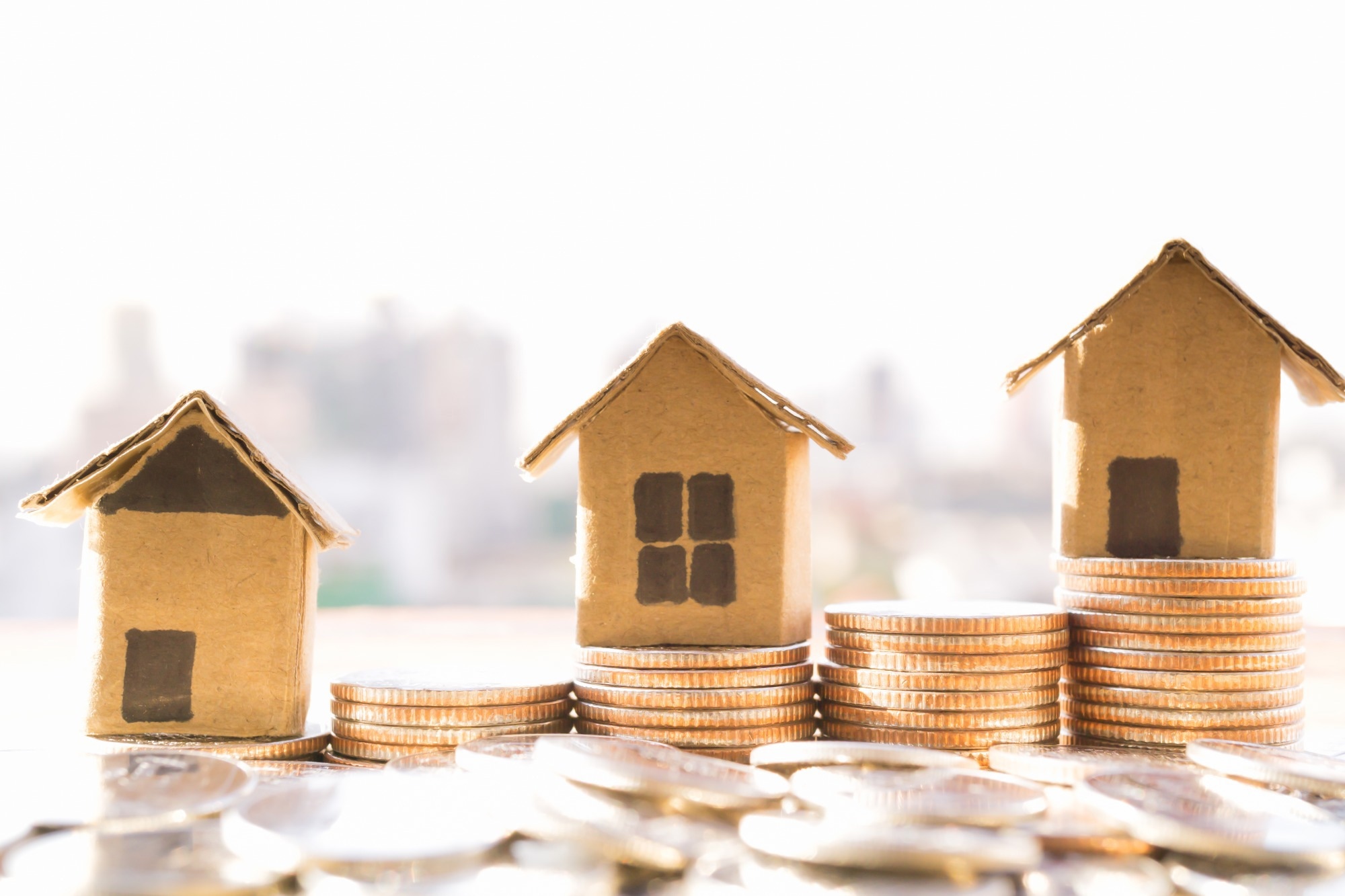
Image Credit: KhongTham/Shutterstock.com
Material Costs Keep Climbing
Residential building material prices have surged recently, seeing their highest yearly increase in over three years. This past May, energy-exclusive prices rose by 4.4% compared to last year and 0.7% from the previous month. Rising energy costs compound this issue; they jumped 17.2% in May and are 62.8% higher than last year. When these rising costs are taken into account, the prices of residential construction goods rose by close to 8%.
A significant factor driving this rise is energy costs, which jumped 17.2% in May and are 62.8% higher than the previous year.1
Goods used in construction carry heavy weight in these price indices, making up around 60% of the total input measure. While lumber prices have stabilized after climbing more than 300% during 2020 and 2021, other materials saw significant hikes.1,2
The average prices of steel mill products declined 16.1% in 2023 after the extraordinary 90.3% jump of 2021, yet prices remain 65.1% above January 2020 levels. Gypsum and drywall dropped only slightly after a 44.6% two-year surge through 2022.
Download a free PDF of this article here!
Across the entire construction industry, approximately 82.5% of materials experienced a significant cost increase since 2020, averaging a 19% jump.2,3
Labor Shortages Compound Cost Pressure
Rising material prices tell only part of the cost story, as labor scarcity is also adding substantially to construction expenses. Skilled trades remain in short supply as fewer workers enter these fields each year.4
The Home Builders Institute estimated that skilled labor shortages cost the US home-building sector approximately $10.8 billion annually, including $2.6 billion in higher carrying costs and $8.1 billion in lost production. Construction times increased by an average of 1.98 months due to workforce gaps, with smaller building companies experiencing even longer delays.5,6
Wage inflation in skilled trades now functions as a structural cost, similar to material inflation, as contractors compete for a shrinking pool of qualified workers. This dynamic pushes some firms toward automation and prefabrication methods that reduce dependence on scarce on-site labor.
Put another way, as labor costs climb alongside material prices, the building industry increasingly treats workforce development and technology investment as core components of long-term cost control.7
Why Prices Refuse to Normalize
Supply chain disruptions from the COVID pandemic set off the initial price spikes, but newer forces now sustain elevated costs. Between 2020 and 2023, approximately 82.5% of construction materials significantly increased in cost, and wood and steel increased by 16 and 22%, respectively, in 2023.3
Oxford Economics reported that energy transition costs and continued labor scarcity add further upward pressure on the broader cost structure. Builders face a market where past price shocks have not simply faded but left a lasting floor beneath which costs rarely return. This pattern forces contractors to build inflation assumptions into contracts and timelines rather than treating price spikes as temporary anomalies.3
Sustainability as a Cost Factor
The push toward eco-friendly materials adds a layer of complexity to pricing. Growing demand for sustainable building products and green construction practices benefits the environment, yet specialty materials often carry higher price tags than conventional alternatives, according to NAHB's economic research team. This tension between environmental goals and budget constraints shapes decisions at every stage of a project.2
A review published in the Journal of Building Design and Environment examined this trade-off between traditional and eco-friendly building materials. One of the reviewed quantitative studies found that using sustainable materials could lower overall building costs by about 3.15% in some cases.
However, challenges remain, such as high production costs for new materials, incomplete market systems, and price fluctuations that affect long-term budgeting.8
In China, government subsidies have offset much of the incremental cost gap for green buildings in several markets, and typical green projects recoup added technology expenses within five to 10 years.8
Life-cycle costing approaches, when applied properly during early design phases, help construction teams calculate the true financial impact of sustainable material choices before committing to procurement. This kind of planning changes sustainability from an afterthought into a core budgeting discipline.8
Circular Economy Gains Ground
Beyond individual material swaps, the industry is exploring circular economy principles as a structural response to cost volatility. Recycled aggregates, alternative cementitious materials, and reused building components reduce dependence on virgin raw materials that are most exposed to price swings.8
Reduction, reuse, and recycling form the foundation of this approach, aiming to lower resource input while extending the service life of existing materials. Moreover, life-cycle assessment tools now help construction firms quantify the environmental impacts of material choices, while complementary assessments can evaluate circularity gains and financial outcomes, giving project teams data to justify material choices to clients and investors.8,9
Digital tools such as building information modeling (BIM) support this transition by tracking material information across procurement, construction, and eventual recycling stages. Adoption remains uneven across regions due to technical barriers, high software development costs, and the need for specialized technical staff to operate these systems effectively.8,9
Advances in Sustainable Materials
Recent developments have achieved tangible progress in developing lower-carbon building products. New sustainable production technologies such as recycled aggregates, bio-based composites, and low-carbon binders are hoped to close the price gap between conventional and sustainable options while cutting embodied carbon in finished structures.10
Carbon fiber materials, renewable resources like bamboo and engineered wood, and composite phase-change materials are categories gaining traction in commercial applications.
Solar-integrated building components, including passive heat-collecting wall systems, demonstrate how energy efficiency and material innovation intersect to reduce both operational costs and environmental footprint over a building's lifespan. These technologies remain more expensive upfront but continue to see cost reductions as manufacturing scales and green building standards mature.8
Smart Buildings Add Another Layer
Technology integration compounds the economic picture further. The global smart building market is booming, reaching about $101 billion in 2025 and expected to grow to $215 billion by 2034. A significant driver of this growth is the rising demand for energy-efficient systems, as buildings are responsible for nearly 40% of global energy use.11
Automated building management systems (BMSs) enable property owners to oversee and optimize heating, air conditioning, lighting, and security in real time, which can significantly reduce maintenance costs by identifying issues early.11
For instance, effective lighting controls can lower energy expenses by 30 to 60% while enhancing lighting quality. Although high initial costs can be a hurdle for smaller developers, the long-term savings are making these investments more appealing for commercial property owners.11
Where the Industry Is Heading
The rise in material prices is expected to persist, meaning builders must treat cost volatility as a permanent planning variable. Sustainability efforts are becoming intertwined with cost management rather than existing as a separate initiative, since green material research directly affects procurement budgets and project timelines. Firms that build life-cycle costing into early design stages position themselves to absorb material price shocks with fewer disruptions to overall project economics.3,8
Digital tools such as BMS and life-cycle assessment platforms are likely to see wider adoption as firms seek ways to track both cost and carbon impacts simultaneously. The future of the construction industry will depend on treating sustainability, technology, and workforce planning as interconnected elements of a single financial strategy, rather than as separate issues.8,9
References and Further Reading
- Wade, J. (2026). Residential Building Material Prices Rise at Highest Rate In Over Three Years. [Online] NAHB. Available at: https://eyeonhousing.org/2026/06/residential-building-material-prices-rise-at-highest-rate-in-over-three-years/.
- How Soaring Prices for Building Materials Impact Housing. (2024). [Online] NAHB. Available at: https://www.nahb.org/blog/2024/07/how-soaring-prices-building-materials-impact-housing.
- Obando, S. (2023). Higher material prices here to stay. [Online] Construction Dive. Available at: https://www.constructiondive.com/news/falling-material-prices-expected-reverse-course/651744/.
- Lerner, M. (2025). Higher pay for skilled construction workers fuels ongoing increases in rebuilding costs. [Online] Business Insurance. Available at: https://www.businessinsurance.com/higher-pay-for-skilled-construction-workers-fuels-ongoing-increases-in-rebuilding-costs/.
- HBI Report Reveals Economic Impact of Labor Shortages on Housing Production. (2025). [Online] NAHB. Available at: https://www.nahb.org/blog/2025/10/hbi-labor-market-report.
- New Study Reveals Significant Economic Impact of Housing Industry Labor Shortage. (2025). [Online] NAHB. Available at: https://www.nahb.org/news-and-economics/press-releases/2025/06/new-study-reveals-significant-economic-impact-of-housing-industry-labor-shortage?.
- Construction and Skilled Labor Report. (2026). [Online] People Ready. Available at: https://skilled.peopleready.com/wp-content/uploads/sites/2/2026/02/TB2010_PRST_Q4_2025ConstructionAndSkilledLaborReport_v2.pdf
- Liao, K. et al. (2024). Implications for cost management analysis of new green building materials in the context of low-carbon economy: a critical review in China. Journal of Building Design and Environment. 2. https://www.sciexplor.com/jbde/articles/2811-0730-0302-13
- Gamage, I., Senaratne, S., Perera, S., & Jin, X. (2024). Implementing Circular Economy throughout the Construction Project Life Cycle: A Review on Potential Practices and Relationships. Buildings, 14(3). https://www.mdpi.com/2075-5309/14/3/653.
- Firoozi, A. A. et al. (2024). Emerging trends in sustainable building materials: Technological innovations, enhanced performance, and future directions. Results in Engineering. 24. https://www.sciencedirect.com/science/article/pii/S2590123024017729.
- Warade, P. (2026). Smart Building Market Size, Share & Trends Analysis Report. [Online] Straits Research. Available at: https://straitsresearch.com/report/smart-building-market.
Disclaimer: The views expressed here are those of the author expressed in their private capacity and do not necessarily represent the views of AZoM.com Limited T/A AZoNetwork the owner and operator of this website. This disclaimer forms part of the Terms and conditions of use of this website.