*Important notice: This news reports on an unedited version of an accepted paper and is awaiting final editing. Therefore, the paper should not be regarded as conclusive or treated as established information.
Researchers have developed a real-options valuation model covering 179 integrated cement plants across Europe to examine how policy and technology uncertainty could shape decarbonization efforts in Europe’s cement industry. Their results, published in Nature Communications, show that investor confidence can strongly influence when and where cement plants adopt low-carbon technologies.
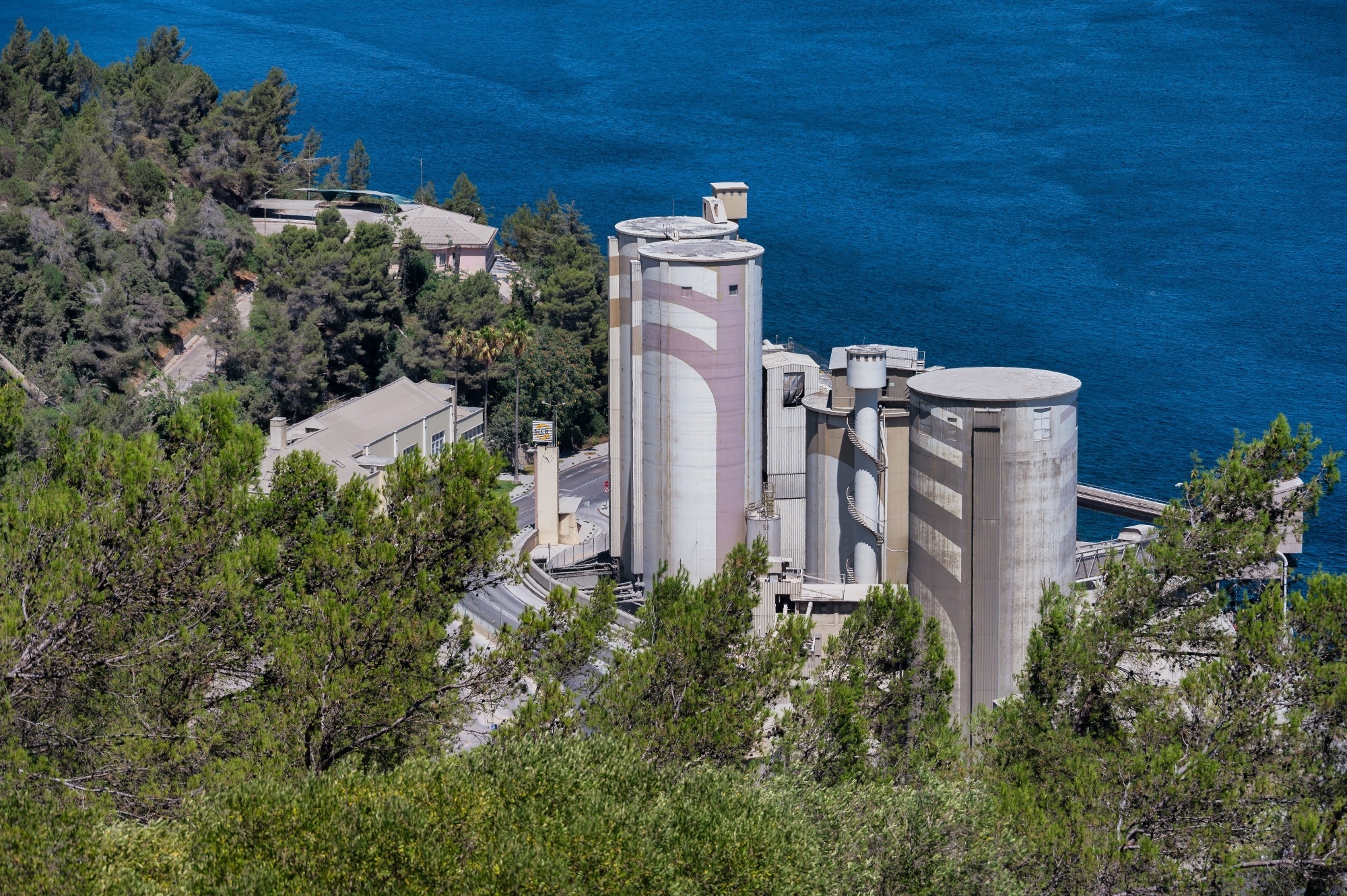 Study: Decarbonizing the EU cement industry under technology and policy uncertainty. Image Credit: studio f22 ricardo rocha/Shutterstock.com
Tackling Uncertainty in Cement Decarbonization
Cement production remains a major source of global industrial CO2 emissions, accounting for around 8% of total carbon emissions. Decarbonizing the sector remains challenging because cement plants operate at very high temperatures and generate process emissions that cannot be eliminated through fuel efficiency measures alone.
Carbon capture and storage (CCS) therefore offers an important pathway for achieving deeper emissions reductions. Combining CCS with biomass energy could go a step further by creating bioenergy with carbon capture and storage (BECCS), which has the potential to deliver net-negative emissions.
Click here to download a free copy of this page.
The European Union's Emissions Trading System (ETS) provides an important incentive for industrial decarbonization. However, cement producers still face uncertainty about future carbon allowance prices, CCS investment costs, and the development of CO2 transport and storage infrastructure. Together, these uncertainties can influence not only whether companies make investments but also when and where they take place.
Against this backdrop, the study examines how these uncertainties could affect investment timing, geographical deployment, and emissions across Europe's cement industry. It also explores whether the sector could eventually become a source of carbon dioxide removal and estimates the biomass demand that a large-scale transition could create.
Earlier models have predominantly assessed cement decarbonization in terms of technology costs, payback periods, and sensitivity analyses. However, they have generally paid less attention to the value producers place on waiting when future policy and technology conditions remain uncertain.
This study addresses that gap by modeling investment decisions at individual cement plants as expectations change.
Modeling Investment Decisions Across European Cement Plants
The researchers compiled plant-level data for 179 integrated cement plants covered by the EU and Swiss emissions trading systems. The dataset captured differences in production capacity, CO2 transport and storage costs, financing costs, and country-specific biomass costs. These variables enabled the model to capture differences at individual plants and across different regions.
Using this data, the team developed a pure-jump real-options valuation model to simulate investment decisions from 2025 to 2050. Unlike conventional approaches that compare fixed net present values, this method accounts for the value of waiting before committing to an irreversible investment.
At five-year intervals, each plant could select CCS, biomass combustion, a combination of both through BECCS, or continued operation with the existing fossil-based system. The model tracked investment cash flows through 2079 to account for the full lifetimes of these technologies.
The researchers incorporated three main sources of uncertainty: future EU climate policy and ETS allowance prices, the availability of CO2 transport infrastructure, and changes in CCS investment costs. They combined these factors into eight possible scenarios and considered 216 potential developments between 2025 and 2050.
Two rounds of expert interviews helped refine and strengthen the modeling approach. The first round focused on validating investment assumptions and identifying the main sources of uncertainty, while the second explored industry participants’ expectations of how these conditions might evolve.
The researchers then incorporated these expert-assessed probabilities into the model to reflect how cement producers may perceive future investment conditions under two broader outlooks: NZ2050 and delayed.
Policy Confidence Could Drive Cement Towards Carbon Negativity
The results show that cement manufacturers' expectations about future ETS prices and CO2 infrastructure strongly influence investment timing. When producers anticipate stronger carbon prices and greater availability of infrastructure, the model points to more rapid CCS deployment.
The aforementioned NZ2050 scenario assumes that the EU remains on track to meet its 2050 net-zero target. In this scenario, the model retrofits all plants with CCS by 2030 and gradually combines CCS with biomass to generate negative emissions.
As a result, Europe's cement industry could become a net carbon sink in the early 2030s. By 2050, the sector could deliver approximately 57.1 million tonnes of annual carbon dioxide removal. Between 2025 and 2050, it could generate around 0.6 gigatonnes of net-negative emissions.
The outcome changes considerably, however, when producers have less confidence in future climate policy. In the delayed scenario, companies expect lower ETS prices, slower CO2 infrastructure development and more limited reductions in CCS costs.
In such conditions, around 17% of overall clinker capacity could remain without any of the modeled low-carbon investments by 2050, leaving those plants dependent on ETS allowances. Other producers could also postpone CCS or BECCS investments while they wait for more favorable conditions.
Location adds another layer to these investment decisions. Facilities near CO2 storage sites or waterways can benefit from reduced transport costs, and access to affordable biomass provides another advantage. In this light, Northern European countries generally transition earlier because they offer more favorable conditions. Smaller and landlocked plants face greater challenges.
The differences therefore point to possible geographical restructuring as low-carbon investment becomes concentrated at plants with better access to infrastructure and resources.
Building Confidence for a Low-Carbon Cement Industry
The study shows that the availability of decarbonization technologies alone will not determine the pace of Europe’s cement industry transition; policy credibility also plays a critical role in shaping investment decisions.
When producers expect strong and sustained carbon prices, they have greater incentives to invest in CCS and BECCS. In contrast, uncertainty about future climate policy can delay investment, even when suitable technologies are available.
The findings highlight the need for a credible European Union Emissions Trading System and greater certainty around CO2 transport and storage infrastructure. Targeted financial support could also help plants facing high investment costs or less favorable locations. However, concentrating investment at the most competitive sites could accelerate geographical restructuring and affect regions that depend on less competitive plants.
Overall, the study shows that credible policy, timely infrastructure, and favorable investment conditions will be essential for transforming Europe’s cement industry from a major emitter into a significant source of carbon dioxide removal.
Journal Reference
Tautorat, P., Sultani, D., et al. (2026). Decarbonizing the EU cement industry under technology and policy uncertainty. Nature Communications. DOI: 10.1038/S41467-026-76611-3. https://www.nature.com/articles/s41467-026-76611-3.
Disclaimer: The views expressed here are those of the author expressed in their private capacity and do not necessarily represent the views of AZoM.com Limited T/A AZoNetwork the owner and operator of this website. This disclaimer forms part of the Terms and conditions of use of this website.