*Important notice: This news reports on an unedited version of an accepted paper and is awaiting final editing. Therefore, the paper should not be regarded as conclusive or treated as established information.
Researchers have examined whether two unconventional ingredients, iron processing waste and dynamically prepared magnetized water, can work together to improve concrete performance while reducing reliance on natural river sand.
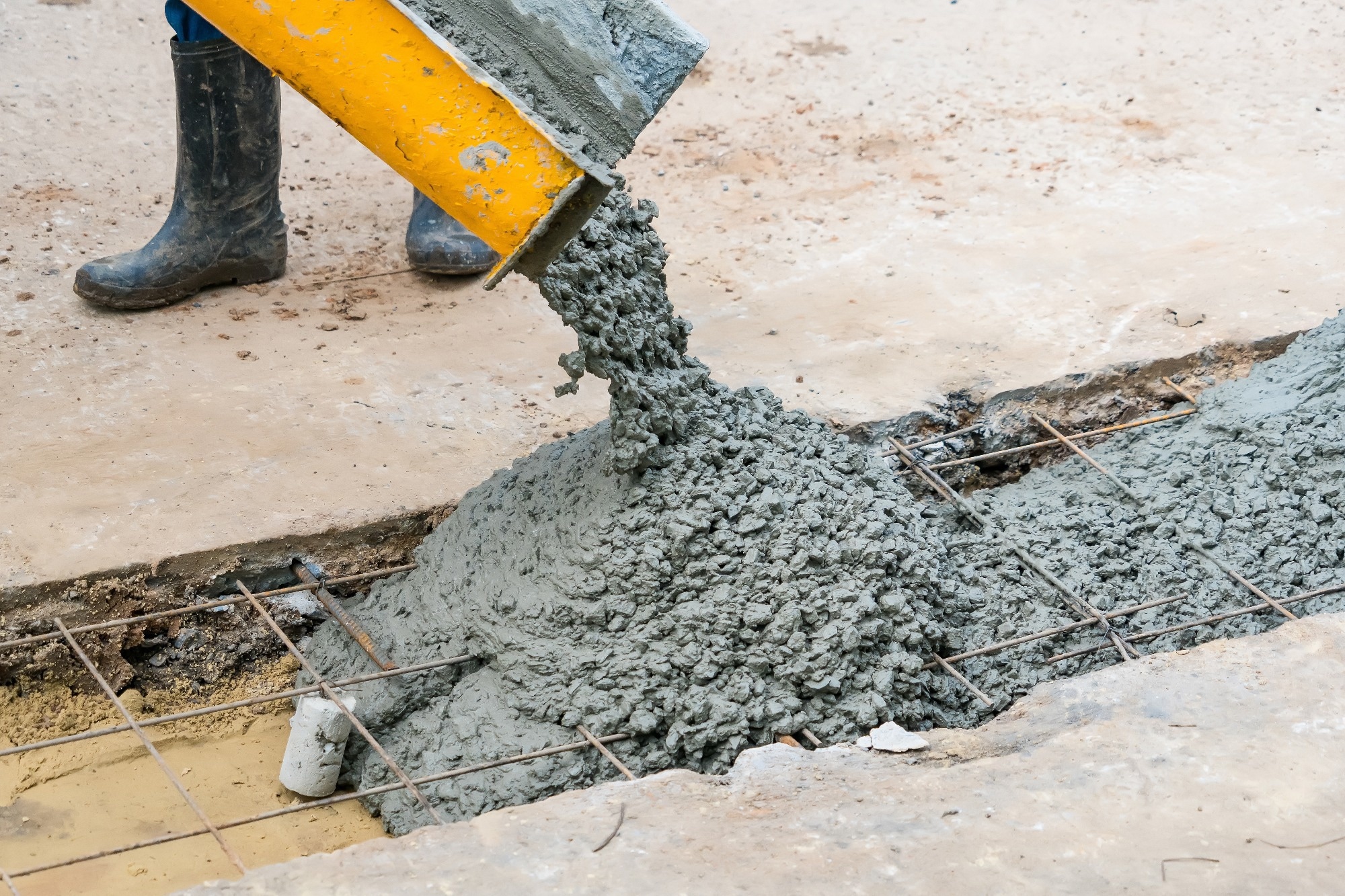
Study: Influence of iron processing waste and dynamically prepared magnetized water on the properties of sustainable concrete. Image Credit: Bubbers BB/Shutterstock.com
The researchers investigated how the combination affected concrete's workability, strength, durability, and microstructure. Their results suggest that, at suitable replacement levels, iron waste (IW) and magnetized water (MW) can produce a denser, stronger concrete matrix while using an industrial waste stream.
A Search For More Sustainable Concrete Materials
Concrete production depends heavily on natural aggregates, including river sand, but this scale of demand has environmental consequences.
Excessive sand extraction can contribute to riverbank erosion, habitat disturbance, and biodiversity loss, creating pressure to find alternatives that can reduce the industry's reliance on natural resources.
Iron waste generated during machining and steel-processing activities is one potential option. The material has physical characteristics and a relatively high specific gravity that make it a suitable candidate for partial replacement of fine aggregate.
Magnetized water has also attracted interest in cement-based materials because it can influence concrete performance. IW and MW have each been studied separately, but comparatively little work has looked at what happens when they are used together.
That interaction is particularly interesting because iron waste contains ferromagnetic material. The researchers therefore investigated whether combining IW with dynamically prepared MW could deliver performance benefits while also providing a use for industrial waste.
Want to save for later? Click here.
Putting the IW-MW Combination to the Test
The experimental program used Ordinary Portland Cement, coarse aggregate, and river sand. Iron waste replaced the sand at six levels: 0%, 10%, 20%, 30%, 40%, and 50%.
The researchers prepared the mixing water in two forms: conventional tap water and magnetized water. The MW was exposed to magnetic fields of 1.4 or 1.6 T for 50, 100, 150, or 200 magnetization cycles. A superplasticizer was added to maintain suitable workability.
The mixing procedure was relatively straightforward. The dry ingredients were first blended in a pan mixer for two minutes. Half of the water was then added and mixed for another two minutes, followed by the remaining water and superplasticizer for three minutes. The magnetized water was used immediately after preparation.
The resulting concrete specimens were water-cured at 18 °C. Compressive strength was measured using 100 mm cubes at 7, 28, and 56 days. The researchers also assessed workability, flexural strength, splitting tensile strength, and sorptivity using relevant ASTM standards.
To understand what was happening inside the concrete, selected mixtures were examined using scanning electron microscopy (SEM), energy-dispersive X-ray spectroscopy (EDX), and X-ray diffraction (XRD). These techniques provided information on the material's morphology, elemental composition, and crystalline phases.
Moderate Iron Waste Replacement Delivered the Best Results
The results showed that IW and MW could improve several properties of the concrete, although the benefits depended on how much IW was used and how the water was magnetized.
Workability generally improved when iron waste was added. The largest increase in slump occurred at IW replacement levels of 20% to 40%. At 50%, however, slump began to fall. The researchers suggest that the higher concentration of fine particles may have increased the concrete's water demand.
Magnetized water also improved flowability, with the strongest results generally associated with higher numbers of magnetization cycles.
The mechanical results followed a similar pattern: more iron waste was not necessarily better.
At 28 days, concrete containing 20% IW and tap water achieved a 32% improvement in compressive strength. The researchers associate this increase with better particle packing and the formation of a denser matrix.
Adding magnetized water provided a further boost under certain conditions. A magnetization level of 150 cycles produced the most favorable results overall, with the IW10-M-150 mixture recording a 22% higher compressive strength than the corresponding tap-water mixture.
The gains were not limited to compressive strength.
The IW20-M-150 mixture produced the strongest overall results for tensile-related properties. After 28 days, splitting tensile strength increased by 37%, while flexural strength increased by 7%.
Sorptivity measurements also pointed to improved durability. Concrete mixtures prepared with magnetized water absorbed less water, which is consistent with lower pore connectivity and a denser internal structure.
What the Microstructure Revealed
The microscopic analysis helped put the mechanical results into context.
SEM images showed a denser concrete matrix, with fewer visible pores and microcracks in the mixtures that performed better mechanically. EDX analysis also identified changes in the calcium-to-silicon (Ca/Si) ratio, which the researchers associated with improved formation of calcium silicate hydrate (C-S-H), one of the main binding phases in cement-based materials.
XRD analysis further supported this, showing stronger hydration-related peaks in mixtures containing magnetized water.
The results suggest that the improvements in strength and durability were accompanied by changes in the concrete's internal structure. The material was not simply stronger on paper. Its microstructure also appeared more refined.
What the Findings Mean for Sustainable Concrete
The study points to a practical route for combining waste utilization with concrete performance, but the results also underline the importance of finding the right mix proportions.
The strongest results did not come from simply increasing the amount of iron waste. Workability was best at around 20% to 40% IW replacement, while the most favorable compressive-strength result involved 10% IW with magnetized water prepared using 150 cycles. For splitting tensile and flexural strength, the 20% IW and 150-cycle MW mixture performed best.
That distinction matters. It suggests that the optimum mixture depends on which property is being prioritized rather than there being one universally best IW-MW combination.
The reduction in sorptivity adds another useful dimension. Lower water absorption suggests a less connected pore structure, which could improve resistance to water ingress. The SEM, EDX, and XRD results broadly supported this interpretation by showing changes in pore structure, composition, and hydration-related phases.
Practical questions remain before this approach can be considered beyond the experimental setting. The reported results apply to the materials, replacement levels, magnetic field strengths, curing conditions, and test methods used in this study. Further work would be needed to establish how consistently the findings translate to other concrete formulations and larger-scale production.
Even so, the study adds to the growing body of research looking for ways to reduce the environmental burden of concrete without treating performance as an afterthought. In this case, an industrial waste material and a modified mixing process appear to work together under specific conditions, offering a potential way to use less natural sand while maintaining, and in some cases improving, key concrete properties.
Journal Reference
Elkhelawy A.N., Yousry E., et al. (2026). Influence of iron processing waste and dynamically prepared magnetized water on the properties of sustainable concrete. Scientific Reports. DOI: 10.1038/s41598-026-67314-2, https://www.nature.com/articles/s41598-026-67314-2