How Is a Launch Pad Built?
Florida Builds for Speed
A Second Pad as Insurance
Kourou Builds for Sharing
Who Pays for the Ground?
Two Paths, One Bet on Growth
References and Further Reading
Launch pads are some of the least flexible investments in the commercial space-construction industry: rockets can be redesigned; production rates can be adjusted; and launch contracts can move between providers. However, once a 700-foot tower (such as Blue Origin’s planned second launch pad in Florida) has been built, it cannot be moved.
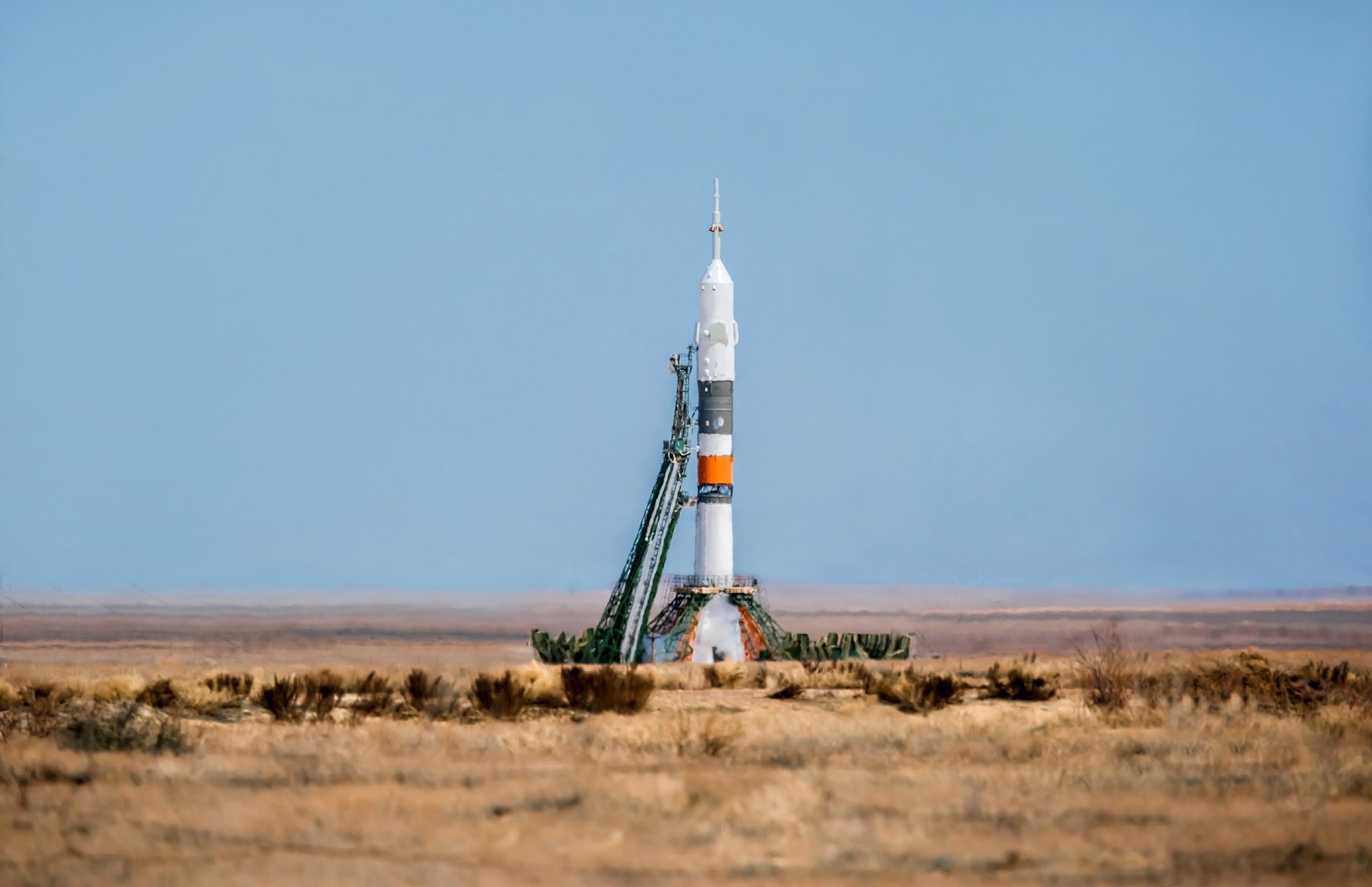
Image Credit: Vera Larina/Shutterstock.com
Therefore, when operators build a launch pad, they must balance multiple requirements while considering the long-term implications of their design. Constructions underway at Cape Canaveral and Kourou show two very different ways of approaching and answering these questions.1,2
This article explains how launch pads are built, why each site chose its path, and what these projects reveal about who funds the commercial space economy.
How Is a Launch Pad Built?
A launch pad has to survive a controlled explosion, so its design starts underground. For example, the Ariane 6 pad, located in French Guiana, extends 28.5 m deep and spans 200 m, and its concrete
base is equivalent to 67 Olympic swimming pools.
This substantial mass stabilizes the rocket and protects the pipes, cables, and support systems buried beneath it. Two exhaust ducts are designed to channel the engine blast away from the vehicle.2
Sound is the next major hazard. The acoustic energy generated during liftoff is powerful enough to damage both the rocket and the surrounding equipment. To mitigate this, the pad is equipped with a deluge system that saturates the area with water to absorb sound.
Above ground, a launch table weighing 700 metric tons supports the rocket, while a mobile gantry weighing 8,200 metric tons provides shelter during assembly and rolls 140 m away on rails just before launch.2
Towers and assembly buildings complete the site, and each reflects how its rocket is assembled. For example, Blue Origin's second launch pad in Florida will require around 2500 tons of steel, primarily for a 700-foot launch tower.
In contrast, the Ariane 6 rocket stages are joined horizontally about one kilometer from the pad. This gives workers easy access and shortens launch campaigns from months to weeks.2,3
Florida Builds for Speed
Florida's Space Coast hosted 109 orbital launches in 2025, almost double the 57 in 2022, with SpaceX flying 101 of them. At this rate, the availability of launch pads has become a critical constraint on flight frequency.
Space Force Colonel Brian Chatman described the current upgrades as the Cape's most significant renovation in two decades, with costs running into billions of dollars.4
Reusable rockets require quick turnaround times at launch pads. In December 2025, SpaceX set a record by launching twice from Launch Complex 40 in just 50 hours and 44 minutes. Fast resets allow a single launch pad to handle the work of several. Planners expect more than 300 launches a year by 2036 and are studying a fuel pipeline to replace hundreds of truck trips.4
Download a free copy of this page here!
Meanwhile, larger rockets require new infrastructure. In November 2025, the Air Force approved SpaceX's plan to rebuild Space Launch Complex 37 for Starship. The site can have up to 76 launches and 152 landings each year after federal reviews. Having twice as many landings as launches indicates that the site is designed for hardware recovery. Regional operations could also grow from 183 in 2025 to about 566 by 2034.5
A Second Pad as Insurance
Blue Origin is in the process of restoring Launch Complex 36 into a two-pad facility. The new LC-36B will support the larger New Glenn 9x4 rocket and will include a payload-processing facility on nearby land. Building a second pad costs money long before it earns any. Therefore, the decision reflects the company's seriousness about reducing the risks of relying on a single pad.3
That risk became real on May 8, 2026, when a New Glenn rocket exploded during an engine test, damaging the complex. Blue Origin had originally planned for eight to 12 launches in 2026, but was left hoping for just one following the incident. The destroyed rocket carried satellites for Amazon's Leo internet network, highlighting how a damaged pad can delay a paying customer and stall its revenue.3
Kourou Builds for Sharing
Kourou is taking a different approach. CNES, the French space agency, is converting the historic Diamant site, used for French rockets in the 1970s, into a complex called ELM-Diamant for small commercial launchers.
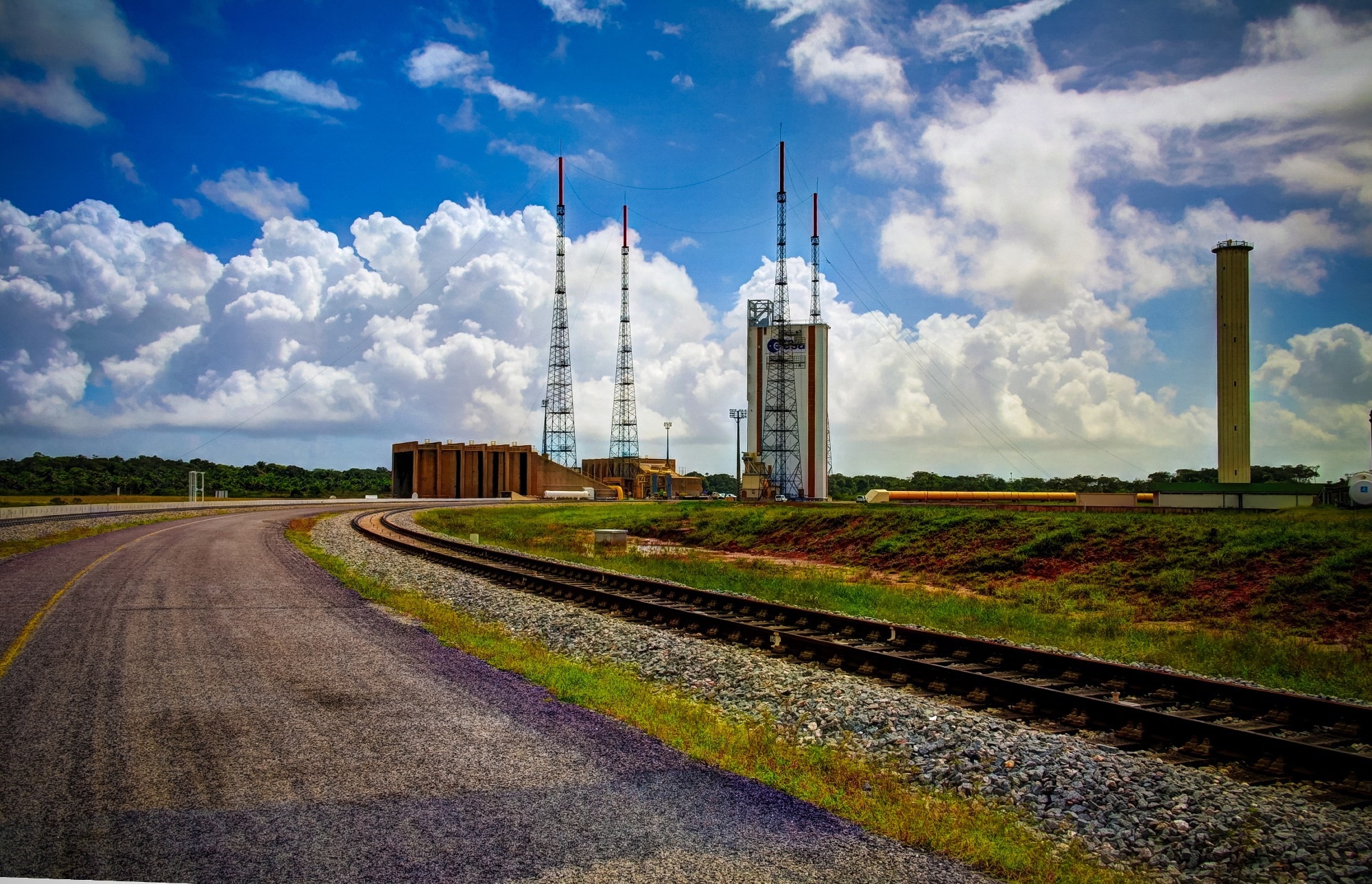
Guiana Space Center. Image Credit: Homo Cosmicos/Shutterstock.com
In 2020, crews removed the old launch structure, and in 2022, they started preparing the ground. By reusing the existing utilities and networks at the site, they are reducing costs and minimizing environmental impact.1
CNES is funding €50 million in shared facilities through the France 2030 plan, while each company builds its own dedicated zone. The complex can host up to five rockets capable of carrying up to 1500 kg into low Earth orbit, including Spain's MIURA 5.
With a new operations center, the wider Guiana Space Center expects 30 to 40 launches a year, spread across many different operators and rocket types.1
Who Pays for the Ground?
Governments remain the primary source of funding, with global public space investment reaching €119 billion in 2025. European budgets also increased by 12% to €13.5 billion, largely driven by defense spending.
Institutional buyers created 80% of demand in the €75 billion market for building and launching spacecraft. That steady public demand gives pad builders confidence that customers will be available once construction is complete.6
Moreover, private investment is growing at a faster pace, though with greater unpredictability. Global private space investment rose 60% in 2025, with United States activity jumping 177%, while European ventures raised €1.4 billion, down 8%.
This gap explains the different building styles. Florida's newest pads are company projects, while Kourou relies on agencies to carry costs that Europe's smaller firms cannot.6
Two Paths, One Bet on Growth
These projects offer two answers to the same rising demand. Florida is developing specialized launch and recovery pads for reusable rockets, which are used many times a year.
On the other hand, Kourou is building a shared launch facility for several smaller companies to launch from a single proven site. Both rely on the same basic engineering of deep concrete foundations, water deluge systems, and heavy steel structures.1,4
The scale of this construction is the clearest sign that the commercial space economy anticipates continued growth. Companies and agencies are committing concrete, steel, and billions of dollars to sites that will operate for decades. Each finished pad binds its owner to years of launches, which makes the current construction boom a physical vote of confidence in future demand for access to orbit.5
References and Further Reading
- ELM-Diamant launch complex: space history in the making. (2025). [Online] CNES. Available at: https://cnes.fr/en/news/elm-diamant-launch-complex-space-history-making.
- Ariane 6 launch complex inaugurated at Europe’s Spaceport. (2021). [Online] European Space Agency. Available at: https://www.esa.int/Enabling_Support/Space_Transportation/Europe_s_Spaceport/Ariane_6_launch_complex_inaugurated_at_Europe_s_Spaceport.
- Dinner, J. (2026). Blue Origin adding second pad to Cape Canaveral launch complex amid rocket explosion repairs. [Online] Space.com. Available at: https://www.space.com/space-exploration/launches-spacecraft/blue-origin-adding-second-pad-to-cape-canaveral-launch-complex-amid-rocket-explosion-repairs.
- Neale, R. (2025). Florida's Space Coast hosts record-breaking 109 rocket launches in 2025. [Online] Florida Today. Available at: https://www.floridatoday.com/story/tech/science/space/2025/12/31/spacex-powers-florida-to-new-record-of-109-orbital-rocket-launches-during-2025-in-brevard-county/87886377007/.
- Graziosi, G. (2025). SpaceX cleared for redesign of launch pad at Cape Canaveral that will allow 76 additional launches per year. [Online] AOL. Available at: https://www.aol.com/articles/spacex-cleared-redesign-launch-pad-192908082.html.
- ESA releases 2026 Space Economy Report. (2026). [Online] European Space Agency. Available at: https://www.esa.int/About_Us/Business_with_ESA/ESA_releases_2026_Space_Economy_Report.
Disclaimer: The views expressed here are those of the author expressed in their private capacity and do not necessarily represent the views of AZoM.com Limited T/A AZoNetwork the owner and operator of this website. This disclaimer forms part of the Terms and conditions of use of this website.