Iron ions enhance plant-based foams, enabling stronger and more water-resistant foamed concrete.
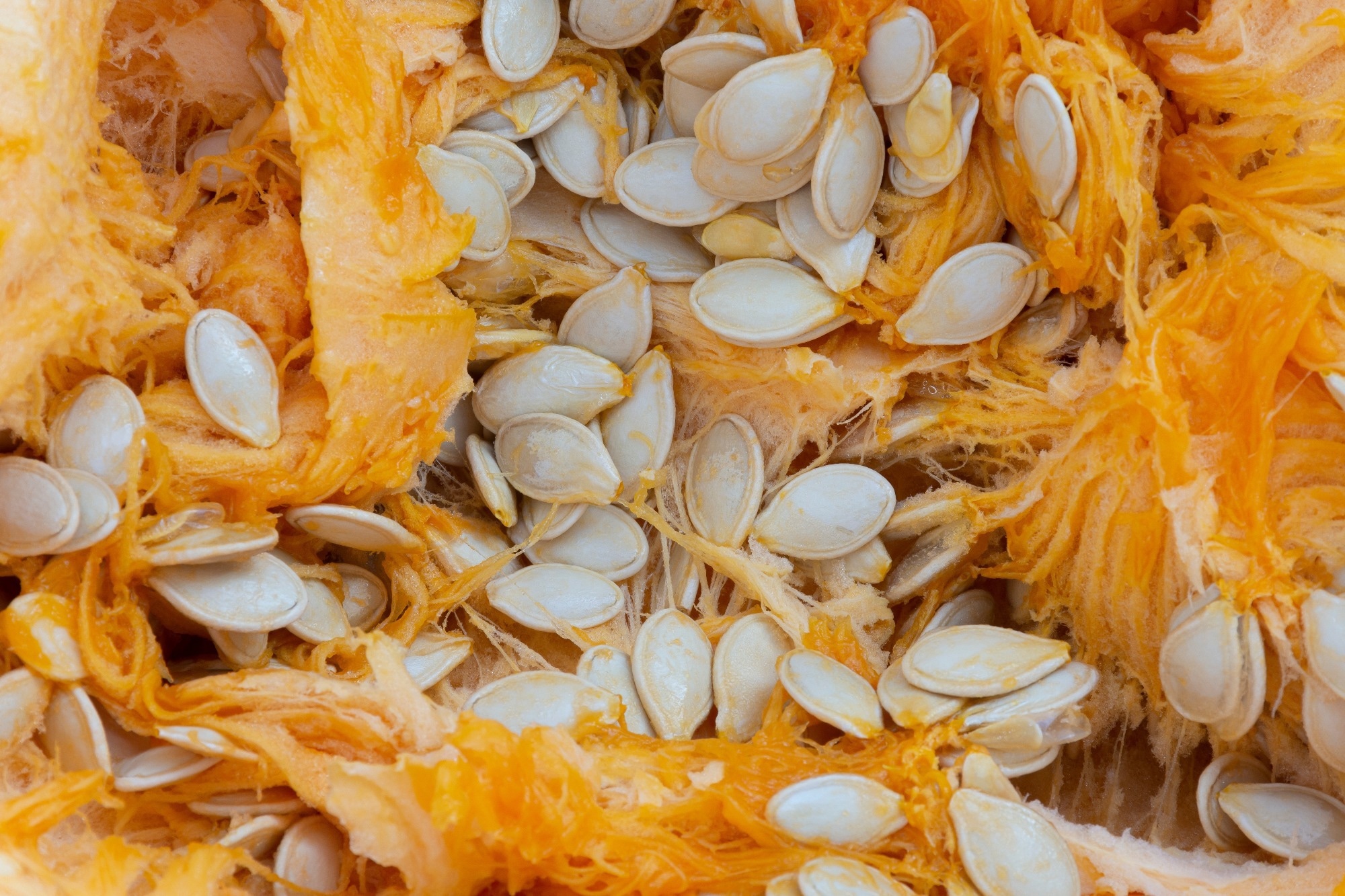
Study: Properties of foamed concrete utilizing Fe(II) as foam stabilizer for hydrolyzed pumpkin seed protein. Image Credit: Pam Walker/Shutterstock.com
Foamed concrete, valued for its lightweight structure and insulating properties, continues to attract attention in construction and materials science. A recent study published in Scientific Reports explores the use of iron(II) ions (Fe(II)) as a foam stabilizer combined with hydrolyzed pumpkin seed protein (HPSP), demonstrating a clear improvement in foam stability.
Under optimized conditions, the HPSP-based foaming agent achieved a foaming capacity of up to 488 mL. This performance surpasses that of many commercial plant-protein foaming agents and underscores the growing potential of plant-based materials in sustainable construction.
The Role of Foamed Concrete in Sustainable Construction
Foamed concrete is a cement-based material characterized by entrained air voids, which reduce density while preserving structural integrity. It is widely used for its thermal insulation, fire resistance, and acoustic performance. At the core of its effectiveness lies foam stability, which depends heavily on the type of foaming agent used.
Traditional foaming agents like synthetic surfactants and animal-derived proteins often present drawbacks, including environmental concerns, high costs, and inconsistent results. Plant-based proteins offer a more sustainable option, but their adoption has been limited by weaker foam stability.
This study addresses that limitation by combining HPSP with Fe(II) ions to improve both stability and performance.
Investigating the Interaction Between Fe(II) and HPSP
The researchers examined how Fe(II) influences foam stability when used with HPSP. Using response surface methodology (RSM), they identified optimal conditions: a pH of 11.5, a temperature of 55 °C, and a reaction time of 1.5 hours. Under these conditions, foaming capacity reached 488 mL.
High-performance liquid chromatography (HPLC) revealed a high content of hydrophobic amino acids, such as isoleucine, in HPSP, which supports foam stability. Further analysis using cryogenic transmission electron microscopy (Cryo-TEM) and small-angle X-ray scattering (SAXS) showed that Fe(II) interacts with the protein structure to form protein–metal complexes. These interactions expose hydrophobic groups and strengthen the foam network. Tests on foamed concrete samples confirmed the stability of this modified system.
Key Enhancements in Foam and Concrete Performance
The addition of Fe(II) led to measurable improvements in foam properties. Liquid drainage dropped significantly, with only a 9 % loss in the first five minutes compared to a 25 % loss in the control group, which indicated a more stable foam structure.
Other performance gains included:
- A 27.78 % increase in foam density
- A 34.29 % rise in viscosity
- A 15.53 % reduction in surface tension
These changes reflect a stronger and more cohesive foam. The interaction with Fe(II) increased aggregate size and improved structural integrity, resulting in a more uniform pore distribution within the concrete.
Mechanical performance also improved. After 28 days of curing:
- Compressive strength increased from 6.15 MPa to 8.67 MPa
- Water absorption dropped from 23.3 % to 5.4 %
- Drying shrinkage decreased, indicating better dimensional stability
Together, these results show that Fe(II) enhances both the foam system and the final concrete material.
Practical Applications for Sustainable Building Materials
This research highlights a viable pathway for replacing synthetic foaming agents with plant-based alternatives. The combination of HPSP and Fe(II) delivers improved performance while relying on renewable resources.
The resulting foamed concrete is lightweight, durable, and more resistant to water, while maintaining strong thermal insulation and fire resistance. These properties make it suitable for a range of applications, including insulation panels, walls, roofing systems, lightweight fills, blocks, and prefabricated components.
By shifting toward natural protein-based systems, the environmental footprint of construction materials can be reduced, supporting more energy-efficient and sustainable building practices.
Conclusion and Future Directions in Material Science
This study demonstrates that Fe(II), when paired with hydrolyzed pumpkin seed protein, significantly improves the stability and performance of foamed concrete. It reinforces the potential of plant-based materials as practical alternatives in modern construction.
The findings also point to broader opportunities in exploring other plant proteins and metal ion combinations, as well as scaling the process for real-world applications under varying environmental conditions. Continued research in this area could lead to more resilient, efficient, and sustainable construction materials.
Journal Reference
Song, N., & et al. (2026). Properties of foamed concrete utilizing Fe(II) as foam stabilizer for hydrolyzed pumpkin seed protein. Sci Rep. DOI: 10.1038/s41598-026-43413-y, https://www.nature.com/articles/s41598-026-43413-y
Disclaimer: The views expressed here are those of the author expressed in their private capacity and do not necessarily represent the views of AZoM.com Limited T/A AZoNetwork the owner and operator of this website. This disclaimer forms part of the Terms and conditions of use of this website.