Researchers have found a way to turn sawdust into strong, fire-resistant building materials using enzymes and a recyclable mineral binder.
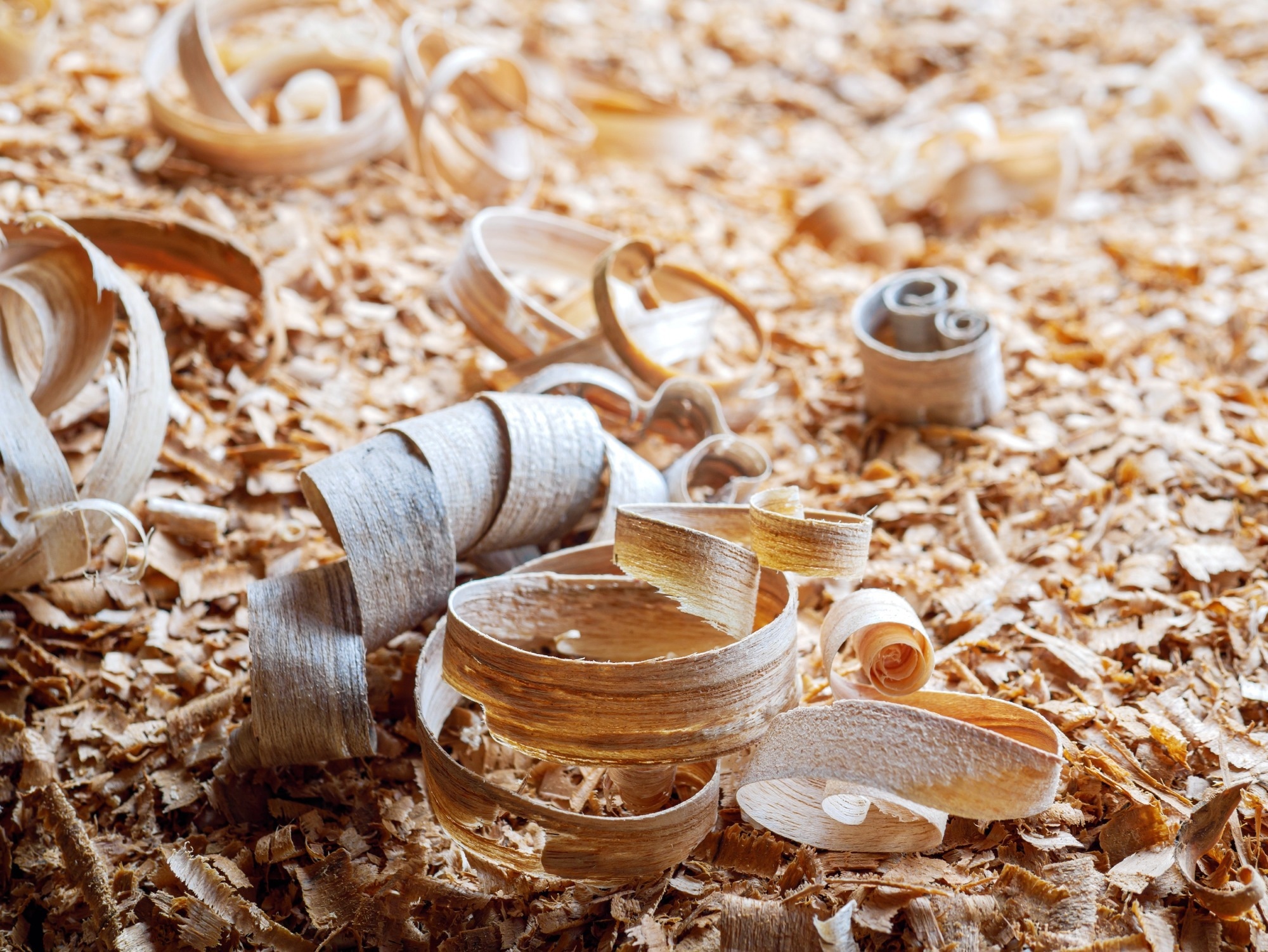
Study: Enzyme-mediated consolidation of lignocellulosic materials with a flame-retardant and fully recyclable mineral binder. Image Credit: Narong Khueankaew/Shutterstock.com
A new study in Chem Circularity shows how sawdust, an everyday waste product, can be converted into durable, flame-resistant composites. By combining an enzyme-driven process with a recyclable mineral called struvite, the team created materials that balance mechanical strength with built-in fire safety, offering a more practical and sustainable option for construction.
Innovative Binding Process with Struvite
The approach centers on an enzymatically induced solution-mediated phase transformation (SMPT), which allows struvite to form in a controlled way from a newberyite (MgHPO4·3H2O) precursor.
Ureolytic protein bodies (UPBs), extracted from watermelon seeds, act as natural catalysts in the process. They break down urea and gradually release ammonium ions, which raises the pH and triggers struvite crystallization. Because this happens slowly, crystal growth remains controlled. That matters because rapid crystallization in conventional methods often leads to weaker, poorly bonded structures.
Here, the slower reaction produces larger, more uniform crystals that bond more effectively with the sawdust. At the same time, the mineral binder can be recovered and reused, supporting circular material use without sacrificing performance.
Addressing Wood Waste in Construction
Sawdust is a widely available by-product of wood processing, but much of it is still discarded or burned. This not only wastes material but also adds to environmental impact.
Using sawdust as a feedstock for composites offers a practical way to recover that value. It also avoids reliance on conventional binders, which are typically fossil-based, non-recyclable, and linked to long-term pollution.
Struvite (MgNH4PO4·6H2O), by contrast, is an inorganic binder that is both recyclable and inherently flame-retardant, making it a more sustainable alternative.
Enzymatic Transformation for Composite Formation
To produce the material, the researchers first prepared a reactive suspension of magnesium sulfate, sodium phosphate, and urea, forming a fine newberyite phase. Once UPBs were introduced, this phase gradually transformed into struvite.
Sawdust was then added and compacted in one direction. This step is key. As the crystals form under confinement, they grow into the surface of the sawdust particles, filling pores and binding to cell walls.
The result is a tightly interlocked structure, where the mineral phase reinforces the wood particles at a microstructural level. This interaction was confirmed through microtomography and supported by thermal and mechanical testing.
Key Performance: Mechanical and Fire Resistance
The composites reached a compressive strength of around 4.5 MPa along the compaction direction, driven by the strong interlocking between struvite crystals and the sawdust matrix. As expected, the material is anisotropic, with transverse tensile strength about 3.5 times lower.
Fire testing showed consistent performance. The material resisted flame spread, showed minimal mass loss, and produced relatively low smoke. In forced-combustion tests, it achieved a time to ignition of 51 seconds and a peak heat release rate of 118 kW/m2.
During burning, a protective char layer formed on the surface, slowing heat transfer and helping the material retain its structure. Overall, this behavior aligns with high fire-safety classifications similar to Euroclass B.
Applications: A New Era for Eco-Friendly Construction
Given its combination of strength, low weight, and fire resistance, the material is well-suited to non-load-bearing and semi-structural applications. These include wall panels, ceilings, flooring systems, and insulation layers in residential and commercial buildings.
The ability to recover and reuse the struvite binder adds further value, enabling repeated use or even repurposing as fertilizer, which supports more circular material flows.
Conclusion: Pathways for Sustainable Development
This work presents a clear route for converting sawdust into mechanically robust, fire-resistant composites using an enzyme-mediated process. By controlling how the mineral binder forms, the researchers improved bonding, strength, and fire performance while maintaining recyclability.
Future research will focus on refining the process, identifying alternative enzyme sources, and assessing long-term durability in real-world conditions. If successfully scaled, this approach could offer a practical path toward more sustainable construction materials.
Journal References
Kürsteiner, R., & et al. (2026). Enzyme-mediated consolidation of lignocellulosic materials with a flame-retardant and fully recyclable mineral binder. Chem Circularity, 100004. DOI: 10.1016/j.checir.2025.100004, https://www.sciencedirect.com/science/article/pii/S3051294825000040
Disclaimer: The views expressed here are those of the author expressed in their private capacity and do not necessarily represent the views of AZoM.com Limited T/A AZoNetwork the owner and operator of this website. This disclaimer forms part of the Terms and conditions of use of this website.