* Important notice: This news reports on an unedited version of an accepted paper and is awaiting final editing. Therefore, the paper should not be regarded as conclusive or treated as established information.
The chemical and physico-mechanical performance of eggshell powder-modified Portland cement has been investigated by researchers in a recent Scientific Reports article. It is hoped that this substance can serve as a sustainable partial substitute for limestone in cement production.
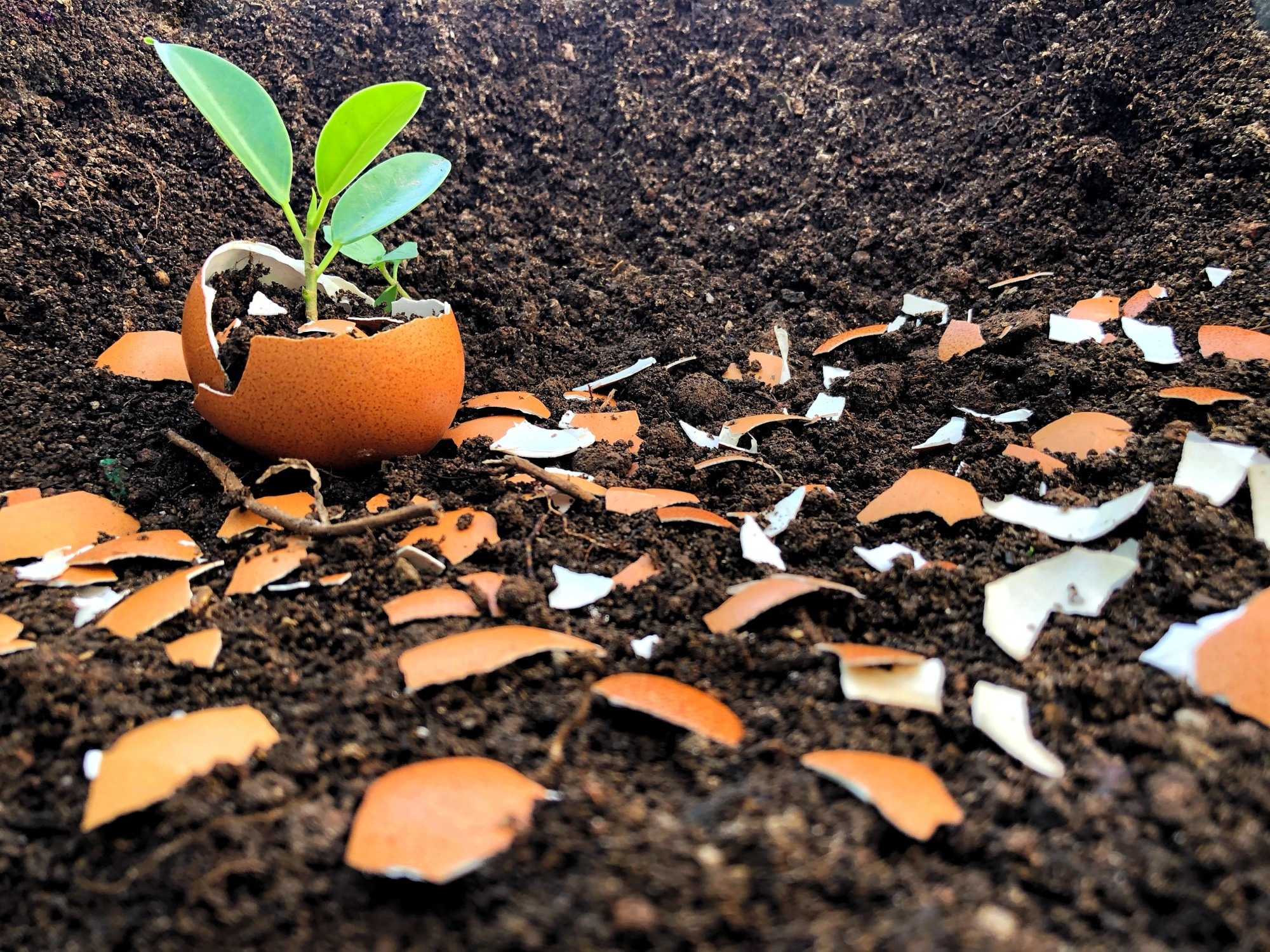 Study: Physico-mechanical and chemical performance of Portland cement modified with eggshell powder for sustainable construction. Image Credit: Afdhaluddin/Shutterstock.com
Cement Sustainability Challenges
Cement is a key construction material, but it accounts for about 8% of global CO2 emissions, alongside environmental issues such as air and water pollution, limestone depletion, habitat damage, and solid waste generation.
To address these challenges, sustainable alternatives to ordinary Portland cement (OPC) are sought to reduce environmental impact without compromising performance.
No time now? Download a PDF and finish later.
Agro-waste materials such as fly ash, rice husk ash, and eggshell powder (ESP) show promise. ESP, containing over 80% calcium carbonate, closely resembles limestone, the primary raw material in cement, offering a valuable way to recycle eggshell waste that otherwise burdens landfills and pollutes the environment. Despite some research on ESP in concrete or mortar, its use as a direct partial substitute for limestone within the cement matrix remains underexplored.
This study investigates the physico-mechanical and chemical effects of incorporating ESP into Portland cement, aiming to promote sustainable construction by optimizing waste valorization and reducing the cement industry’s environmental footprint.
Eggshell Powder Processing
The study used Type B and D OPC (grade 42.5N) sourced from the Nigerian market, and eggshells collected from households, cafeterias, and hotels in Abuja, Nigeria. The eggshells were meticulously cleaned, washed with detergent and water to remove organic residues, air-dried, oven-dried, and finally ground into a fine powder.
The resulting ESP was sieved through a 75 μm British Standard sieve to ensure micro-level fineness suitable for incorporation into the cement matrix. River sand from the Kuje River in Abuja was used as the fine aggregate, and tap water conforming to BS EN 1008 was employed for mortar production.
ESP was blended with Type B and Type D cements at 0% (control), 5%, and 10% by weight to partially replace the limestone component in the cement matrix. Mortar samples were prepared according to standard mixing procedures.
The physical properties assessed included consistency and setting times, in accordance with BS EN 196-3 and IS 8112 standards to ensure adherence to international norms for workability and curing. The mechanical properties were evaluated by compressive strength tests conducted over two-, seven-, and 28-day curing periods to assess the influence of ESP on early-age and later strength development.
Chemical characterization was performed using a suite of advanced analytical techniques. X-ray fluorescence (XRF) determined the oxide composition, confirming the calcium oxide content of ESP. X-ray diffraction (XRD) analysis assessed mineralogy, especially the presence and crystallization of calcium carbonate phases.
Scanning electron microscopy (SEM) coupled with energy-dispersive spectroscopy (EDS) provided insights into the microstructure, surface morphology, porosity, and elemental composition of the ESP-blended cement mortars. Statistical analysis using analysis of variance (ANOVA) was applied to assess the significance of differences among ESP replacement levels.
Cement Performance Analysis
The study showed that ESP possessed high fineness, with approximately 90.75% of particles passing through a 75 μm sieve, making it effective as a micro-filler to enhance particle packing in cement. X-ray fluorescence (XRF) analysis confirmed a high calcium oxide content (~81.24%) in ESP, supporting its role as a sustainable limestone substitute in cement.
Physical tests indicated increased normal consistency from 31–35% in ESP-blended cement, complying with BS EN 197-1 and IS 8112 standards for setting times, thus not hindering cement hydration or curing.
Compressive strength results revealed that mortar with 5% ESP replacement surpassed the British Standard requirement of 42.5 N/mm² at 28 days, attributed to improved hydration and increased calcium-silicate-hydrate formation confirmed by XRD and SEM analyses.
However, 10% ESP substitution caused strength reductions of 8.4% and 12.3% in Type B and D cements, likely due to dilution and excess calcium carbonate disrupting hydration chemistry.
SEM revealed a denser microstructure with fewer pores for 5% ESP samples, supported by EDS data showing elevated calcium consistent with calcite presence from XRD. These microstructural improvements explain the enhanced strength at lower ESP contents.
ESP Replacement Recommendations
This study demonstrates that ESP can partially replace limestone in OPC up to 5% by weight, enhancing consistency, meeting setting-time standards, and improving compressive strength beyond industry requirements.
The calcium carbonate in ESP promotes hydration and microstructure densification, leading to superior mechanical properties. However, replacements above 5% reduce strength, emphasizing the need for optimized ESP content. By valorizing agro-waste, this approach reduces the environmental impacts of cement production while maintaining construction performance standards.
The research supports sustainable construction and calls for further investigation into long-term durability, water-cement ratio effects, and applicability across diverse cement types and standards to establish ESP as an effective, eco-friendly cement alternative for global waste reduction and green building initiatives.
Journal Reference
Sanusi, A., et al. (2026). Physico-mechanical and chemical performance of Portland cement modified with eggshell powder for sustainable construction. Scientific Reports. 411. https://www.nature.com/articles/s41598-026-56311-0