By integrating nano-titanium dioxide into M40-grade concrete, scientists unlock stronger, longer-lasting, and more cost-effective building materials for a sustainable future.
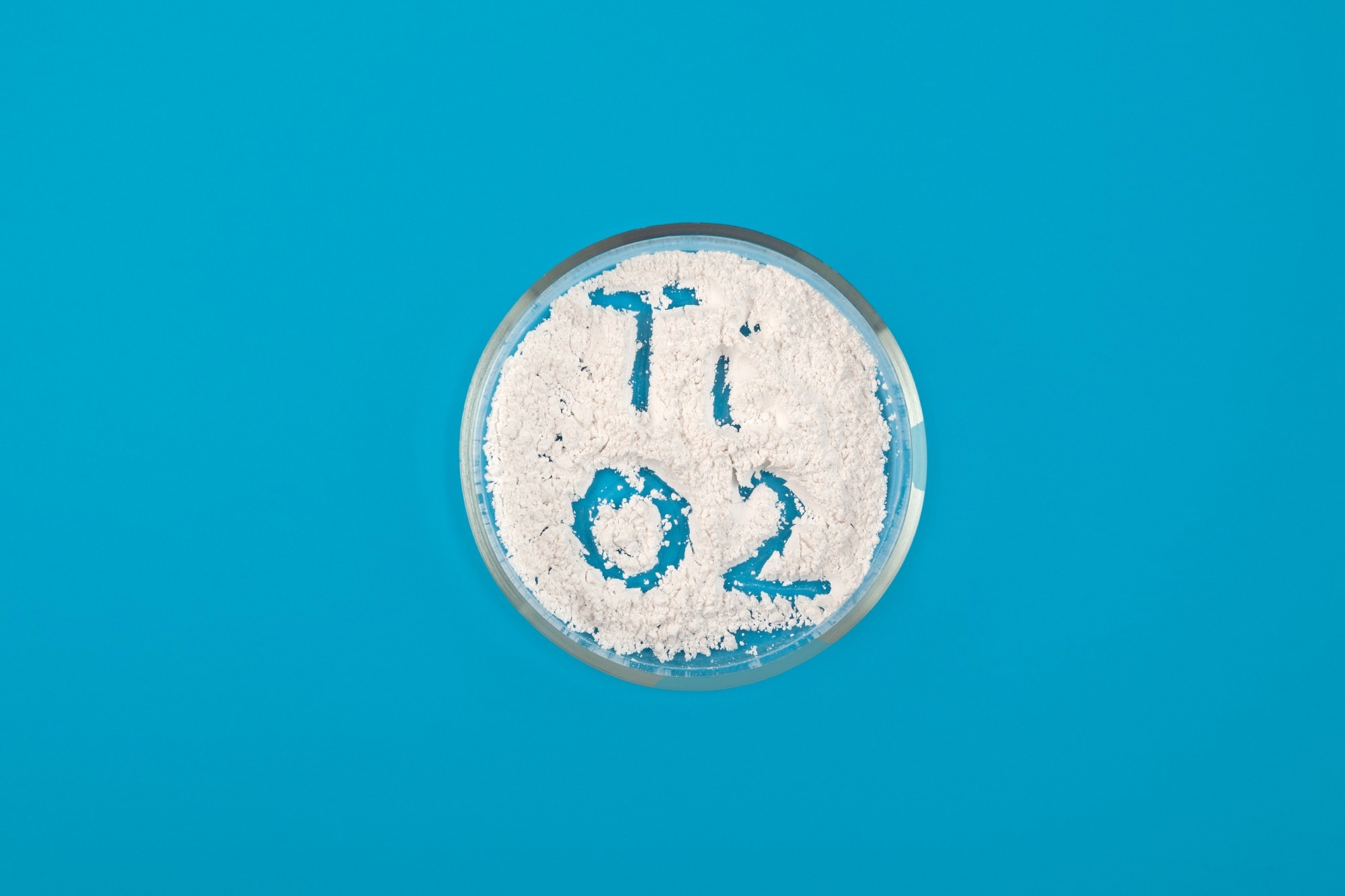
Study: Mechanical, microstructure, durability, and economic assessment of nano titanium dioxide integrated concrete. Image Credit: AB-7272/Shutterstock.com
A study recently published in Scientific Reports performed an extensive investigation into the microstructural, mechanical, durability, and petrographic properties of nano-titanium dioxide (NT)-incorporated concrete, along with economic analysis.
Why Nano-Titanium Dioxide is a Game-Changer for Cement
The construction sector, responsible for approximately 7–8 % of global carbon dioxide emissions, is under increasing pressure to move toward more sustainable alternatives to traditional cementitious materials. In this context, nanotechnology has emerged as a promising approach for improving the sustainability and performance of cement-based composites.
Over the past two decades, nanomaterials have gained considerable attention for their ability to enhance mechanical strength, durability, and environmental performance. Among these, nano-titanium dioxide stands out for its multifunctional capabilities and distinctive photocatalytic behavior.
Already widely used across various industries, NT is known for its ultraviolet resistance, chemical stability, and self-cleaning properties. When applied in construction, it improves not only the durability and functionality of cementitious materials but also their appearance. NT actively influences cement hydration kinetics, refines the pore structure, and aids in pollutant degradation when incorporated into pavements, making it an attractive option for sustainable infrastructure.
Research has consistently indicated that incorporating the right dosage of NT can improve the mechanical performance of concrete at both early and later curing stages. At the microstructural level, NT enhances the cement matrix through three primary mechanisms: it provides nucleation sites, promotes denser formation of calcium-silicate-hydrate (C–S–H), and serves as a crystallization center for calcium hydroxide.
These changes also contribute to increased durability by lowering permeability, slowing chloride penetration, and improving corrosion resistance.
Still, despite extensive research, there remain gaps in integrated studies that explore mechanical, microstructural, and durability performance together (particularly under aggressive environmental conditions) as well as long-term curing behavior, fire resistance, and detailed economic feasibility.
A Comprehensive Test of Strength, Structure, and Survival
To address these gaps, the study examined how NT affects concrete properties across a wide range of parameters. The research team focused on NT’s role in improving durability, mechanical performance, and microstructural characteristics, while also assessing cost-effectiveness.
NT was incorporated at three dosages - 0.5 %, 1 %, and 1.5 % by weight of cement - to evaluate its impact on resilience, toughness, and strength. The goal was to deliver a thorough evaluation by linking strength development with durability indicators and microstructural changes, and to supplement this with a cost–benefit analysis for practical implementation.
A full experimental program was conducted to evaluate both fresh and hardened properties of M40-grade concrete modified with NT.
The three NT-modified mixes were designated as 0.5 NT, 1 NT, and 1.5 NT, and results were benchmarked against conventional M40 concrete (0 NT). Mechanical performance was first examined through tensile, compressive, and flexural strength tests to determine how each NT dosage influenced strength gains. For nanoscale insights, scanning electron microscopy (SEM) was used to analyze pore refinement, matrix densification, and interfacial bonding enhancements.
To assess durability, specimens were exposed to 4 % concentrations of hydrochloric acid, sodium chloride, and sulfuric acid over a 90-day period.
Additional evaluations included freeze–thaw cycles, surface resistivity, rapid chloride penetrability (RCPT), and accelerated carbonation to simulate long-term performance. The concrete's behavior under elevated temperatures (200?°C, 400?°C, and 600?°C) was also analyzed, along with its modulus of elasticity.
Concrete Gets Stronger - Up to 75 MPa - With Nano-TiO2
The results clearly demonstrated that NT is a highly effective nanomaterial for enhancing concrete’s microstructural integrity, strength, and overall durability.
Its incorporation significantly increased compressive strength, effectively converting conventional M40 concrete into a high-strength nanocomposite. At 180 days, compressive strength reached 75.25 MPa for the 1.5 % NT mix, compared to 58.20 MPa for the control.
At 28 days, compressive strength improvements were recorded at 10.54 %, 21.98 %, and 28.70 % for the 0.5 %, 1 %, and 1.5 % NT mixes, respectively. Similar gains were observed in split tensile (up to 30.30 %) and flexural strength (up to 40.74 %). However, increasing NT content did reduce workability, which should be accounted for during mix design.
Microstructural analysis via SEM and petrographic studies confirmed NT’s role in refining the pore network, minimizing microcracking, and enhancing fracture resistance. These improvements were linked to reduced microporosity, denser bonding at the interfacial transition zone, and visible crack-bridging behavior, all of which contributed to the superior performance of NT-modified concrete.
Durability under aggressive environments was another area where NT showed clear advantages. After 90 days of chemical exposure, compressive strength in 4 % hydrochloric acid increased by 5.93 %, 17.70 %, and 28.72 % with 0.5 %, 1 %, and 1.5 % NT, respectively. In 4 % sulfuric acid, the gains were even more notable: 15.35 %, 30.28 %, and 42.94 % across the same dosages.
Additionally, NT improved resistance to freeze–thaw cycles, reduced chloride permeability, and mitigated carbonation. Notably, while NT effectively reduced chloride ingress, a discrepancy was observed between surface resistivity (indicating “very low” penetrability) and RCPT values (categorized as “moderate”), emphasizing the need to use multiple durability metrics for accurate assessment.
Performance Under Heat and a Look at Economic Value
Thermal resistance was also evaluated, with NT-enhanced concrete showing compressive strength gains of up to 35.89 % at 300?°C for the 1.5 % NT mix. However, at 600?°C, performance declined for mixes with NT dosages above 0.5%, indicating a thermal limit to NT’s effectiveness. The tangent modulus of elasticity increased as well, peaking at 8.25 GPa with the 1.5 % NT mix, reflecting improved stiffness and resilience.
From an economic standpoint, the 1 % NT mix provided the best balance between performance and cost. Life-cycle analysis revealed potential savings exceeding ?14 lakh, primarily due to reduced maintenance and longer service life. Market analysis also showed that the current cost of NT remains below the breakeven threshold, confirming its practical and economic feasibility for widespread adoption.
Conclusion
In conclusion, this study underscores the strong potential of nano-titanium dioxide in enhancing the structural performance, durability, and cost-effectiveness of concrete. By addressing key mechanical and environmental challenges, NT offers a viable path forward for building more resilient, sustainable infrastructure.
Journal Reference
Rahman, I. et al. (2025). Mechanical, microstructure, durability, and economic assessment of nano titanium dioxide integrated concrete. Scientific Reports, 15(1), 39325. DOI: 10.1038/s41598-025-22974-4, https://www.nature.com/articles/s41598-025-22974-4
Disclaimer: The views expressed here are those of the author expressed in their private capacity and do not necessarily represent the views of AZoM.com Limited T/A AZoNetwork the owner and operator of this website. This disclaimer forms part of the Terms and conditions of use of this website.