A new form of concrete, developed by scientists, not only surpasses traditional cement in strength and heat resistance, but it also helps reduce industrial waste by incorporating recycled quarry dust, plastics, and rubber.
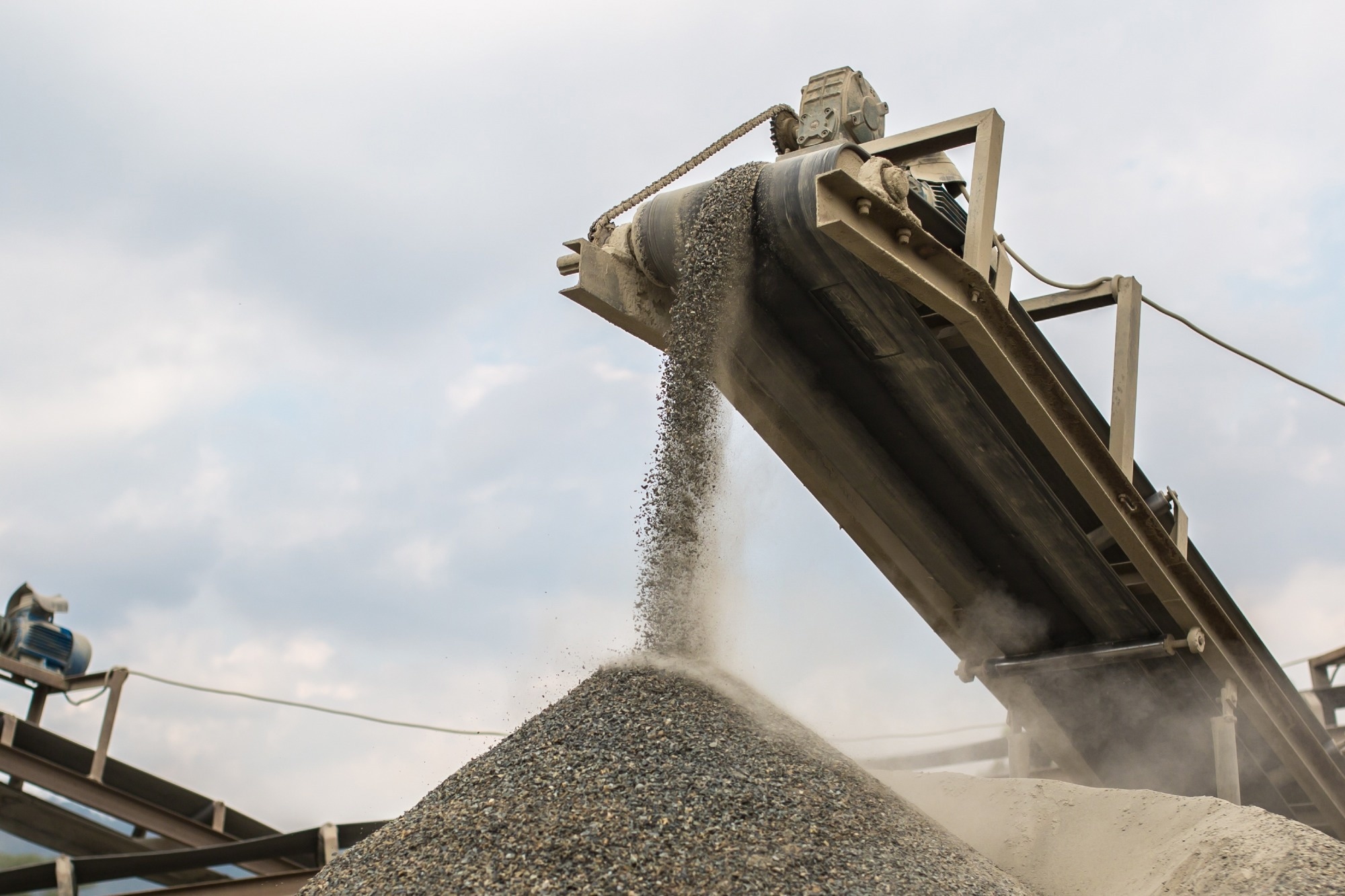
Study: Integrating quarry dust and industrial waste in producing eco-friendly hybrid geopolymer concrete. Image Credit: CatwalkPhotos/Shutterstock.com
A recent study published in Scientific Reports explored how quarry dust and industrial waste can be used to create eco-friendly hybrid geopolymer concrete (HGC). The research addresses major environmental concerns tied to conventional concrete production, including high carbon emissions and heavy resource use.
By integrating waste materials, the researchers aimed to improve sustainability while achieving mechanical performance that matches, or slightly exceeds, that of standard concrete.
The Need for Sustainable Concrete Solutions
The construction industry is under increasing pressure to adopt materials that minimize environmental impact. Conventional Portland cement (PC) concrete accounts for roughly 5–7 % of global carbon emissions due to its energy-intensive manufacturing process. As a response, geopolymer concrete (GC) offers a promising, cement-free alternative. It uses industrial by-products like fly ash and slag, significantly lowering both energy consumption and emissions while delivering comparable strength and durability.
To further enhance sustainability, researchers have begun incorporating additional waste materials such as quarry dust, granite powder, basalt powder, dolomite powder, crumb rubber, and plastic waste into GC. These additives not only reduce landfill waste but also contribute to GC’s viability as a low-carbon construction material.
Methodology: Exploring Waste Material Integration
The study focused on how these waste materials affect the performance of hybrid geopolymer concrete. Researchers tested the integration of granite powder (GP), basalt powder (BP), dolomite powder (DP), crumb rubber (CR), and two types of plastic waste: plastic shavings (PS) and plastic pellets (PP).
They created 14 different HGC mixtures, replacing fly ash with GP, BP, or DP at varying levels (15 %, 30 %, and 45 %). Additionally, about 25 % of the fine aggregate (sand) was substituted with CR and plastic waste. These mixtures were then subjected to various curing methods, including heat followed by air curing (HA) and heat followed by water curing (HW).
To assess mechanical performance, the mixtures were tested for compressive, tensile, and flexural strength at room temperature and elevated temperatures (300?°C and 600?°C). The team also examined the material's microstructure using scanning electron microscopy (SEM) and energy-dispersive X-ray spectroscopy (EDX), evaluating how the added waste components influenced bonding and density.
Findings: Performance of Hybrid Geopolymer Concrete
The results showed that partial replacement of fly ash with GP, BP, or DP significantly influenced the concrete’s strength. The best-performing mixes (those with 15 % replacement) achieved compressive strengths as high as 76.4?MPa after 56 days under HA curing. However, higher replacement levels (30 % and 45 %) led to a drop in strength, emphasizing the need for optimal mix design.
Substituting sand with crumb rubber and plastic waste had a more mixed impact.
A 25 % replacement with crumb rubber reduced compressive strength by roughly 38.7 %, mainly due to weak bonding between rubber particles and the geopolymer matrix. Similarly, plastic waste (both PS and PP) reduced overall strength because of its water-repellent properties, which limited adhesion to the binder.
Microstructural analysis supported these findings. Mixes containing GP, BP, and DP formed denser, more uniform structures than the control. Improvements in the interfacial transition zone between aggregates and the geopolymer paste were key contributors to enhanced strength. The curing method also played a role. HA curing generally produced stronger results, though some mixtures (like GP30, PP, and CR) performed better with HW curing.
Overall, the study demonstrated that HGC can match or even exceed the mechanical performance of conventional concrete, while incorporating recycled industrial waste.
Practical Applications of Hybrid Geopolymer Concrete
These findings suggest that HGC could be a viable sustainable alternative in modern construction. Its improved strength makes it suitable for structural elements like beams, slabs, columns, and load-bearing walls. The use of waste materials also aligns with broader sustainability goals, reducing landfill burden and decreasing demand for virgin natural resources.
Moreover, HGC supports circular economy principles by repurposing industrial by-products and non-biodegradable waste. However, to fully capitalize on its potential, careful optimization of mix designs is essential, balancing performance with ecological benefits.
As sustainable building practices gain momentum, HGC offers a practical, scalable solution to reduce the environmental footprint of the built environment without compromising structural integrity.
Conclusion and Future Directions
The development of hybrid geopolymer concrete opens up important questions about how waste-based materials can be more systematically integrated into structural applications. While this study confirms the technical viability of using materials like granite powder, basalt powder, and plastic waste, the real challenge lies in scaling these solutions for consistent, real-world use.
What remains to be explored is how these mixes behave over time in varied environmental conditions, and how they interact with other systems in modern construction.
Durability under long-term exposure to chemicals, moisture cycles, and temperature shifts will be key to determining their reliability. Equally important are standardized frameworks for life cycle and carbon impact assessments, which can guide builders and policymakers in making informed choices.
This research pushes the conversation forward, not just about alternative materials, but about redefining performance in concrete to include both structural and environmental metrics.
Journal Reference
AL-Mowafy, A., El-Zoughiby, M, E., & Youssf, O. 2025. Integrating quarry dust and industrial waste in producing eco-friendly hybrid geopolymer concrete. Sci Rep, 15, 45804. DOI: 10.1038/s41598-025-28913-7, https://www.nature.com/articles/s41598-025-28913-7
Disclaimer: The views expressed here are those of the author expressed in their private capacity and do not necessarily represent the views of AZoM.com Limited T/A AZoNetwork the owner and operator of this website. This disclaimer forms part of the Terms and conditions of use of this website.