Researchers have demonstrated that combining waste marble dust, recycled polypropylene fibers, and machine learning can significantly improve concrete strength and durability while supporting more sustainable construction practices.
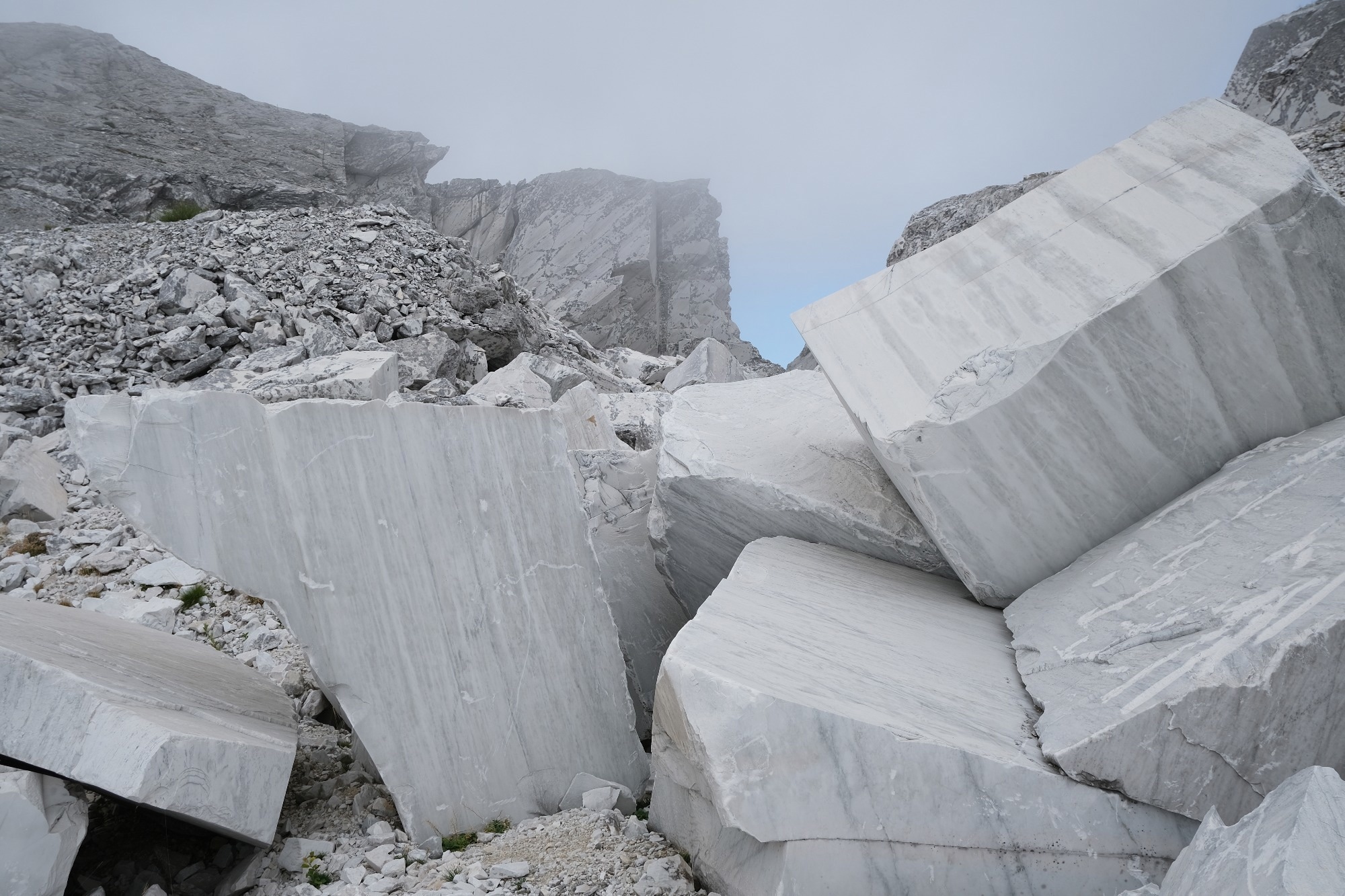
Study: Mechanical and durability assessment of marble dust–fiber concrete supported by ML prediction. Image Credit: MyVideoimage/Shutterstock.com
The study, published in the journal Scientific Reports, examined how waste marble dust (MD) and polypropylene fibers (PF) influence the mechanical and durability performance of concrete.
The research team also used machine learning (ML) models, including artificial neural networks (ANN), support vector regression (SVR), and random forest regression (RFR), to predict key performance metrics and optimize mix design.
Their findings suggest that industrial by-products and recycled materials can be integrated into concrete without compromising performance, while data-driven tools can help identify the most effective material combinations.
Exploring Waste Materials for Lower-Carbon Concrete
The construction sector is under increasing pressure to reduce its environmental impact. Cement production is highly energy-intensive and contributes roughly 8 % of global carbon dioxide emissions, prompting researchers to investigate alternative materials that can partially replace cement while maintaining concrete performance.
Marble dust, a by-product of marble processing rich in calcium carbonate, can act as a micro-filler in concrete. When incorporated into the mixture, it improves particle packing density and contributes to higher mechanical strength. Using marble dust also reduces waste and lowers the demand for conventional cement.
Polypropylene fibers serve a different role. They improve tensile strength and help control crack propagation, which can enhance the long-term durability of concrete structures. However, increasing the amount of marble dust and fibers can affect workability because the mixture may require more water and experience higher internal friction.
Experimental Study and Machine Learning Analysis
To evaluate these effects, the researchers prepared 25 concrete mixtures with marble dust content ranging from 0 % to 20 % and polypropylene fiber content between 0 % and 1.0 %. The mixes used ordinary Portland cement (OPC) grade 53 as the binder, along with natural river sand and crushed granite as aggregates.
The team measured several fresh and hardened concrete properties, including slump, density, compressive strength, flexural strength, split tensile strength, water absorption, permeability, and resistance to acid exposure. The mixing process was carefully controlled to ensure uniform material distribution and consistent testing conditions.
The experimental results were then used to train machine learning models capable of predicting concrete performance. By analyzing the dataset, the models helped identify key factors influencing strength and durability and supported the optimization of mix proportions.
Stronger and More Durable Concrete
The results showed that certain combinations of marble dust and fiber reinforcement significantly improved concrete performance.
The optimal mix, containing 10 % marble dust and 0.6–0.8 % polypropylene fiber, achieved a compressive strength of 57.7 MPa, compared with 51.62 MPa for the control mixture.
Tensile and flexural performance also improved. Split tensile strength increased from 3.236 MPa to 4.249 MPa, representing a 31 % increase, while flexural strength rose by about 25 % to 5.54 MPa.
Durability tests showed similar improvements. Water absorption decreased from 3.42 % to 2.84 %, indicating a denser microstructure, while permeability dropped by around 30 %, from 9.42 × 10⁻¹² m/s to 6.64 × 10⁻¹² m/s. Acid resistance testing further showed that fiber reinforcement helped limit crack propagation and slow acid penetration.
The machine learning models demonstrated high predictive accuracy. The ANN model achieved coefficients of determination (R2) above 0.95, indicating strong agreement between predicted and measured results.
Implications for Sustainable Construction
The study has important implications for sustainable construction practices. Concrete incorporating marble dust and polypropylene fibers demonstrated improved mechanical strength and durability, making it suitable for applications such as structural components, pavements, precast elements, and infrastructure projects.
Using marble dust as a recycled material supports environmentally responsible construction by reducing industrial waste and lowering the demand for conventional raw materials. At the same time, fiber reinforcement helps control cracking and enhance long-term structural performance. When mix proportions are carefully optimized, marble dust–fiber concrete could support longer service life and improved resource efficiency in building projects.
Conclusions and Future Directions
Overall, the study shows that incorporating marble dust and polypropylene fibers can enhance both the mechanical performance and durability of concrete. The results emphasize the importance of optimizing mix design to balance strength, durability, sustainability, and fresh concrete workability.
The researchers also highlight the growing role of machine learning in predicting and optimizing material performance. Future research could expand the dataset and examine additional variables, such as curing conditions, chemical admixtures, and alternative waste materials, to further refine concrete performance models.
Together, these findings provide a useful foundation for developing more sustainable concrete materials and demonstrate how data-driven methods can support smarter mix design in modern construction.
Journal Reference
Sai, A.N., & et al. (2026). Mechanical and durability assessment of marble dust–fiber concrete supported by ML prediction. Sci Rep. DOI: 10.1038/s41598-026-40874-z, https://www.nature.com/articles/s41598-026-40874-z
Disclaimer: The views expressed here are those of the author expressed in their private capacity and do not necessarily represent the views of AZoM.com Limited T/A AZoNetwork the owner and operator of this website. This disclaimer forms part of the Terms and conditions of use of this website.