A quarry by-product once discarded as waste could help tackle one of construction’s biggest environmental challenges by strengthening mortar, reducing porosity, and cutting down the need for natural sand.
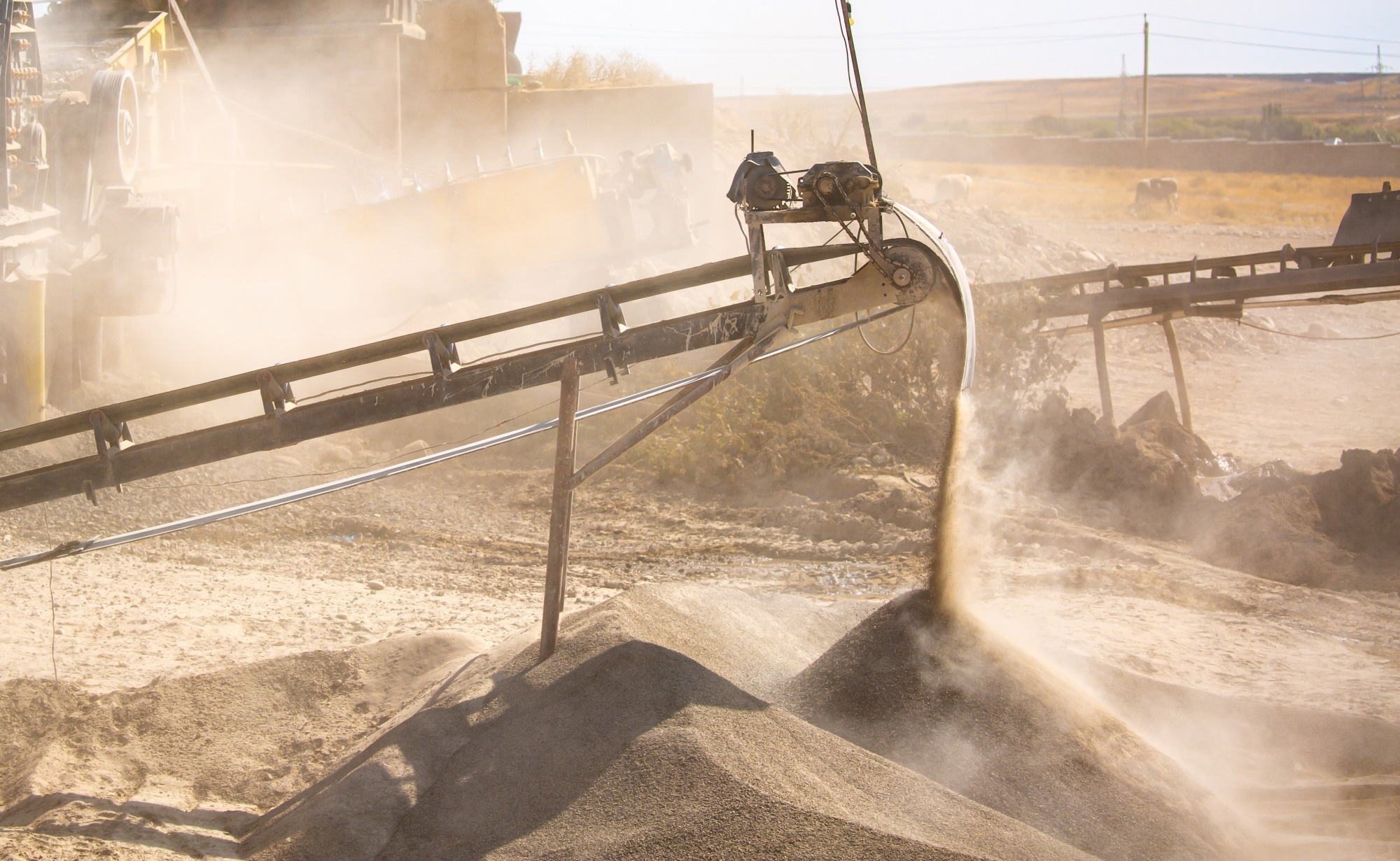
Study: Utilization of quartz quarry dust as a sustainable partial sand replacement in cement mortar. Image Credit: Vera Larina/Shutterstock.com
As the construction sector consumes an estimated 50 billion tons of sand each year, the search for sustainable alternatives has become increasingly urgent. A new study published in Scientific Reports investigates quartz quarry dust (QQD), a by-product of quartz processing, as a partial replacement for natural sand in cement mortar.
The researchers assessed both the mechanical performance and environmental benefits of QQD-enhanced mortar. Their findings suggest that QQD can improve mortar quality while reducing reliance on natural sand - a dual win for performance and sustainability.
Environmental Context: Rethinking Waste as a Resource
The heavy extraction of natural sand for concrete and mortar has led to environmental degradation, including riverbed erosion and disruption of aquatic ecosystems. This has prompted a growing demand for substitute materials that offer strong performance with a lighter ecological footprint.
Quartz quarry dust, typically generated during quartz crushing operations, poses a disposal challenge but also presents an opportunity.
With a high silica (SiO2) content (around 99.6 % SiO2), fine particle size, and stable chemical properties, QQD has potential as a viable component in cement-based materials.
Methodology: Testing QQD in Mortar Applications
The research team designed an experiment to evaluate the effects of replacing natural sand with varying amounts of QQD. This included 0 %, 5 %, 10 %, 15 %, and 20 % by weight of fine aggregate. All mortar samples maintained a fixed cement-to-aggregate ratio of 1:3 and a water-cement ratio of 0.5.
Natural river sand was cleaned to eliminate impurities, and the QQD used was sourced from Handeni Quarry in Tanga, Tanzania. The team carried out thorough material characterization, including:
- Sieve analysis
- Chemical composition (via X-ray fluorescence or XRF)
- Microstructural analysis using SEM and XRD
Mortar cubes were cast, cured under lab conditions, and tested at 7 and 28 days for workability, bulk density, water absorption, and compressive strength.
Results: Stronger Mortar with Less Porosity
Adding QQD yielded clear mechanical and durability improvements up to an optimal replacement level:
- Compressive strength peaked at 10 % QQD, where the 28-day strength reached 18.5 MPa, up from 10.8 MPa in the control mix, a 71 % increase. At higher replacement levels, strength declined slightly due to increased voids and poor packing.
- Flexural strength also improved at 10 % QQD, enhancing resistance to bending.
- Workability decreased with more QQD due to its angular shape. Still, mixes with up to 15 % replacement remained practical to handle.
- Water absorption fell from 6.4 % (control) to 5.7 % at 10 % QQD, suggesting denser microstructures. Absorption increased again at higher replacements, likely due to particle clumping and reduced paste coverage.
- Bulk density decreased with higher QQD content, mainly due to looser particle packing, not because of differences in material density.
Microstructural analysis confirmed that optimal QQD levels led to better particle packing and a more continuous calcium silicate hydrate (C-S-H) network. Although QQD doesn’t exhibit strong pozzolanic reactivity, its role as an inert micro-filler improves internal bonding and mechanical interlock within the mortar.
Practical Implications: Moving Toward Circular Construction
Integrating QQD into cement mortar provides several key benefits:
- Reduced environmental impact by cutting reliance on sand extraction
- Improved mortar strength and durability, making it suitable for structural and masonry use in residential and commercial projects
- Extended service life, thanks to lower porosity and better microstructure
This approach also aligns with circular-economy principles by repurposing quarry waste into valuable construction inputs.
By minimizing industrial waste and supporting responsible resource use, QQD helps shift construction practices toward more sustainable models.
Future Outlook: Expanding the Role of QQD
This study highlights QQD’s potential as a sustainable alternative to natural sand, particularly at an optimal replacement level of around 10%. Its performance benefits make a strong case for broader adoption in cement-based applications.
Next steps for research include long-term durability studies, real-world performance evaluations, and exploring QQD in concrete and other composite systems.
The findings contribute to the broader effort to develop environmentally responsible construction solutions that conserve natural resources while maintaining structural integrity.
Journal Reference
Ngayakamo, B.H., Ikotun, B.D. (2026). Utilization of quartz quarry dust as a sustainable partial sand replacement in cement mortar. Sci Rep. DOI: 10.1038/s41598-026-37993-y, https://www.nature.com/articles/s41598-026-37993-y
Disclaimer: The views expressed here are those of the author expressed in their private capacity and do not necessarily represent the views of AZoM.com Limited T/A AZoNetwork the owner and operator of this website. This disclaimer forms part of the Terms and conditions of use of this website.