A new study shows that copper mine waste can be converted into a durable, moderate-strength construction binder through alkali activation, offering a lower-carbon alternative to conventional cement while safely immobilizing heavy metals.
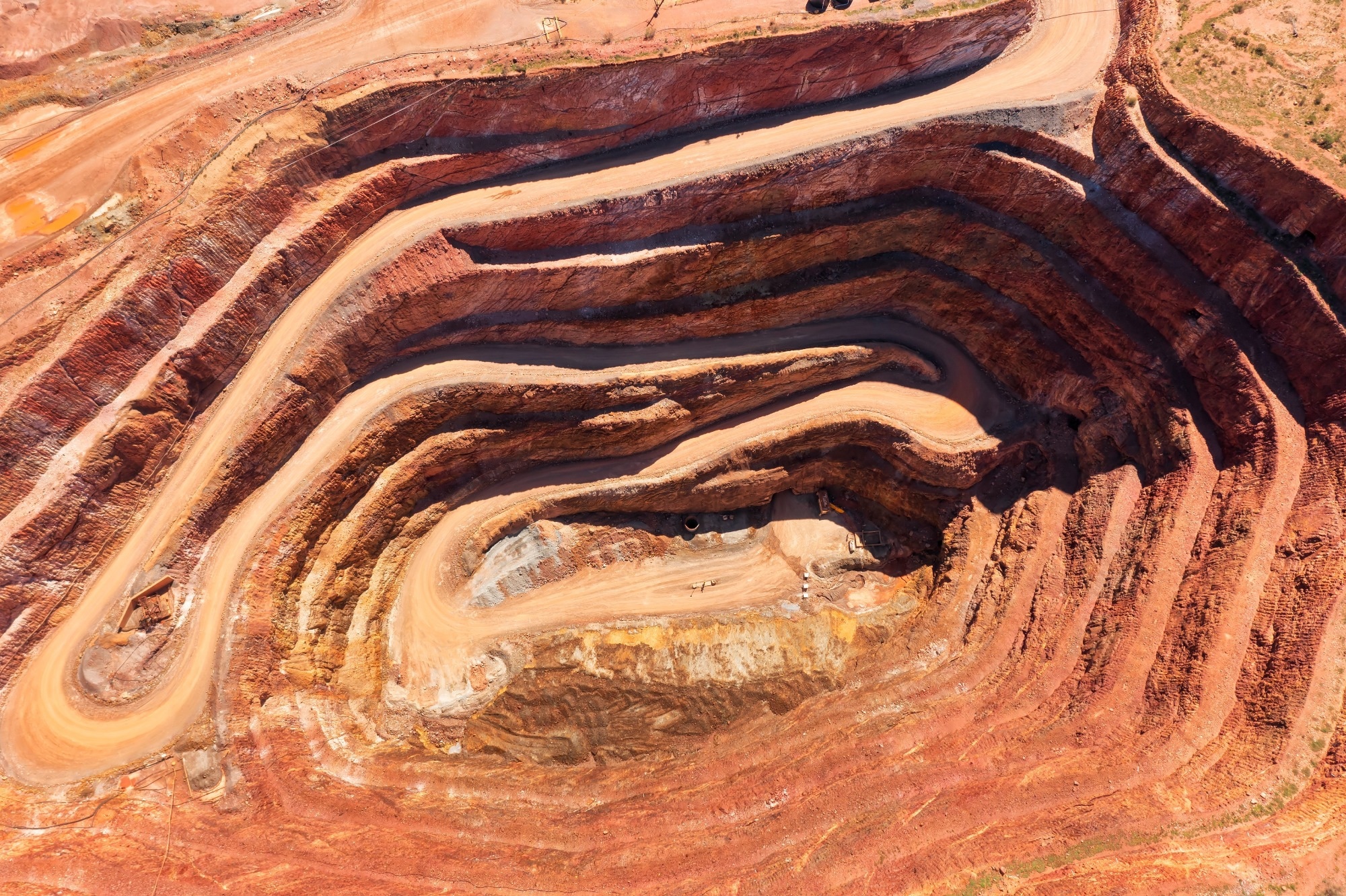
Study: Sustainable valorization of copper mine waste into construction materials by alkali activation. Image Credit: Taras Vyshnya/Shutterstock.com
Can copper mine waste replace conventional cement in certain construction applications? This research demonstrates how alkali activation converts iron-rich tailings into durable binders that resist freeze–thaw damage and stabilize heavy metals, outlining a practical pathway toward lower-carbon infrastructure and more responsible mine waste management.
The construction industry carries a substantial environmental footprint, and much of it can be traced to cement production. Ordinary Portland Cement (OPC) alone accounts for roughly 7–8 % of global carbon dioxide (CO2) emissions, underscoring the urgency of identifying viable alternatives to conventional cement-based materials.
Against this backdrop, recent research published in Scientific Reports examined copper mine waste (CMW) as a construction binder through alkali activation. Rather than treating mine tailings as an environmental liability, the study approaches them as a potential resource.
By converting this industrial by-product into a functional building material, the process addresses both emissions from cement production and the growing accumulation of large-scale mine waste.
The results suggest that alkali-activated CMW can function as a mechanically robust, moderate-strength alternative binder suited for geo-environmental and earthwork applications. In this way, the study connects material innovation with broader goals of resource efficiency and sustainable construction.
Mechanisms of Alkali Activation in CMW
To understand the significance of these findings, it is important to consider how alkali activation works. Unlike OPC production, which relies on high-temperature calcination, alkali activation converts aluminosilicate materials into cementitious binders at much lower energy input. This reduction in thermal demand directly translates into lower associated carbon emissions.
The process begins by activating silica- and alumina-rich materials with alkaline solutions, typically sodium hydroxide (NaOH) and sodium silicate (Na2SiO3). These solutions initiate dissolution and reorganization reactions that ultimately form a hardened, gel-like binding matrix.
As a result, alkali-activated materials (AAMs) are known for strong mechanical performance, low permeability, and resistance to chemical attack and environmental degradation. In this context, CMW is particularly well-suited as a precursor. Its high silica and alumina content provides the chemical foundation necessary for gel formation, making it a logical candidate for use as a primary binder material.
Importantly, unlike earlier studies that blended CMW with Portland cement or supplementary additives, this research evaluated CMW as the sole precursor. This decision allows for a clearer assessment of the material’s intrinsic mechanical behavior, durability, and leaching characteristics, thereby strengthening the credibility of the conclusions.
Experimental Approach to Assess CMW Performance
Building on this foundation, the researchers designed an experimental program to evaluate performance in practical terms. CMW sourced from the copper mine was first dried and then mixed with varying concentrations of NaOH and Na2SiO3 solutions. The mixtures were cast into cylindrical specimens and cured under controlled ambient conditions for 7 and 28 days.
From there, the study moved systematically through performance metrics. Unconfined compressive strength (UCS) tests quantified mechanical capacity, while freeze–thaw cycling simulated environmental exposure and assessed durability under repeated thermal stress.
Environmental safety was evaluated through leaching tests, which revealed near-neutral pH values along with low electrical conductivity (EC) and total dissolved solids (TDS). Together, these results indicate limited heavy-metal release.
To connect performance with material structure, the team conducted microstructural analysis using field-emission scanning electron microscopy (FE-SEM) and energy-dispersive X-ray spectroscopy (EDS). By varying activator concentrations and curing conditions, the researchers were able to link processing parameters with mechanical and environmental outcomes, demonstrating the feasibility of producing competent binders from CMW without supplementary additives.
Key Findings from the Research
The experimental results reinforce the material’s potential. Specimens activated with Na2SiO3 achieved an unconfined compressive strength of 16.5 MPa after 28 days. That is more than double the strength of mixtures activated solely with NaOH. Moreover, increasing the activator concentration improved strength up to an optimal dosage, highlighting the importance of chemical balance in binder development.
Durability performance followed a similar pattern of measured improvement. After 12 freeze–thaw cycles, the binders exhibited a moderate strength reduction of approximately 23 %, indicating reasonable resistance to cyclic environmental loading.
Under laboratory conditions, the materials maintained stable performance during repeated freezing and thawing. At the same time, sodium silicate activation enhanced the immobilization of heavy metals within the binder matrix, strengthening the environmental case for its use.
Microstructural observations help explain these outcomes.
Analysis revealed dense gel formation, primarily composed of sodium aluminosilicate hydrate (N-A-S-H) and calcium aluminosilicate hydrate (C-A-S-H) phases, along with iron-modified gel structures linked to the Fe-rich composition of the waste. These interconnected gels reduced porosity and improved chemical stability, providing a structural basis for both mechanical strength and durability.
Taken together, the mechanical, durability, and leaching results present a coherent picture of CMW as a stable and environmentally safer alternative binder.
Practical Applications of CMW-Based Binders
With performance established at the laboratory scale, the next question becomes application. The study indicates that CMW-based binders are particularly well suited for structural fills, embankments with protective cover layers, engineered barriers, and mine backfilling - settings where moderate strength, durability, and environmental stability are essential.
Because the material also immobilizes heavy metals within its matrix, it offers added value in geo-environmental containment and remediation projects. In such contexts, mechanical performance alone is insufficient; environmental reliability is equally critical. CMW-based binders address both considerations simultaneously.
By converting locally available mine waste into chemically stable binders, this approach reduces reliance on conventional cement while lowering associated carbon emissions. More broadly, it aligns with circular-economy principles, reframing waste streams as inputs for infrastructure development.
Directions for Sustainable Construction Materials
Overall, the study demonstrates that CMW can serve as a sustainable precursor for alkali-activated binders in construction. Through controlled chemical activation, it can be converted into mechanically robust, durable, and environmentally stable materials suitable for low-to-medium-strength geo-environmental applications.
Beyond improving mine waste management, the research outlines a practical pathway for reducing the construction sector’s carbon footprint through lower-emission binder production. Future work should focus on field-scale implementation, long-term performance under real environmental conditions, and continued refinement of activator chemistry and curing strategies.
Journal Reference
Fattahi, S.M., & et al. (2026). Sustainable valorization of copper mine waste into construction materials by alkali activation. Sci Rep. DOI: 10.1038/s41598-026-38224-0, https://www.nature.com/articles/s41598-026-38224-0
Disclaimer: The views expressed here are those of the author expressed in their private capacity and do not necessarily represent the views of AZoM.com Limited T/A AZoNetwork the owner and operator of this website. This disclaimer forms part of the Terms and conditions of use of this website.