From offshore wind farms to the ports that keep global trade moving, marine construction supports some of the most critical infrastructure on the planet. But working in and around water brings unique engineering challenges; structures must survive constant wave pressure, saltwater corrosion, and even damage from marine life.
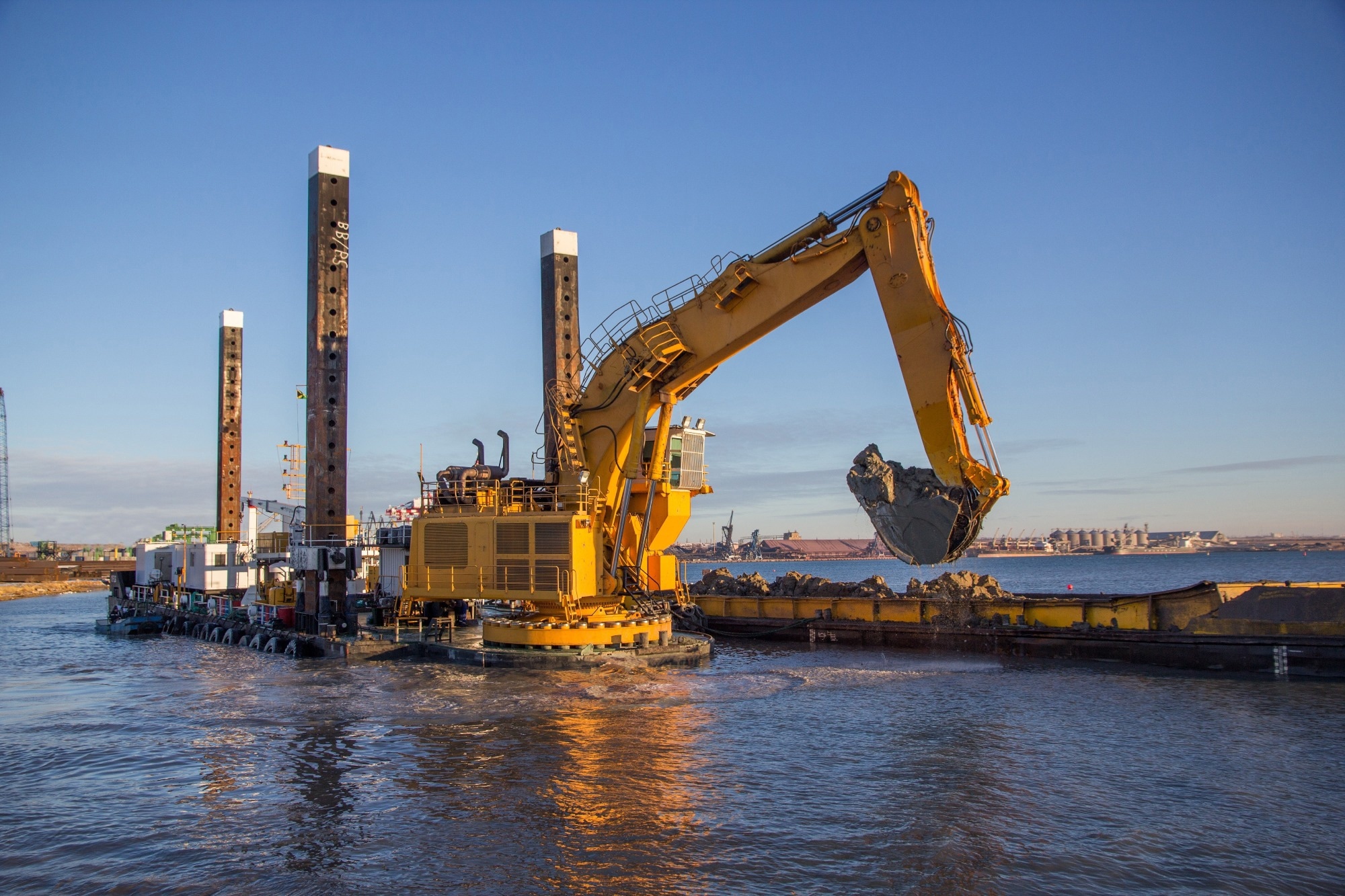
Image Credit: Iuliia_K/Shutterstock.com
To meet these demands, the industry relies on advanced materials and specialized technologies built for extreme environments. And as priorities shift toward climate resilience, sustainability, and clean energy, marine construction is quickly adapting.
This article takes a closer look at the materials and innovations shaping the future of how we build in water.
Want all the details? Grab your free PDF here!
The Core Materials Used in Marine Construction
Marine construction depends on a small group of materials that are built to handle tough conditions - namely, concrete, steel, and timber. Each material offers key advantages but also comes with limitations, especially when exposed to saltwater, constant moisture, and biological threats.
Concrete is by far the most widely used material in marine structures. It’s durable, versatile, and performs well under compressive loads. But it’s not without flaws. Standard Portland cement concrete can allow chloride ions from saltwater to seep in over time, which corrodes the steel reinforcement inside. That kind of internal damage can reduce a structure’s lifespan and lead to expensive repairs.1
Steel is another essential material, thanks to its strength and ease of fabrication. It's often used in structural frames, reinforcements, and pile foundations. However, steel is highly susceptible to corrosion in marine environments, especially when exposed to both moisture and salt. Without proper protective systems in place, it deteriorates quickly - sometimes even faster than expected.
Timber isn’t as common in large-scale marine construction today, but it still plays a role in specific applications. Natural timber is vulnerable to decay and attack by marine organisms like shipworms and borers. Still, pressure-treated wood remains a reliable option for structures such as piers, fender systems, and small docks, where its flexibility and resistance to impact are valuable.2,3
Each of these materials plays a foundational role, but improving their performance, and finding alternatives, is a major focus of innovation in the industry.
Advances in Concrete for Tougher Marine Conditions
Concrete has come a long way in adapting to the demands of marine construction. One of the biggest improvements involves supplementary cementitious materials (SCMs) like fly ash, slag, and silica fume. These additives make concrete denser and less permeable, which helps block chloride ions from getting in and corroding the steel reinforcement. This results in structures that last longer and need less maintenance.4
A newer innovation is geopolymer concrete, a type of cement-free mix that uses industrial byproducts and is activated through chemical reactions. It’s not only more durable in harsh marine environments, but it also significantly lowers carbon emissions compared to traditional concrete. That makes it a promising option for both performance and sustainability.4
Engineers are also adding corrosion inhibitors and anti-corrosion admixtures directly into concrete mixes. These compounds form protective layers within the material, shielding the steel reinforcement from chloride attack. They improve the overall compactness of the concrete and create a passivating film on the steel surface, helping extend the structure’s service life without compromising strength.¹ 5
And then there’s self-healing concrete, a technology that still sounds futuristic but is already being used in select projects. Some versions use bacteria, while others rely on tiny capsules filled with healing agents. When cracks form, these built-in systems activate automatically to seal the damage, stopping water and harmful substances from getting in.1,5
Fiber-Reinforced Composites: Lightweight, Strong, and Built for the Sea
While concrete continues to improve with new additives and self-healing capabilities, it’s not the only material getting a high-tech upgrade. One of the most impactful shifts in marine construction is the growing use of fiber-reinforced polymer (FRP) composites, a class of materials that offer an entirely different approach to durability and design.
FRPs combine a polymer matrix (usually a resin) with reinforcing fibers like glass, carbon, or aramid. This blend creates a material that’s both lightweight and extremely strong, with excellent resistance to saltwater corrosion and environmental stress.6
Today, FRPs are being used in a wide range of marine applications, including bridge decks, pilings, seawalls, structural panels, and even boat hulls. One of their biggest advantages over traditional materials like steel is that they don’t rust, which reduces maintenance needs and extends service life.
These composites also allow for greater design flexibility. Components can be prefabricated in various shapes, which speeds up installation and cuts down on on-site labor, which is especially useful in remote or offshore projects.
That said, there are still hurdles. The industry is working to standardize how FRPs are tested and to better integrate them into structural design codes, which were mostly developed for steel and concrete. Long-term performance data is also still being collected.6
Even so, FRPs represent a major step forward. As adoption grows and engineering standards evolve, these composites are set to become a key part of modern marine construction, particularly in environments where corrosion resistance and speed matter most.
Steel and Corrosion Protection Technologies
Even with the rise of advanced materials like FRP composites, steel remains a core part of marine construction. Its high strength, versatility, and well-understood behavior make it essential for structural frameworks, reinforcements, and pile foundations. But there's one major issue: corrosion.
In marine environments, where saltwater and humidity are constant threats, unprotected steel can degrade rapidly. To counter this, engineers rely on a range of corrosion protection methods.
One common approach is using protective coatings such as epoxy paints or polymer-based layers that act as barriers between the steel and the surrounding environment. These coatings help prevent moisture and chloride ions from reaching the metal surface.4
Another widely used method is cathodic protection, which involves attaching sacrificial anodes or applying an electrical current to redirect corrosion away from the steel itself. Essentially, it turns the steel into a cathode in an electrochemical system, slowing or stopping oxidation.2,4
Material choices also matter. Stainless steel and duplex stainless alloys offer greater corrosion resistance by design, although their higher cost limits how broadly they’re used. In many projects, a hybrid approach, combining FRP composites with steel reinforcements, offers the best of both worlds: mechanical strength plus better durability.
Together, these protection strategies help extend the lifespan of steel components, keeping them functional even in harsh marine environments. And as demands for longer-lasting infrastructure grow, fine-tuning these systems continues to be a top priority.
Sustainable and Biobased Alternative Materials
As marine construction pushes for more resilient and longer-lasting materials, there’s also growing pressure to reduce environmental impact.
That’s where sustainable and biobased materials come in.
Researchers and engineers are exploring alternatives that not only perform well in marine environments but also lower carbon emissions and reduce dependence on resource-heavy materials like cement and steel.7
Some of the most promising developments involve biopolymers; natural materials derived from algae, chitin (found in shellfish), and seagrass. These can be used as additives or binders in cement-based systems, improving durability while also resisting marine biofouling (the buildup of organisms like algae and barnacles). Their renewable origins make them an appealing choice for eco-conscious projects.
Another area of interest is marine biobased composites, which reuse waste from industries like fishing and aquaculture. Instead of sending organic waste to landfills, these byproducts are processed into building materials that can be used in coastal infrastructure. It’s a win-win: turning waste into useful products while reducing the footprint of new construction.7
While still in the early stages of development, these sustainable alternatives are gaining traction as part of a broader shift toward eco-friendly infrastructure. Combined with innovations in traditional materials, they’re helping the industry move toward solutions that are not only durable but also responsible.
Modular Methods and Digital Tools
It’s not just materials that are evolving; the way in which marine structures are built is changing too. Modern projects are increasingly turning to modular construction and digital technologies to improve efficiency, reduce costs, and limit environmental disruption.8,9
Modular construction involves prefabricating components like concrete units, steel frames, or composite modules in a controlled factory setting before transporting them to the site for assembly. This approach improves quality control, shortens construction timelines, and reduces the amount of heavy work done in unpredictable marine environments. It’s now widely used for building seawalls, wharves, and offshore platforms.
At the same time, digital tools are transforming how marine projects are designed and executed. Technologies like 3D modeling, Building Information Modeling (BIM), and geographic information systems (GIS) allow engineers to plan more accurately, optimize material use, and catch potential issues before construction even begins.8,9
Field technology is advancing too. Drone-based surveys, GPS-guided pile driving, and real-time monitoring systems are improving precision during installation, especially in complex underwater environments. These tools help reduce human error, limit environmental impact, and keep projects on schedule.8,9
Together, modular methods and digital workflows are making marine construction more adaptive, more efficient, and better equipped to meet the challenges of today’s coastal and offshore demands.
Corrosion-Resistant Coatings and Surface Treatments
In marine environments, protecting structural surfaces from corrosion, wear, and biofouling is just as important as choosing the right core materials. That’s where advanced coatings and surface treatments come in - acting as the first line of defense against saltwater, moisture, and marine organisms.10,11
Modern polymer coatings, epoxy paints, and ceramic-based layers are engineered to bond tightly to steel, concrete, or composite surfaces. These coatings improve abrasion resistance and chemical stability, helping structures hold up in aggressive marine settings. They’re essential for preventing small issues like surface cracks or rust spots from turning into major structural problems.
New technologies are also changing what coatings can do.
Bio-inspired antifouling coatings, for example, are designed to stop organisms like barnacles and algae from sticking to surfaces without having to rely on toxic chemicals. This helps keep structures cleaner and reduces drag on vessels and underwater components.
On the cutting edge, nanotechnology-enabled coatings are bringing new performance features, like water-repellent (hydrophobic) surfaces and self-cleaning capabilities. These not only lower maintenance demands but also slow down corrosion by reducing water retention on exposed surfaces.10,11
When matched to the right material and environment, these coatings significantly increase durability, making them a critical part of long-term marine infrastructure planning.
What’s Next for Marine Construction?
Marine construction is advancing quickly, but it’s entering a phase where innovation alone isn’t enough. As materials get smarter and construction methods more precise, the bigger challenge is integration: How do we bring new technologies into real-world projects at scale?
As well as testing for stronger concrete and more durable coatings, we also need to start looking at the bigger picture, aligning engineering innovations with policy, regulation, and cost realities.
Many of the most promising materials, like biobased composites or FRPs, still face hesitation due to unclear design standards or limited performance data over decades. Without regulatory frameworks that support adoption, even the best innovations risk staying on the shelf.1,6
There’s also a growing need for marine structures that can do more than just hold up over time. Future infrastructure may be expected to monitor its own condition, adapt to shifting shorelines, or even play an active role in restoring coastal ecosystems. That means the next wave of research won’t just come from materials science or structural engineering; it’ll come from cross-disciplinary collaboration with marine biology, environmental science, and data systems.
At its core, the future of marine construction will depend on a balance: pushing boundaries without losing sight of practical application.
Want to Explore More?
The materials and technologies shaping marine construction today are also making waves across other sectors - from sustainable design to smart infrastructure. If you're interested in how these innovations are being applied in real-world projects, here are a few articles worth checking out:
References and Further Reading
- Pratiwi, W. D. et al. (2021). A review of concrete durability in marine environment. IOP Conference Series: Materials Science and Engineering, 1175(1), 012018. DOI:10.1088/1757-899x/1175/1/012018. https://iopscience.iop.org/article/10.1088/1757-899X/1175/1/012018/meta
- Dalmora, G. P. V. et al. (2024). Methods of corrosion prevention for steel in marine environments: A review. Results in Surfaces and Interfaces, 18, 100430. DOI:10.1016/j.rsurfi.2025.100430. https://www.sciencedirect.com/science/article/pii/S2666845925000170
- Treu, A. et al. (2019). Durability and protection of timber structures in marine environments in Europe: An overview. BioRes. 14(4). 10161-10184. https://bioresources.cnr.ncsu.edu/wp-content/uploads/2019/10/BioRes_14_4_Treu_REVIEW_Durability_Protection_Timber_Structures_Marine_14995-2.pdf
- Napte, K. et al. (2025). Recent Advances in Sustainable Concrete and Steel Alternatives for Marine Infrastructure. Sustainable Marine Structures, 107–131. DOI:10.36956/sms.v7i2.2072. https://journals.nasspublishing.com/index.php/sms/article/view/2072
- Tumwiine, H. et al. (2025). On the use of self-healing materials in concrete technology: A comprehensive review of materials, mechanisms, and field applications. Materials Today Chemistry, 48, 103001. DOI:10.1016/j.mtchem.2025.103001. https://www.sciencedirect.com/science/article/abs/pii/S2468519425004914
- Rohith, K. et al. (2018). Recent Material Advancement for Marine Application. Materials Today: Proceedings, 18, 4854-4859. DOI:10.1016/j.matpr.2019.07.476. https://www.sciencedirect.com/science/article/pii/S2214785319326604
- Marthe, H. (2024). Marine Biobased Building Materials. DiVA Portal https://www.diva-portal.org/smash/get/diva2:1857735/FULLTEXT01.pdf
- Xylia, M. et al. (2023). Exploring multi-use platforms: A literature review of marine, multifunctional, modular, and mobile applications (M4s). Heliyon, 9(6), e16372. DOI:10.1016/j.heliyon.2023.e16372. https://www.sciencedirect.com/science/article/pii/S240584402303579X
- Innovations in Marine and Coastal Construction: Techniques Shaping Our Shorelines. Waagner Biro Bridge Services. https://waagnerbiro-bridgeservices.com/innovations-in-marine-and-coastal-construction-techniques-shaping-our-shorelines/
- Sarode, D. et al. (2025). Corrosion-Resistant Materials for Ocean Structures: Innovations, Mechanisms, and Applications. Sustainable Marine Structures. DOI:10.36956/sms.v7i3.2335. https://journals.nasspublishing.com/index.php/sms/article/view/2335
- Lee, T. et al. (2025). Advancements in Surface Coatings and Inspection Technologies for Extending the Service Life of Concrete Structures in Marine Environments: A Critical Review. Buildings, 15(3), 304. DOI:10.3390/buildings15030304. https://www.mdpi.com/2075-5309/15/3/304
Disclaimer: The views expressed here are those of the author expressed in their private capacity and do not necessarily represent the views of AZoM.com Limited T/A AZoNetwork the owner and operator of this website. This disclaimer forms part of the Terms and conditions of use of this website.