Construction in Low-Gravity Environments
Materials for Low-Gravity Construction
Methods of Construction
Conclusion
References and Further Reading
Building on the Moon or Mars isn’t simply a matter of packing up our usual construction toolkit and setting to work. The conditions are fundamentally different. Gravity is weaker, temperatures swing dramatically, radiation levels are far higher, and resources are scarce. Under these circumstances, conventional building materials and methods quickly prove inadequate.
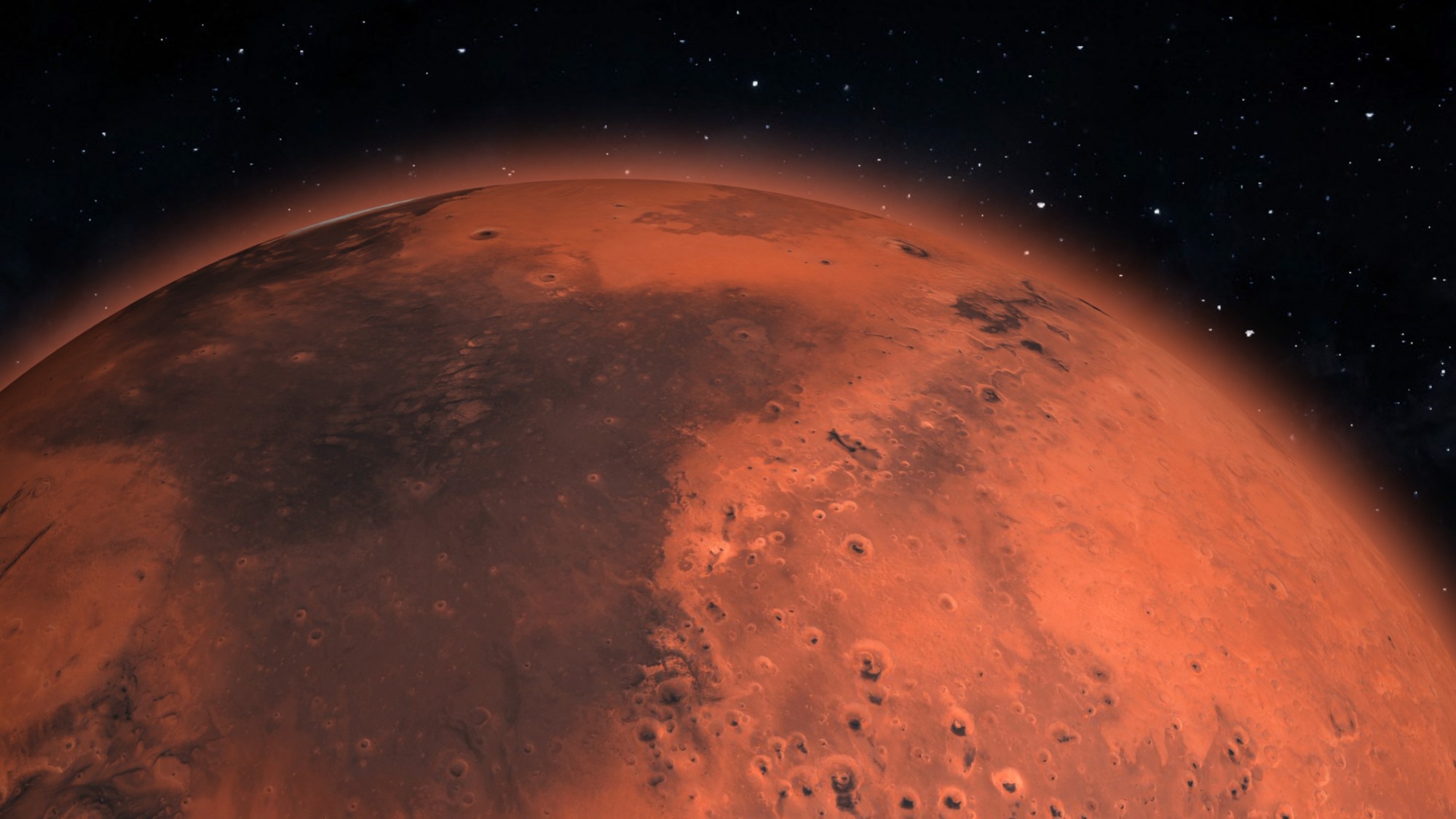
Image Credit: vikas31/Shutterstock.com
This reality has prompted researchers to rethink construction from the ground up. Instead of relying on Earth-based supply chains, attention has shifted toward materials that can be produced and used locally.
Regolith-based composites, alternative binders that do not depend on water, and three-dimensional (3D) printing technologies are all being developed to create structures capable of withstanding extraterrestrial environments.1-4
The goal is to build intelligently using what is available, conserving energy, and designing for durability in places that offer very little margin for error.
Save this PDF for later by downloading it here.
Construction in Low-Gravity Environments
Interest in space exploration has surged again in recent years, and with it, serious discussions about long-term habitation. Programs such as NASA’s Artemis initiative are not simply planning brief visits to the Moon; they are laying the groundwork for a sustained presence, with Mars on the horizon. That shift from exploration to habitation changes the engineering conversation entirely.
Building for space is not a matter of scaling down terrestrial methods. Materials that perform well on Earth often behave unpredictably in vacuum conditions, under persistent radiation, or across severe thermal cycles. Concrete can lose moisture too quickly. Metals respond differently to extreme temperature gradients. Even curing processes become uncertain in reduced gravity. For that reason, researchers are developing systems designed specifically for extraterrestrial environments rather than attempting to retrofit conventional approaches.
Several strategies are now under active investigation. Thermosetting materials, laser and microwave sintering, and regolith melting or forming techniques offer ways to create structural components without relying on water-based hydration. Various forms of “space concrete” are also being studied, each adapted to the realities of microgravity and limited resources.
At the center of much of this work is in-situ resource utilization (ISRU) or, in other words, the logic that if habitats are to be built sustainably, they must rely primarily on materials already present on the Moon or Mars. Lunar and Martian soils contain many of the elemental constituents required for construction, which makes local production both technically plausible and economically necessary.
When scientists analyzed the soil and rock samples returned from the Apollo and Luna missions, they identified substantial amounts of alumina, calcium oxide, and silicates in lunar regolith, the same core components used in cement production on Earth. The essential ingredients for construction are already present.
That has practical implications. Transporting materials from Earth can cost around $20,000 per kilogram to the Moon, and significantly more to Mars. At that scale, importing bulk construction materials is not feasible. Any long-term building strategy must rely on resources available at the destination.
Research has also moved beyond conventional cement analogues. Investigators are studying adapted composite systems, metals and alloys designed for vacuum conditions, and bio-inspired materials with built-in capabilities such as self-healing or embedded sensing.
Among these options, composite materials (particularly concrete derivatives) continue to draw attention. Concrete has a long record of performing under demanding terrestrial conditions, including radiation exposure and elevated temperatures. That experience provides a useful starting point for adapting similar systems to space environments.1–3
Materials for Low-Gravity Construction
Selecting materials for low-gravity construction is not simply a matter of strength. Any viable system must withstand vacuum conditions, radiation exposure, and repeated thermal cycling, while also being compatible with locally available resources. These constraints narrow the field considerably.
Researchers are exploring advanced composite systems as one response to these demands.
Organic matrix, metal matrix, ceramic matrix, carbon fiber reinforced carbon (C/C), and polyimide-based composites are all under investigation.
Metal matrix composites offer resistance to harsh environmental conditions, though cost and long-term durability remain under study. Ceramic matrix composites, reinforced with fine ceramic fibers, provide improved fracture resistance compared to conventional ceramics. Carbon fiber reinforced carbon composites (carbon fibers embedded in a graphite matrix) are already widely used in spacecraft and satellite components.2 In many cases, these systems are also being designed with additional capabilities, such as self-sensing or self-healing, to reduce maintenance demands in remote environments.
At the same time, attention has turned to materials that could be sourced more directly from lunar and Martian soils. Although refined metals are not readily available, elements such as aluminum, magnesium, iron, titanium, zirconium, chromium, vanadium, and manganese are present within regolith.
Aluminum is of particular interest because it can be melted and used as a binding phase, allowing local soil to be fused into a waterless aluminum-based concrete. Lunar highland soils contain approximately 15 % aluminum oxide. Magnesium, often found as olivine, a magnesium–iron silicate, is also abundant. These compositions have led researchers to consider aluminum- and magnesium-based structural systems for extraterrestrial habitats.2
Despite this range of options, much of the research continues to return to concrete-based materials. The reason is pragmatic. Concrete has a well-documented record of performing under demanding terrestrial conditions, including radiation exposure and elevated temperatures.
Experimental studies suggest that conventional concrete can remain stable under lunar vacuum conditions, and precast panels have tolerated extreme temperature fluctuations. When lunar soil is used as aggregate, compressive strengths approaching 75.7 MPa have been reported.
The principal constraint is water. Traditional cement hydration requires it, and water is a limited resource in space environments. To address this limitation, researchers are investigating non-hydraulic alternatives. Epoxy-based concrete has demonstrated compressive strengths between 17 and 60 MPa, depending on resin composition. Polymeric concrete combining lunar simulant with polymers and cured at 230 °C has been found to reach 12.75 MPa within five hours. Geopolymer binders derived from regolith have also achieved compressive strengths ranging from 16.6 to 33.1 MPa.
Several non-hydraulic systems are now being evaluated as practical alternatives. One approach uses sulfur as the primary binder. Because sulfur concrete does not rely on hydration, it eliminates the need for water and gains strength quickly. Typical formulations contain 10–20 % sulfur and 80–90 % aggregate.
Other systems build on magnesium-based chemistry. Magnesia–silica concrete forms magnesium silicate hydrate gel and is considered compatible with Martian resource availability. Sorel concrete, produced from magnesium oxide and magnesium chloride, has demonstrated compressive strengths of 54 MPa at seven days and 73 MPa at 28 days, with corresponding flexural strengths between 8.5 and 11.5 MPa.2–4
Methods of Construction
Choosing the right material is only half the challenge. The larger question is how to build with it in an environment where gravity is weaker, temperatures fluctuate dramatically, and astronauts cannot safely spend long periods working outdoors. On the Moon or Mars, construction cannot rely on crews operating heavy equipment in the way we do on Earth. Much of the process must be automated.
For that reason, two approaches have become central to space construction research: three-dimensional (3D) printing and automated robotics.
3D Printing
Within this broader move toward automation, 3D printing has emerged as a leading approach. Instead of assembling prefabricated components, 3D printing builds structures layer by layer. In space, that distinction matters because it enables construction directly from locally processed materials.
If lunar or Martian soil can be converted into a printable mixture, habitats can be fabricated on-site, reducing dependence on Earth-supplied materials. The process also minimizes waste, since material is deposited only where required. Many formulations are designed to set quickly and to avoid conventional water-based curing, aligning with the limited water and energy resources available during space missions.
Recent studies have demonstrated robotic extrusion of sulfur-based concrete, including micro-vibration techniques to improve surface quality. Lunar and Martian soil simulants have been used to prototype complex geometries, and regolith-based polymeric inks have been developed with controlled porosity and elastomeric properties.3 Powder-based printing methods have also been applied to Sorel cement and related binders derived from lunar simulants.
Mechanical testing has shown compressive strengths ranging from 9.3 to 32.2 MPa for HIT-MRS-1 Martian simulant polymer cement, up to 16 MPa for JSC-1A lunar simulant polymer cement, and approximately 31 MPa for sulfur concrete. Additives such as urea have been incorporated to improve flowability and final strength in geopolymer systems. Reduced gravity, however, affects material flow and layer bonding, and scaling these systems for autonomous deployment remains an engineering challenge.3
Automated Robot Technology
If 3D printing is the tool, robotics is the system that makes it workable.
Printing alone does not build a habitat. Someone, or something, has to excavate the soil, process it, position equipment, monitor structural integrity, and manage the sequence of construction. On the Moon or Mars, that “someone” cannot reliably be a human crew.
Radiation exposure, reduced gravity, and temperature extremes limit how long astronauts can work outside protected environments. Construction, therefore, has to be largely autonomous.
Robotic platforms are being developed to excavate regolith, prepare foundations, fabricate structural components, and inspect builds in real time. Rather than operating as isolated machines, current research focuses on coordinated systems (multiple robots communicating through machine-learning frameworks and executing digital construction plans with limited supervision).
In this model, habitat construction unfolds in stages. Robots would first prepare and level sites, then fabricate structural shells through additive manufacturing, install shielding using local regolith, and deploy supporting infrastructure such as power systems. By the time human crews arrive, the essential framework would already be in place.3
Instead of constructing habitats under direct exposure, astronauts would focus on supervising, adapting, and maintaining systems that had been largely assembled in advance.
Conclusion
Building on the Moon or Mars will not look like construction on Earth. The constraints are different, the risks are higher, and the margin for error is smaller.
What current research makes clear is that no single material or method will solve the challenge. Instead, progress depends on a coordinated system: materials adapted for vacuum and reduced gravity, sourced from local soil, and assembled through automated fabrication.
Concrete derivatives, magnesium- and aluminum-based systems, advanced composites, and regolith-derived binders each contribute part of the solution. Their effectiveness, however, depends not only on strength or durability, but on how they can be processed and deployed under extraterrestrial conditions. For that reason, additive manufacturing and autonomous robotics move from supporting technologies to central components of the construction strategy.
What this ultimately reflects is a change in approach. Instead of trying to carry Earth’s construction model into space, researchers are working outward from the conditions they will actually face. The environment sets the rules. Local resource use, automation, and material adaptation follow from that reality.
There is still considerable work ahead, particularly in scaling these systems and verifying long-term performance. But the direction is becoming clearer. The individual components are taking shape. The next step is making them function together reliably.
As lunar missions expand and Mars plans mature, extraterrestrial construction is moving steadily from controlled experimentation toward applied engineering.
If you’d like to explore this topic further, you might like to check out the articles linked below:
References and Further Reading
- Naser, M. Z. (2019). Space-native construction materials for earth-independent and sustainable infrastructure. Acta Astronautica, 155, 264-273. DOI: 10.1016/j.actaastro.2018.12.014, https://www.sciencedirect.com/science/article/abs/pii/S0094576518307033
- Naser, M. Z., Chehab, A. I. (2018). Materials and design concepts for space-resilient structures. Progress in Aerospace Sciences, 98, 74-90. DOI: 10.1016/j.paerosci.2018.03.004, https://www.sciencedirect.com/science/article/abs/pii/S0376042118300150
- Wu, C., Yu, Z., Shao, R., & Li, J. (2024). A comprehensive review of extraterrestrial construction, from space concrete materials to habitat structures. Engineering Structures, 318, 118723. DOI: 10.1016/j.engstruct.2024.118723, https://www.sciencedirect.com/science/article/pii/S0141029624012859
- Yan, Z., & Kawasaki, S. (2025). Review of In Situ Resource Utilization-Based Biocementation and Regolith Consolidation Techniques for Space Applications. Buildings, 15(11), 1815. DOI: 10.3390/buildings15111815, https://www.mdpi.com/2075-5309/15/11/1815
Disclaimer: The views expressed here are those of the author expressed in their private capacity and do not necessarily represent the views of AZoM.com Limited T/A AZoNetwork the owner and operator of this website. This disclaimer forms part of the Terms and conditions of use of this website.